Your pages aren't painted yet. Here's every place your story happens and what each page will show — when it looks right, press the button below to start drawing. It takes about 10 minutes, and we'll email you the moment your book is ready.
⚠ Some of your people may come out looking like twins
When two people are described almost the same, the pictures can't tell them apart. Give one of them something all their own — different hair, a different dress or shirt color, a keepsake they always carry — and we'll redraw their portrait.
The fighting was over. Wayne Wilberg and his fellow Marines had come to Japan as part of the occupation — keeping the peace now that the guns had gone quiet. The base was calm, but out in the hills, something else was waiting.
The picture
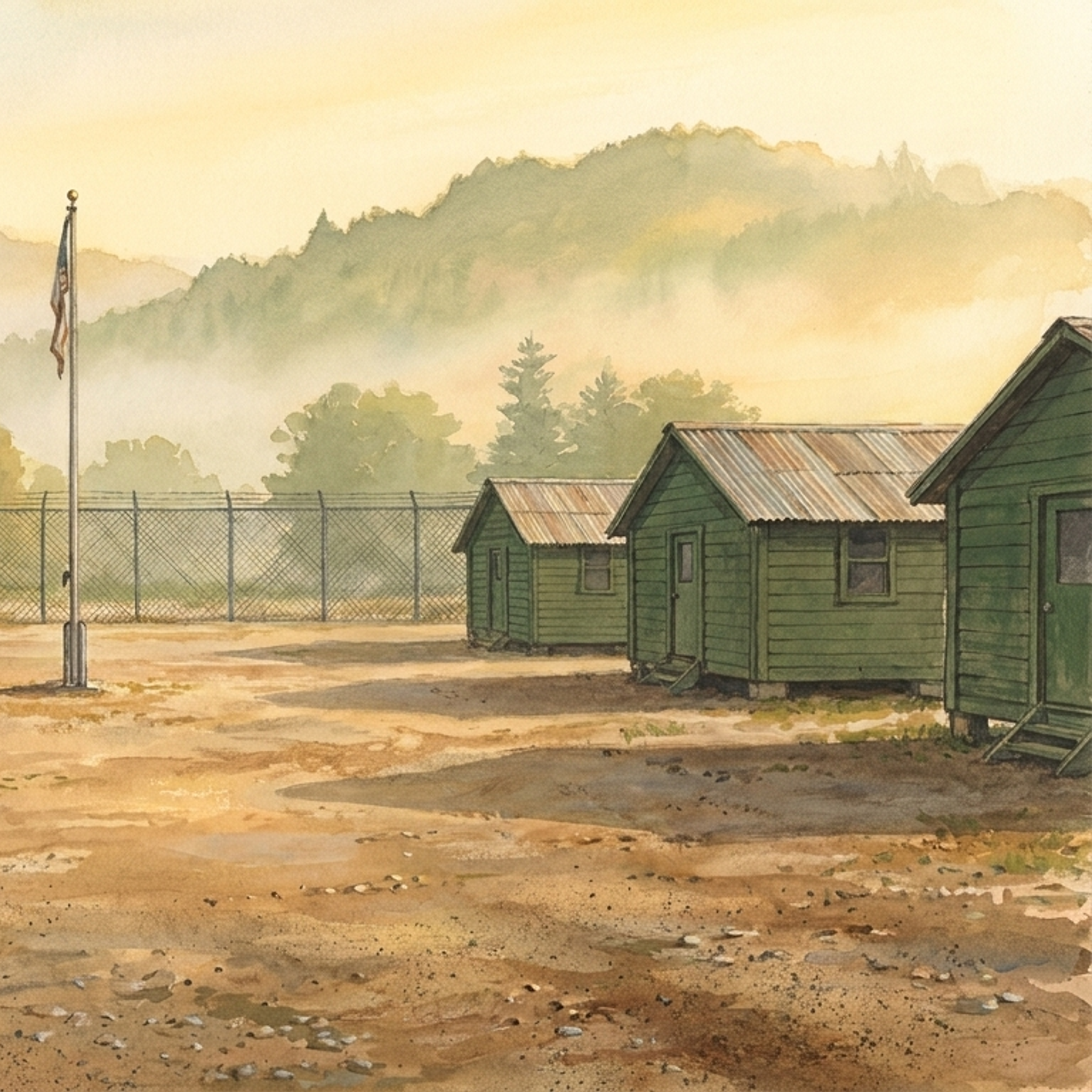
Wide, quiet aerial view of a Marine base in Japan — low green huts, a dirt yard, a flagpole. Beyond the fence, forested hills rise in morning mist. Wayne stands in the yard with two other Marines, all three looking toward the hills. The mood is still and watchful, lit in soft gold morning light
"During this occupation, they met very little resistance during the beginning... The taking care of these children was one of the major projects facing the occupation forces after the surrender of Japan."
02
Page 2 — the words
The children had been sent to the hills to get away from the fighting. Many were lost. But some survived — hungry, frightened, alone. One day, Wayne's group found a boy. Twelve years old. Thin as a reed. His eyes said everything his words could not.
The picture
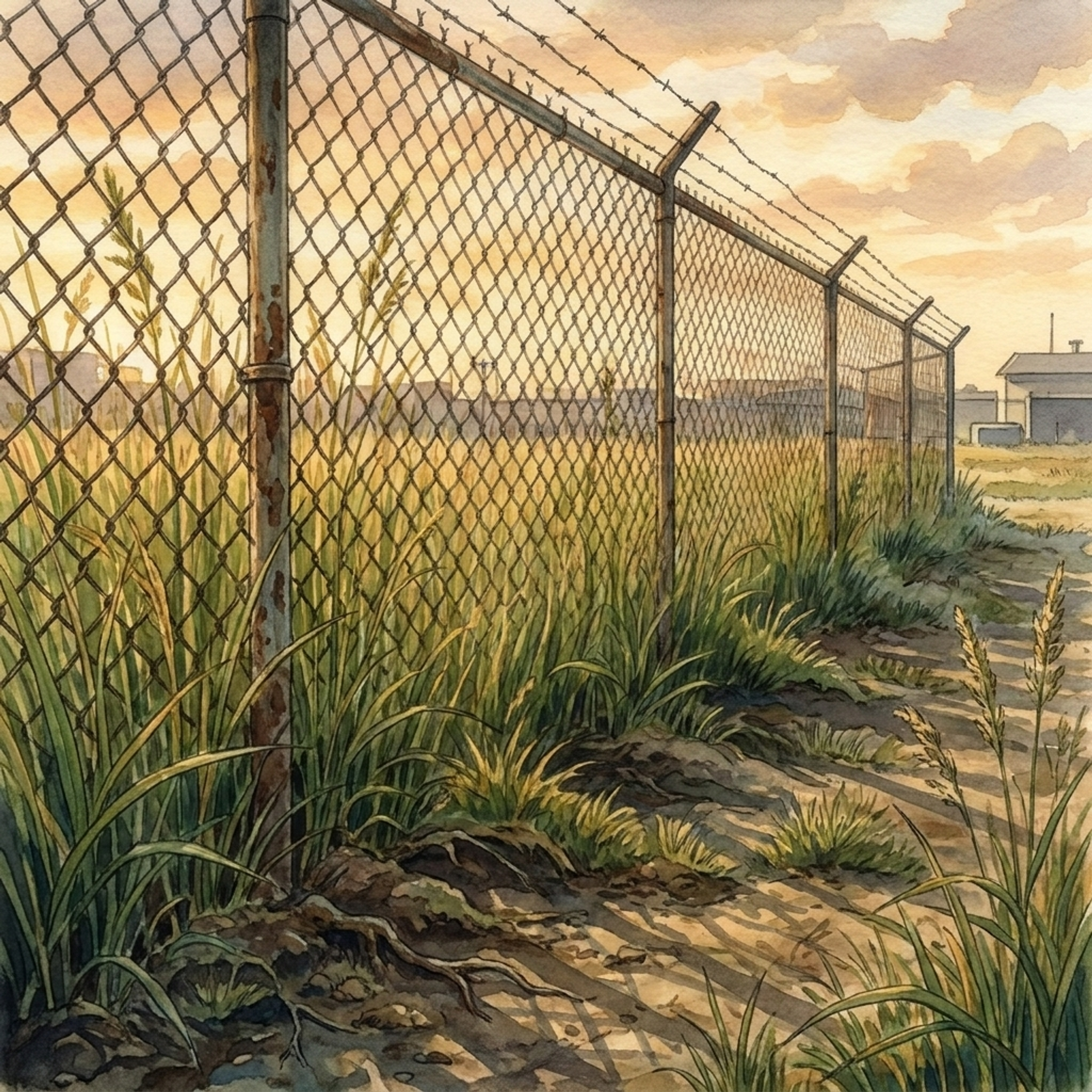
At the edge of the base fence, half-hidden in tall grass, a small boy crouches — bare feet, oversized gray shirt, dark watchful eyes. Wayne stands a few feet away, crouching down to the boy's level, hands open and still. Two other Marines wait a step behind. The light is soft and slanted. The boy is not running, but he looks as though he might
"Their parents were shot and killed. The kids were sent to the hills to get away from the fighting. They eventually were starved out. Many of them ended up dieing. The army started to gather the kids up and try to help them. One time my group picked up a 12-year boy and took him back to the base with us."
03
Page 3 — the words
Wayne reached into his pocket and held out a candy bar. The boy stared at it. He had probably not eaten in days. Then — he took it. "We gave him a candy bar and he gobbled it up."
The picture
Close-up spread: Wayne's outstretched hand holding a candy bar, and the boy's small hands snatching it. The boy's face is bent toward it — pure, desperate, grateful hunger. Wrapper already half-torn away. Warm amber light. Wayne watches with a soft, careful smile. One Marine behind him grins
"We gave him a candy bar and he gobbled it up."
04
Page 4 — the words
That night, the men made up their minds. "We made him a bed and snuck him in," Wayne said. They tucked the boy away and looked at each other — because they all knew the rule. "If they found out we had him, we would have been court-martialed."
The picture
Interior of a dim Marine hut at night. Three Marines have pushed together blankets on the floor in a corner to make a low, soft bed. The boy lies curled on it, already half-asleep, clutching the candy wrapper. Wayne and two other Marines stand close together, exchanging a quiet, serious look — a look that says: we know the risk, and we're doing it anyway. A single oil lamp throws warm gold across the scene
"We made him a bed and snuck him in. If they found out we had him we would have been court marshaled."
05
Page 5 — the words
The boy stayed. There were no shared words between them — no English, no Japanese — but there were nods, and pointing, and shy smiles. Little by little, he learned the shape of the base. Little by little, he began to help.
The picture
Daytime, the open dirt yard of the base. The boy carries a small crate, following behind Wayne, who is lifting a larger one. Two other Marines work nearby. Everyone is busy, easy, comfortable. The boy glances up at Wayne with a careful, hopeful look. Wayne glances back and gives a single slow nod. No words needed. Bright midday light
"He did some labor work for us."
06
Page 6 — the words
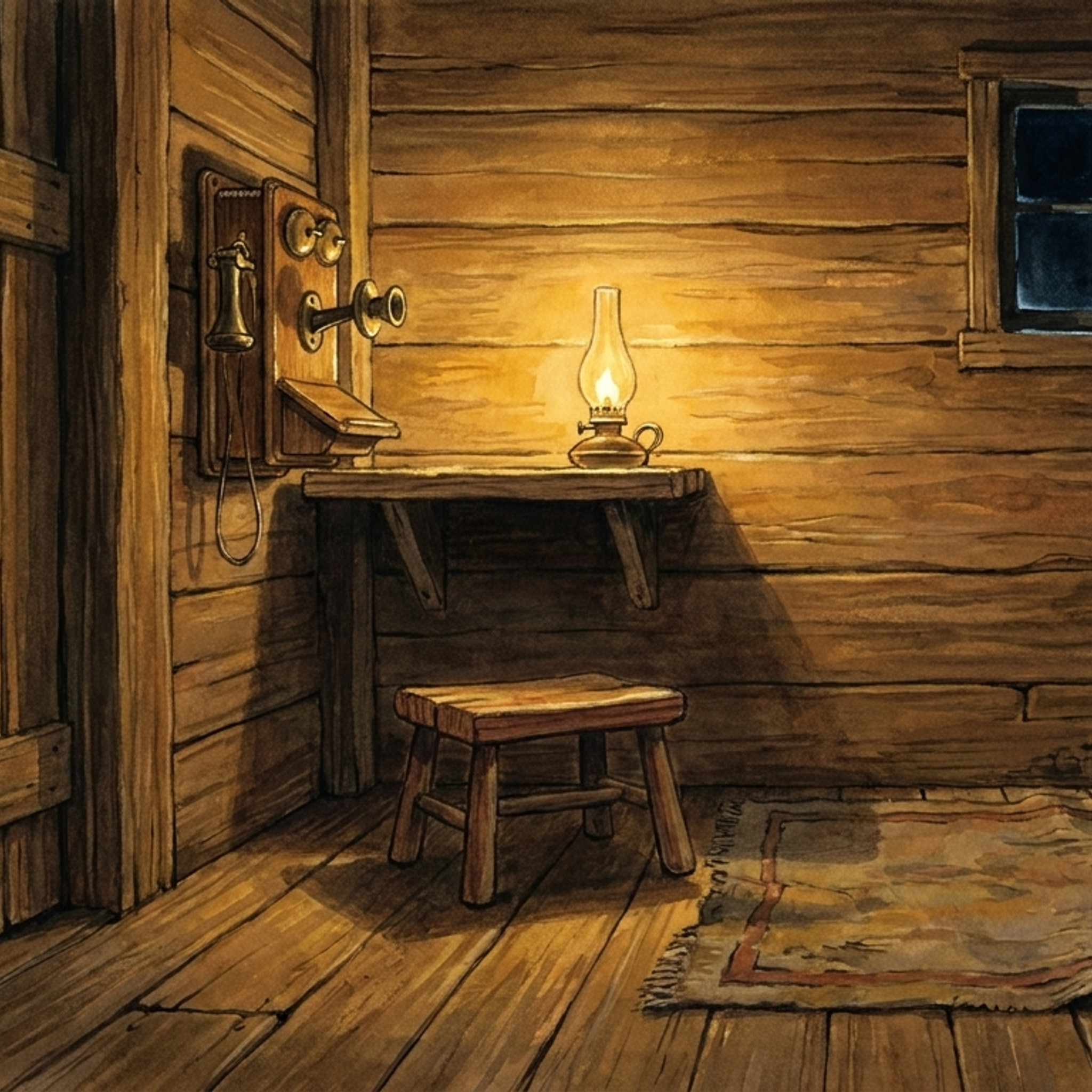
Then the men had an idea. They brought the boy inside and showed him the telephone. Wayne pointed to the phone. He pointed to the boy. He pointed outside, and waved his arms. The boy watched every move. He understood: if it rings — you run.
The picture
Inside a hut, bright afternoon light through one small window. Wayne stands beside an old wooden telephone mounted on a wall shelf. He mimes holding a receiver to his ear, then points at the boy, then sweeps his arm dramatically toward the open door. The boy sits on a low stool in front of the telephone, nodding fast and seriously, eyes huge with concentration. Two Marines lean in the doorway watching, barely hiding grins
"We had him set by the phone and listen for it to ring. If it would ring he was to quickly run outside and yell to us that the phone was ringing. He couldn't speak any English."
07
Page 7 — the words
The boy sat very still. He watched the telephone the way a cat watches a bird. He didn't know a single word of English. He didn't know what to say when the men came running. He only knew one thing: the moment it rings, you go.
The picture
Tight, quiet illustration: the boy alone in the hut, perched on the small stool, bare feet barely touching the floor, both hands on his knees. His enormous eyes are locked on the telephone. The room is still. Dust motes hang in a shaft of light. The telephone is the center of the image — the boy tilted toward it, coiled and ready. Suspenseful stillness
"He couldn't speak any English. He would run out and yell, 'telle, telle, telle' until someone would go answer it."
08
Page 8 — the words
RING. The boy shot off that stool like a firecracker. He burst through the door, bare feet slapping the dirt, arms pumping, racing across the yard as fast as his legs could carry him.
The picture
Full-spread action illustration: the boy explodes out of the hut door, mid-sprint, one arm flung forward, bare feet kicking up a small plume of dust. His mouth is just opening — the shout is half a second away. Marines in the yard look up, startled, dropping tools. Bright afternoon sun. Pure kinetic energy — the boy is a blur of motion
09
Page 9 — the words
"Telle! Telle! Telle!" he hollered, running and running until a Marine jogged over to answer. Everyone stopped. Everyone stared. Then someone laughed. And then everyone laughed — because there was nothing else to do. "He would run out and yell, 'telle, telle, telle' until someone would go answer it."
The picture
The boy stands in the center of the yard, both fists raised, shouting with his whole body. Around him, six or seven Marines have stopped mid-task — one holding a wrench, one a tin cup — all of them breaking into wide, helpless grins. Wayne is laughing hardest of all, one hand pressed to his stomach, head thrown back. The boy looks around at the laughter, uncertain for one beat — then his own face cracks open into a giant smile
"He would run out and yell, "telle, telle, telle" until someone would go answer it."
10
Page 10 — the words
After that, every time the telephone rang, the boy ran. "Telle! Telle! Telle!" The men stopped listening for the phone. They listened for him instead. His voice — that one flying word — had become the sound of the whole base.
The picture
A triptych-style spread: three small panels across the page, each showing the boy mid-sprint and mid-shout at different times of day — morning light, noon heat, golden late afternoon. In each panel, Marines react with bigger and warmer smiles. The final panel shows Wayne sitting on a step, laughing before the boy even gets to him. The boy has become the heartbeat of the place
"He would run out and yell, 'telle, telle, telle' until someone would go answer it."
11
Page 11 — the words
Then one morning, the day came. The men packed their bags and walked to the docks. Wayne carried his pack and looked back toward the base — toward the hut, toward the telephone, toward everything the boy had made feel like home.
The picture
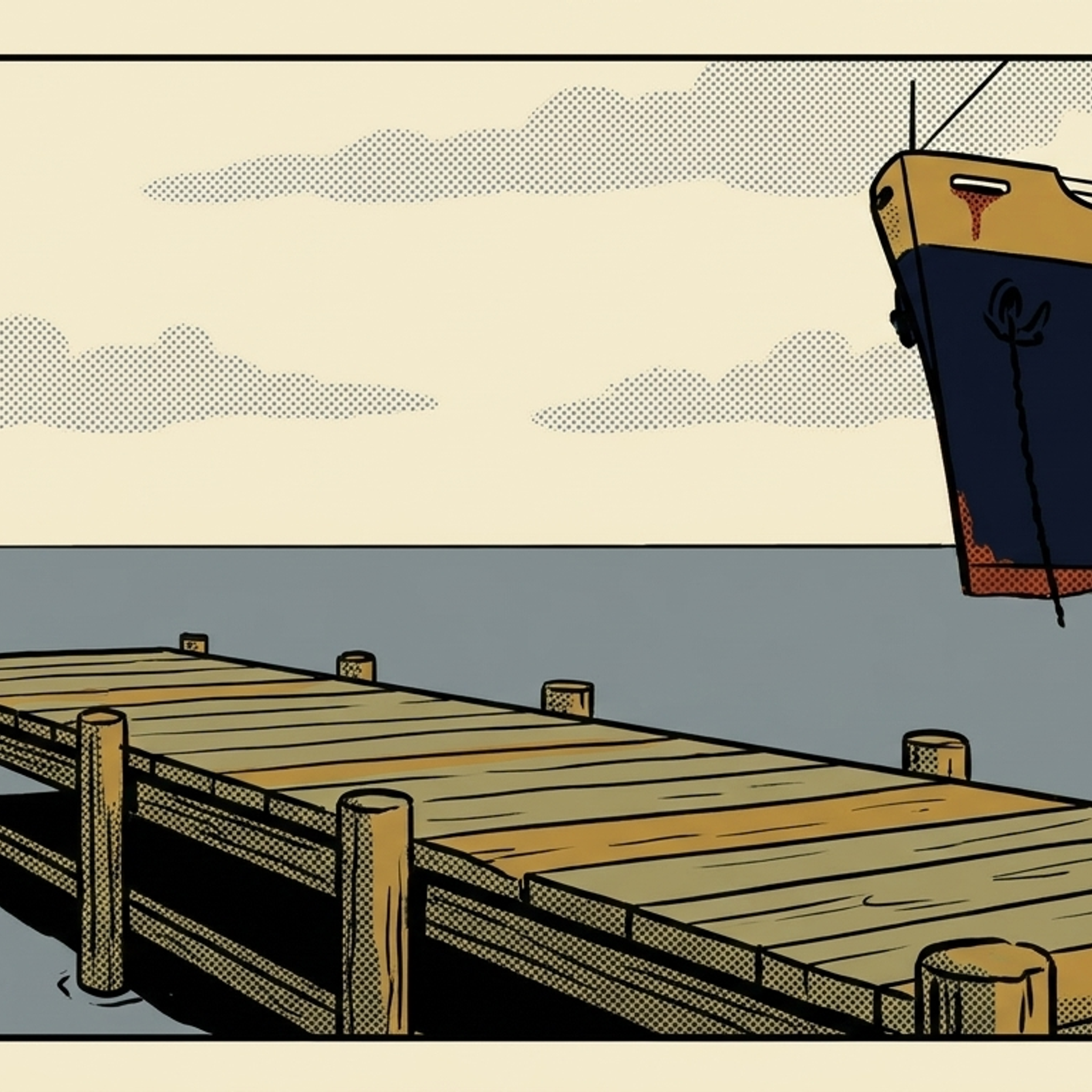
Early morning, the docks. Wayne and a line of Marines in full packs walk slowly toward a large transport ship at anchor. Gray-blue water, pale sky. Wayne has turned his head to look back over his shoulder, his face held between leaving and remembering. The ship is huge and waiting. The mood is bittersweet — proud, sorrowful, tender
"The day we shipped home from the war, he was standing on the docks waving goodbye to us."
12
Page 12 — the words
The boy was standing on the docks. He did not run. He did not shout. He only raised his hand — and waved, and waved, and waved, until the ship was too far away to see. Wayne watched until he couldn't anymore. Some things don't need any words at all. "The day we shipped home from the war, he was standing on the docks waving goodbye to us."
The picture
The final, full-spread illustration, split in feeling: in the foreground, the boy stands on the dock, small and barefoot, one arm raised high and still in a wave, face upturned. In the distance, the transport ship moves slowly across the wide gray-blue bay, growing small. Wayne stands at the ship's railing, one hand raised back. Between them: open water, pale sky, and light. Quiet. Complete
"The day we shipped home from the war, he was standing on the docks waving goodbye to us."
See something off? Change what a picture will show, or add a note — fixing it here is free, before any image is made. To change the words, use the Story step. You can still redraw or edit any page afterward; nothing here is final.