Your book
Flip through the book the way a child will hold it. The PDF tabs show exactly what gets printed. If something feels off, jump back to the step that owns it — the wizard remembers everything you've done.
Cover
Custom art
Title + dedication
Sheet 1
Story spreads
12
The real story
9 quotes · 3 photos
Back cover
Blurb + brand
This story belongs to
— — — — — — — —
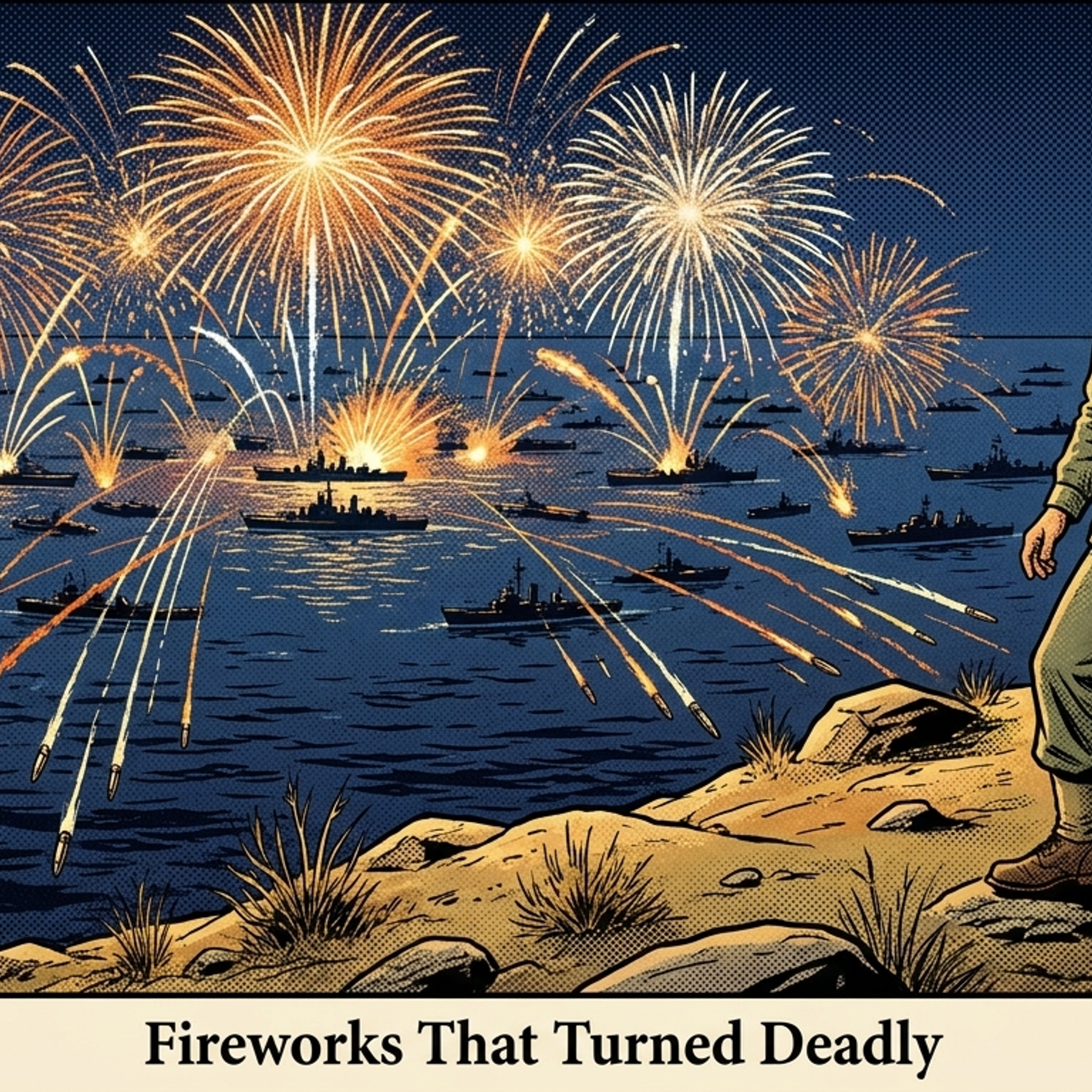
Fireworks That Turned Deadly
KindredPages
1
2
3
4
5
6
7
8
9
10
11
12
Behind the story
The real words behind it
The real story · photographs
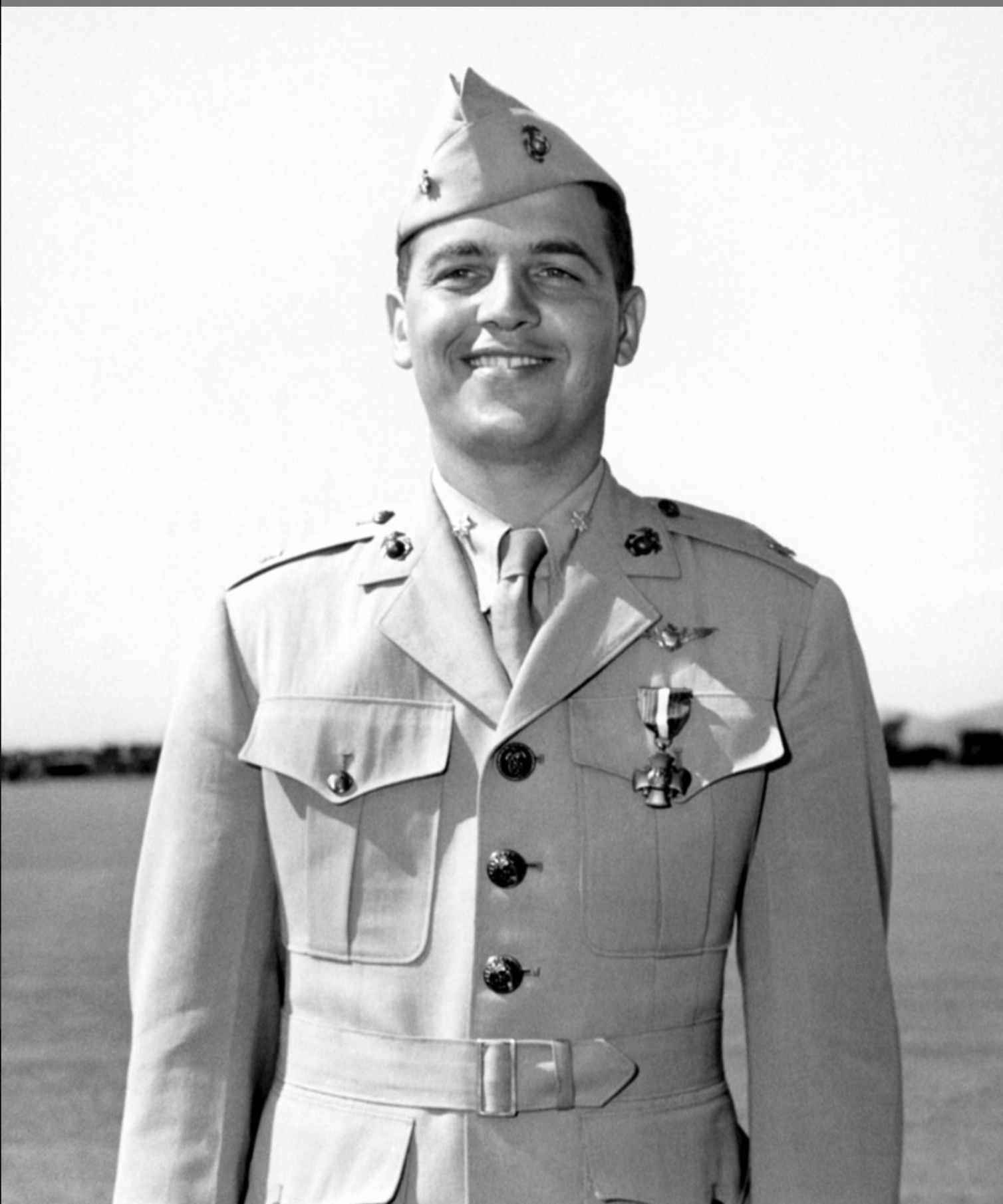
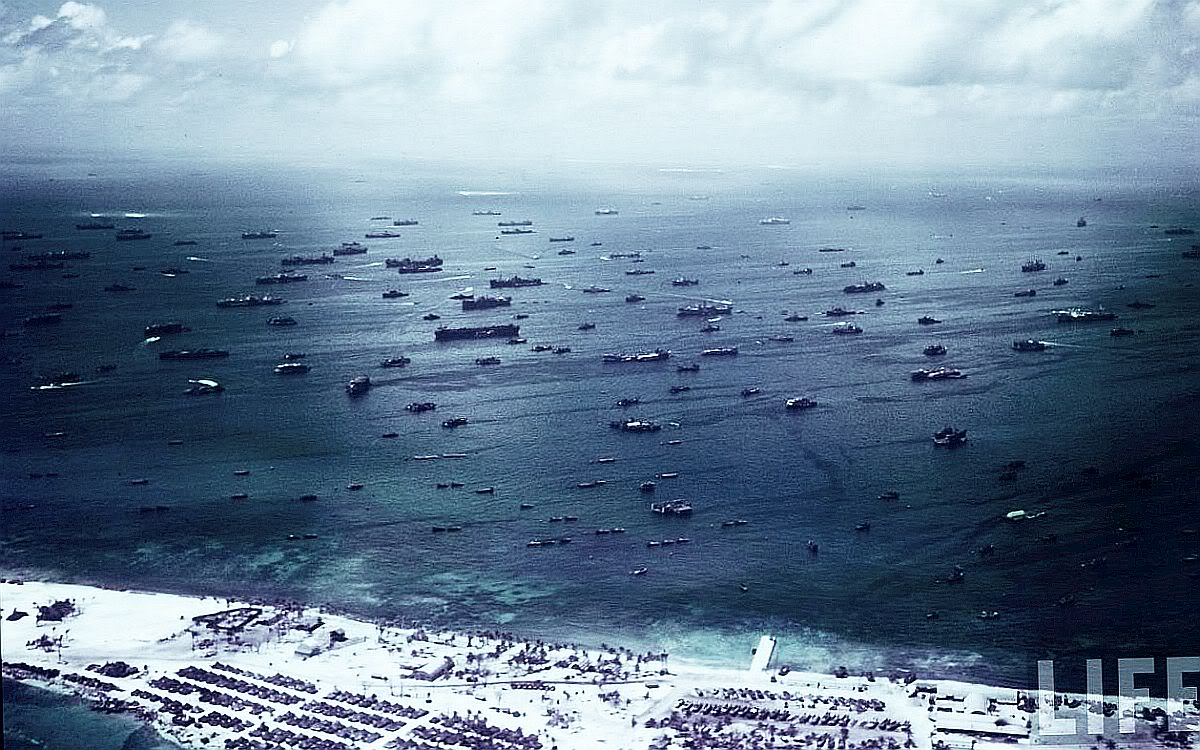
Behind the story · 1 of 3
Behind the story · 2 of 3
Behind the story · 3 of 3
About this time and place
Details true to the time and place of this story — drawn from history, not from the journal itself.
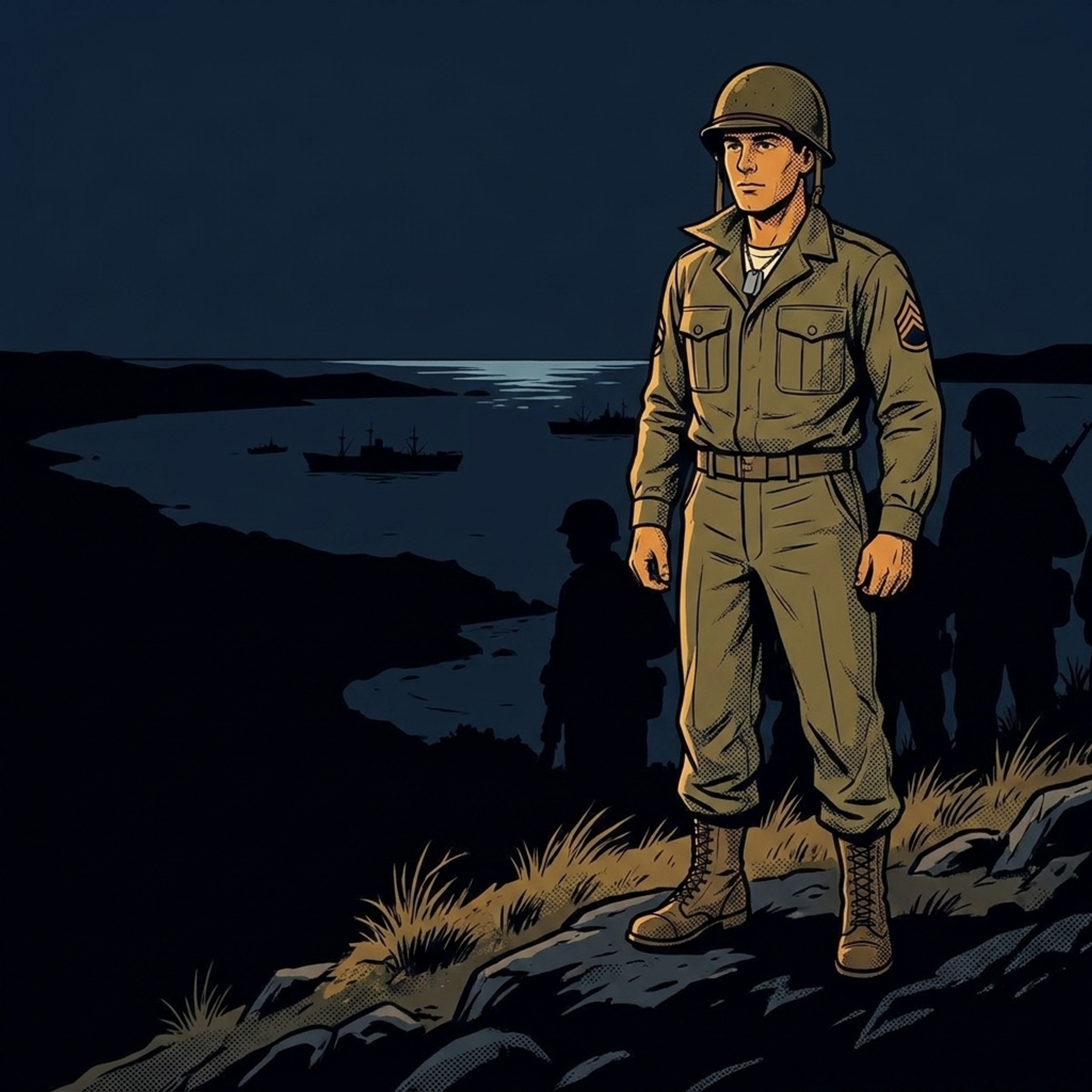
U.S. military personnel stationed on Okinawa in 1945 wore lightweight olive-drab herringbone twill (HBT) utility uniforms designed for the hot, humid Pacific climate.
Historical context · U.S. Army and Marine Corps Pacific-theater uniform regulations, 1943–1945; Smithsonian National Museum of American History uniform collection
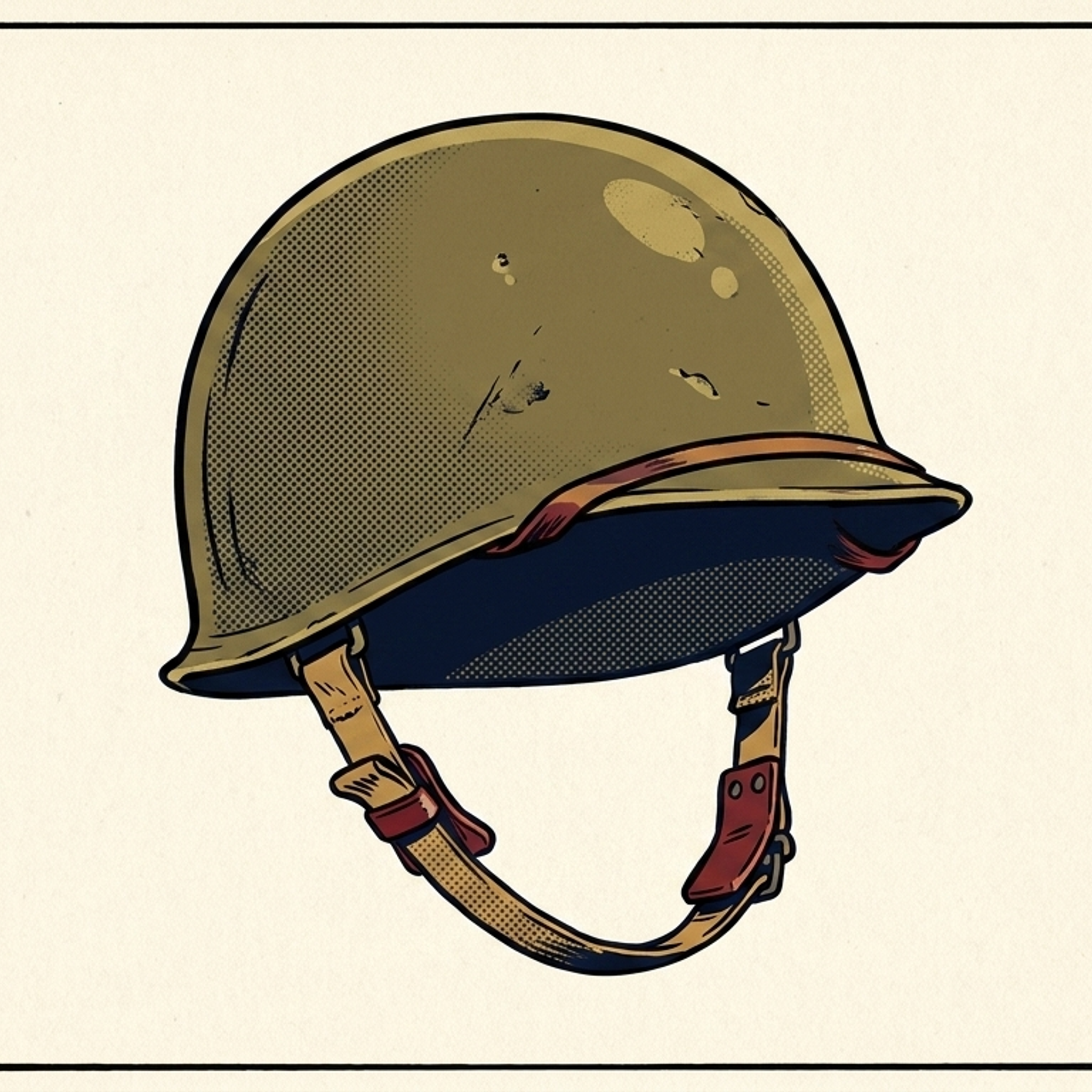
The M1 steel helmet, with its distinctive rounded dome and separate fiber liner, was standard headgear for U.S. military personnel in the Pacific theater in 1945.
Historical context · Standard USMC and U.S. Army Pacific-theater issue, 1942–1945; U.S. Army Center of Military History uniform records
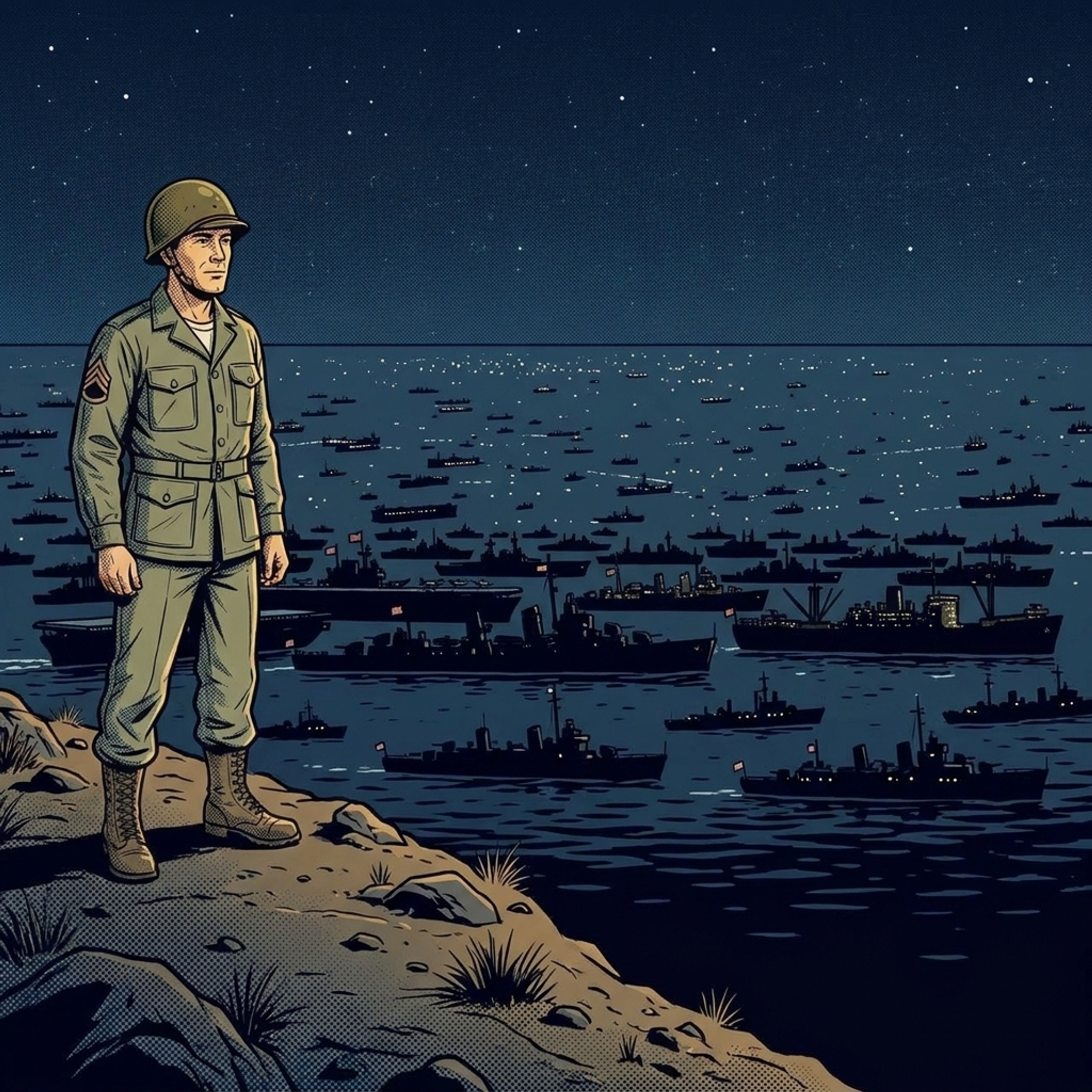
Buckner Bay (also called Nakagusuku Bay) on the southeastern coast of Okinawa is a wide, deep natural harbor ringed by low hills, and in mid-1945 it was filled with dozens of U.S. Navy ships visible from the surrounding hillsides.
Historical context · U.S. Navy action reports, Okinawa campaign, April–August 1945; geographic survey records of Nakagusuku Bay, Okinawa
The hills of southern Okinawa are composed of coral limestone, giving the ground a pale, rocky surface with sparse low scrub vegetation and thin, reddish-orange soil.
Historical context · U.S. Geological Survey records and U.S. Army Corps of Engineers Okinawa terrain studies, 1945
Summer nights on Okinawa are warm and humid, with temperatures rarely dropping below the low 70s Fahrenheit, and the sky over the Pacific is very dark away from artificial light, making distant flashes clearly visible.
Historical context · Japan Meteorological Agency historical climate data for Okinawa; U.S. Weather Bureau Pacific theater records, 1945
Anti-aircraft fire at night produced brilliant orange, gold, and white bursts visible for many miles, lighting up the sky over the bay in dramatic flashes before fading back to darkness.
Historical context · U.S. Navy and Army anti-aircraft artillery operational reports, Okinawa, 1945; photographic record in National Archives Still Pictures Branch
U.S. military field rations in the Pacific in 1945 often included the C-ration, a set of small olive-drab cans containing items such as hash, beans, or biscuits, eaten directly from the can with a small folding can opener called a P-38.
Historical context · U.S. Army Quartermaster Corps ration specifications, 1943–1945; National Museum of the Pacific War artifact collection, Fredericksburg TX
Soldiers and Marines on Okinawa carried a canteen — a round, olive-drab metal or hard-rubber bottle with a cloth cover — clipped to their web belt to hold drinking water in the island heat.
Historical context · U.S. Army and USMC individual equipment tables, 1943–1945; U.S. Army Quartermaster Museum records
U.S. military personnel like those stationed on Okinawa hillside observation posts in 1945 would likely have used binoculars — standard-issue 6×30 or 7×50 field glasses in olive-drab finish — to scan the bay and the horizon.
Likely for someone in their situation · U.S. Army and USMC field equipment tables of organization, 1944–1945; National Archives RG 127 USMC equipment records
The U.S. flag flown at military installations on Okinawa in 1945 was the 48-star flag, as Hawaii and Alaska had not yet become states.
Historical context · U.S. flag law; 48-star flag in use 1912–1959, confirmed in National Archives photographic record of Okinawa installations, 1945
ABOUT THIS RECORD
This book was drawn from the journals, kept 1944-2013.
KindredPages
Made with care · 2026
The war is over. Two thousand ships fill Buckner Bay, and every gun aboard is pointed at the sky.
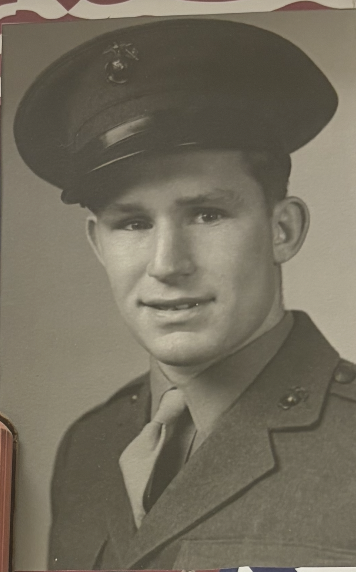
From his hilltop on Okinawa, young Marine Wayne Wilberg watches the night explode in gold and fire - beautiful, thunderous, alive. He doesn't know yet what goes up must come down. Some celebrations teach us things we never forget. Give this one to someone you love.
From his hilltop on Okinawa, young Marine Wayne Wilberg watches the night explode in gold and fire - beautiful, thunderous, alive. He doesn't know yet what goes up must come down. Some celebrations teach us things we never forget. Give this one to someone you love.
Created with KindredPages
kindredpages.studio
kindredpages.studio
Cover
direct Verbatim from the journal
paraphrase Same meaning, child-friendly wording
bridge Connective tissue we wrote
Page 1
Wayne Wilberg was twenty-one years old, and he had been a Marine for a long time. He'd driven trucks. He'd slept on the ground. He'd worn the same green dungarees until they were thin at the knees. Tonight he stood on a hilltop in Okinawa, and something in the air felt different.bridge
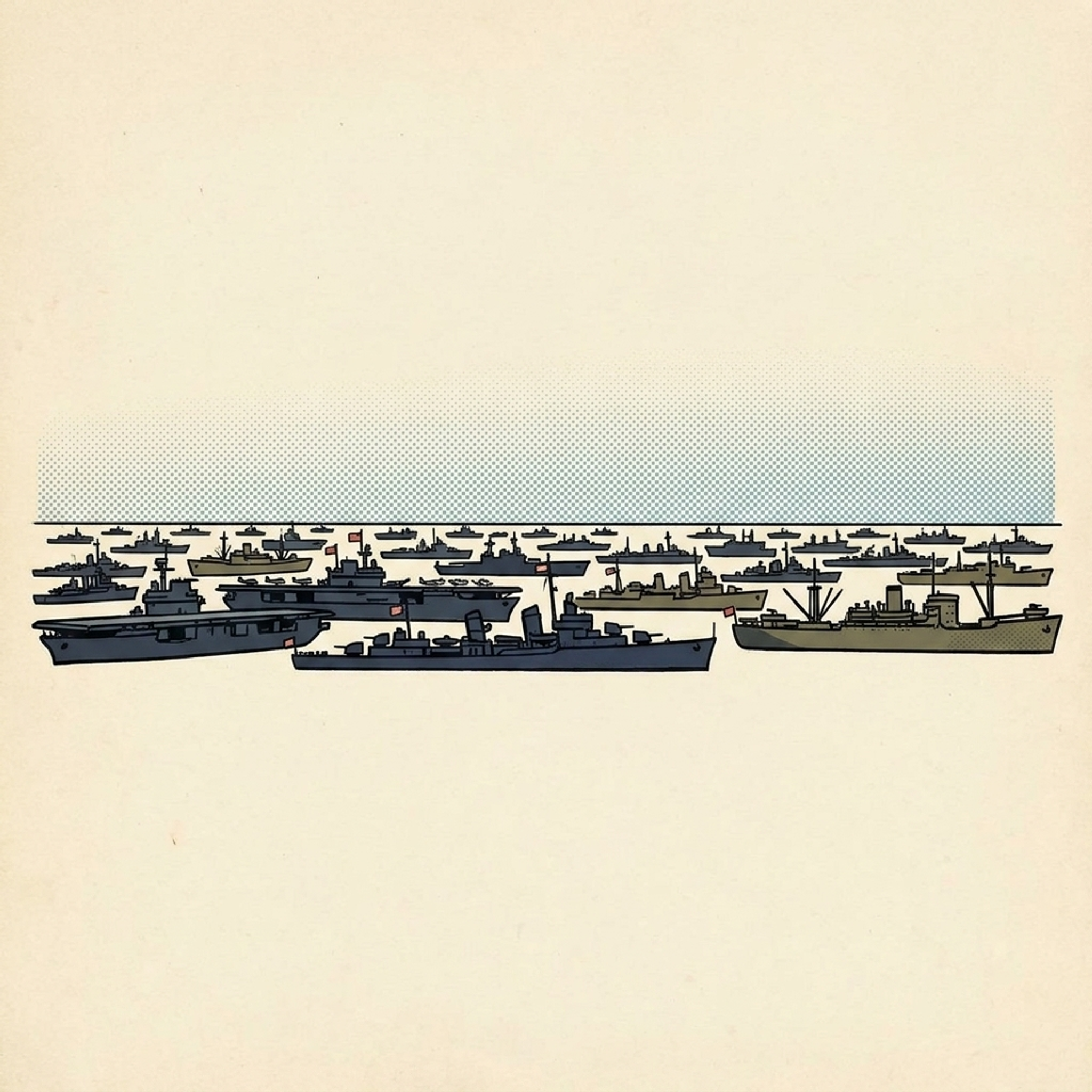
Page 2
He looked down at the water. Ship after ship after ship filled the bay - more than he could count, more than he had ever imagined. "There were about 2000 ships out in Buckner Bay," Wayne would say. As far as his eyes could see, from one edge of the world to the other.direct
Page 3
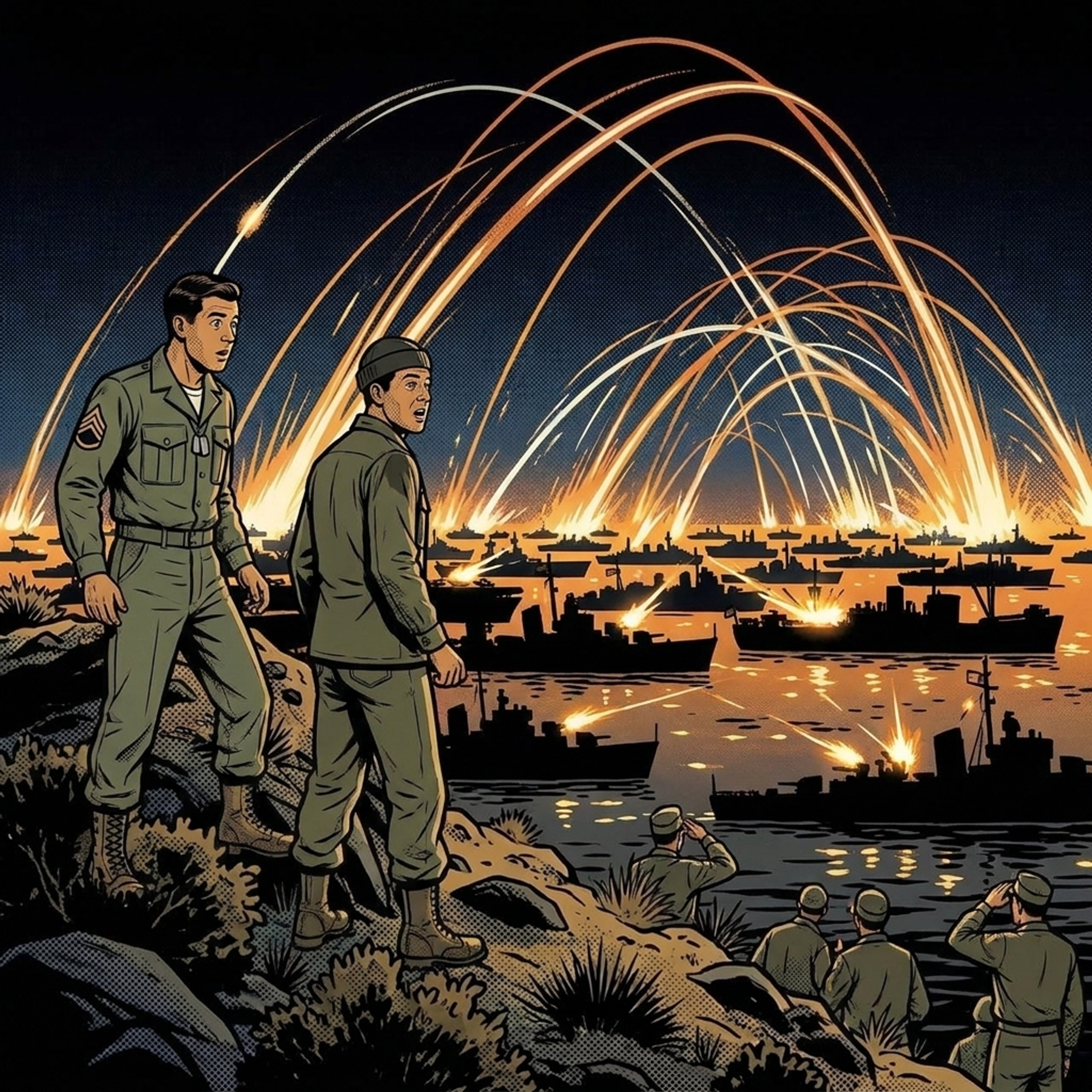
Then - a flash. A boom that rolled up the hill like thunder. Then another. And another. Every ship in the bay lit up at once, guns firing straight into the sky. Tracers tore through the dark like rivers of fire. The noise was everywhere.paraphrase
Page 4
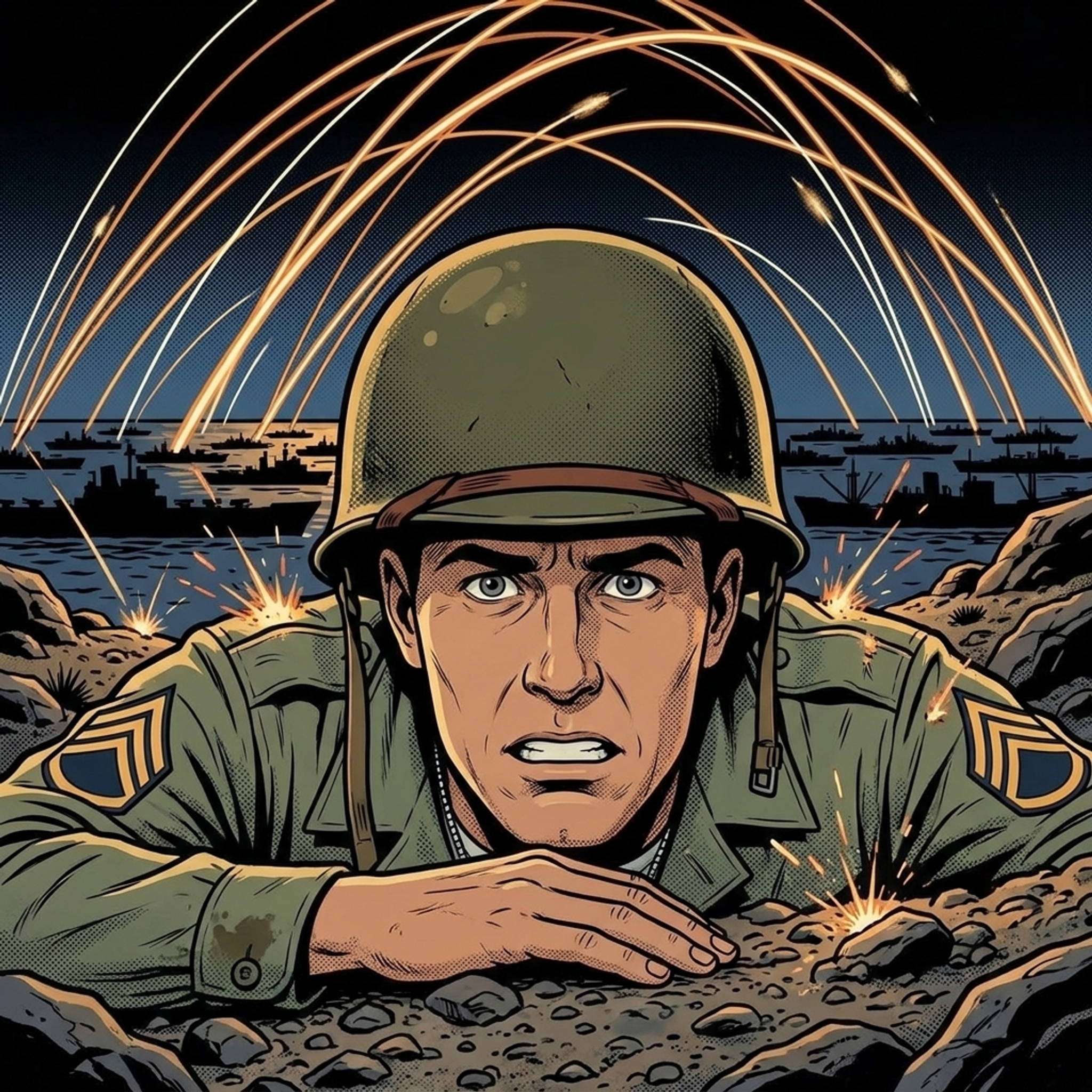
Wayne had never seen anything so beautiful in his life. The lights kept arcing up - gold and orange and white - bursting over the water again and again. It was just like home on the Fourth of July. Only a thousand times bigger. "It was like a huge July 4 celebration," he said.direct
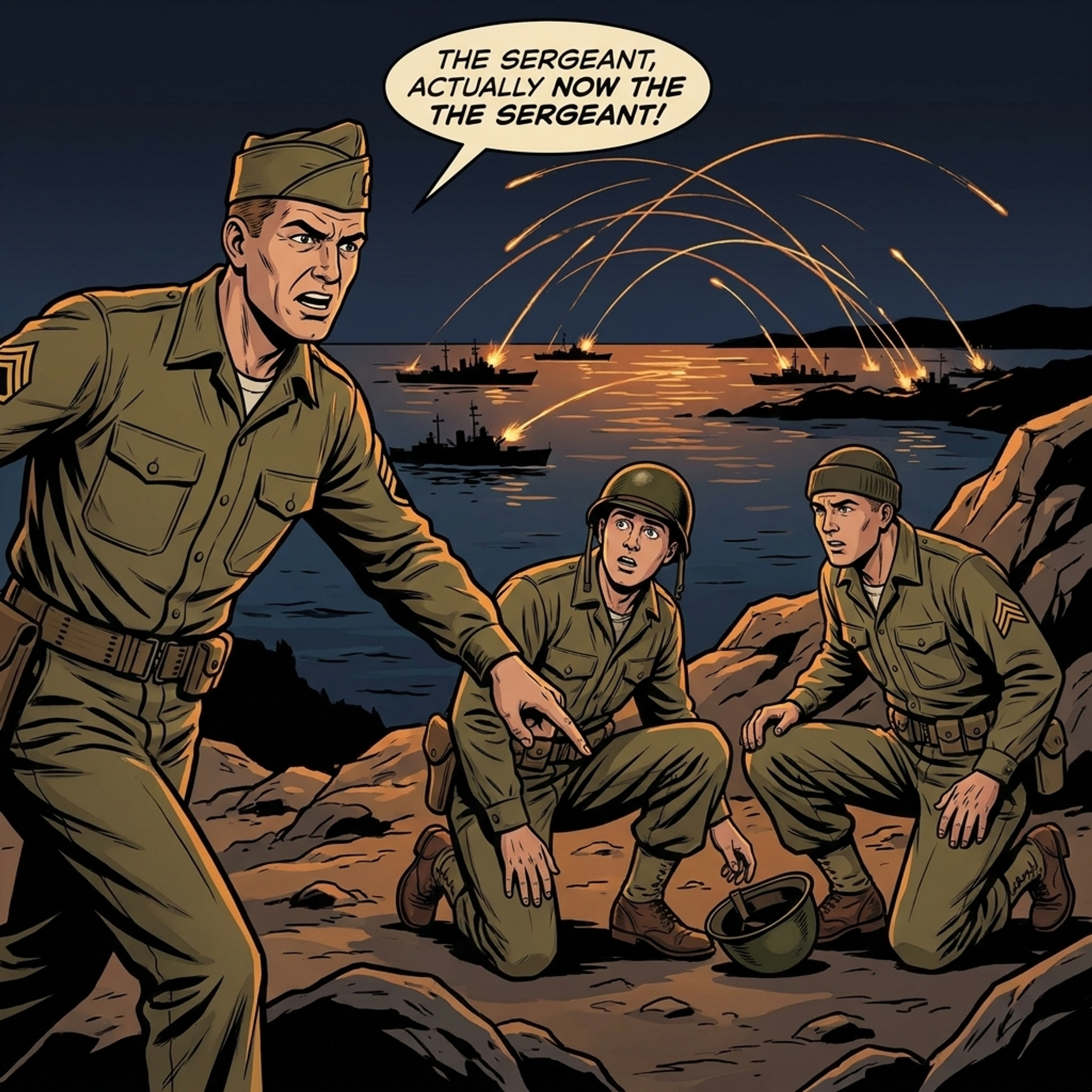
Page 5
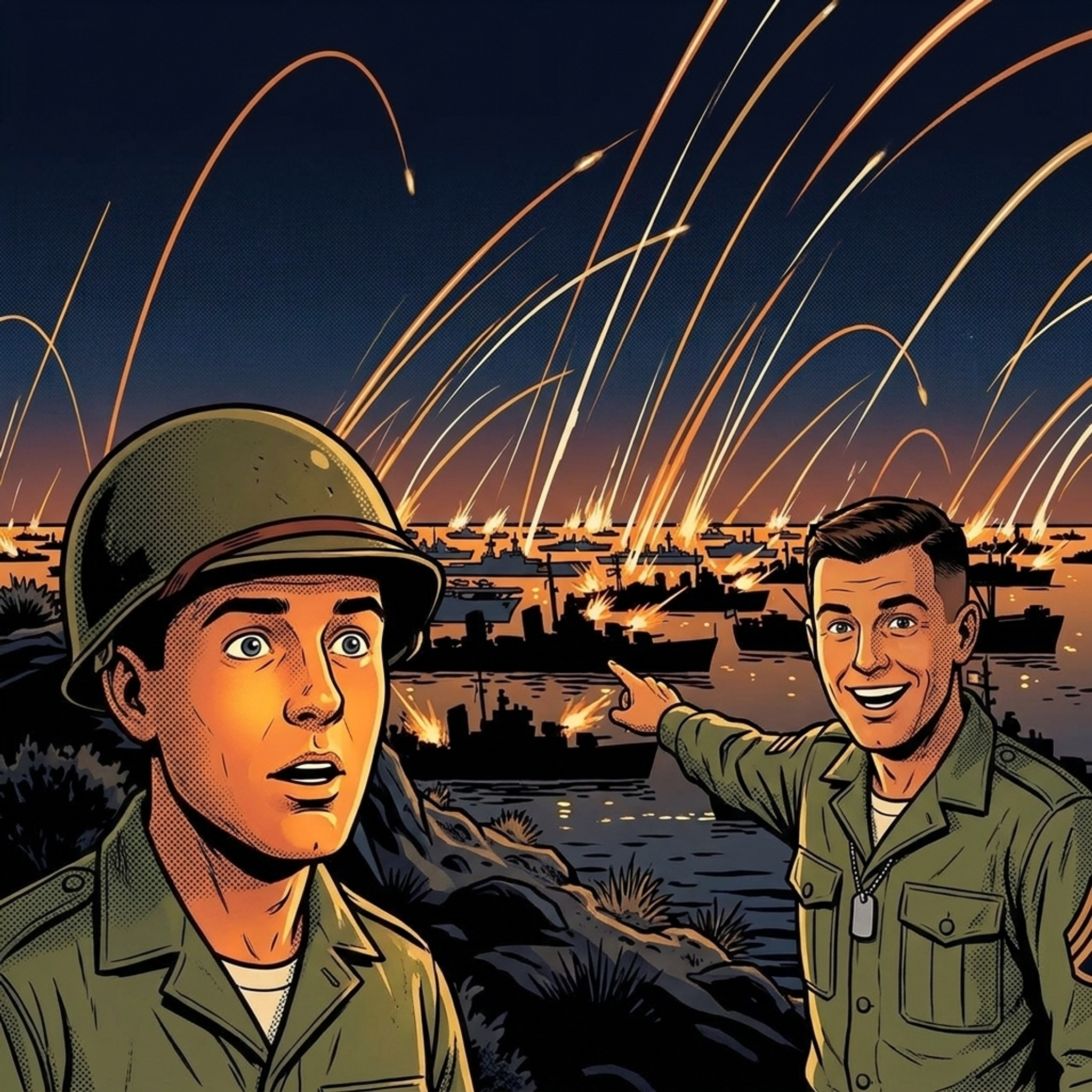
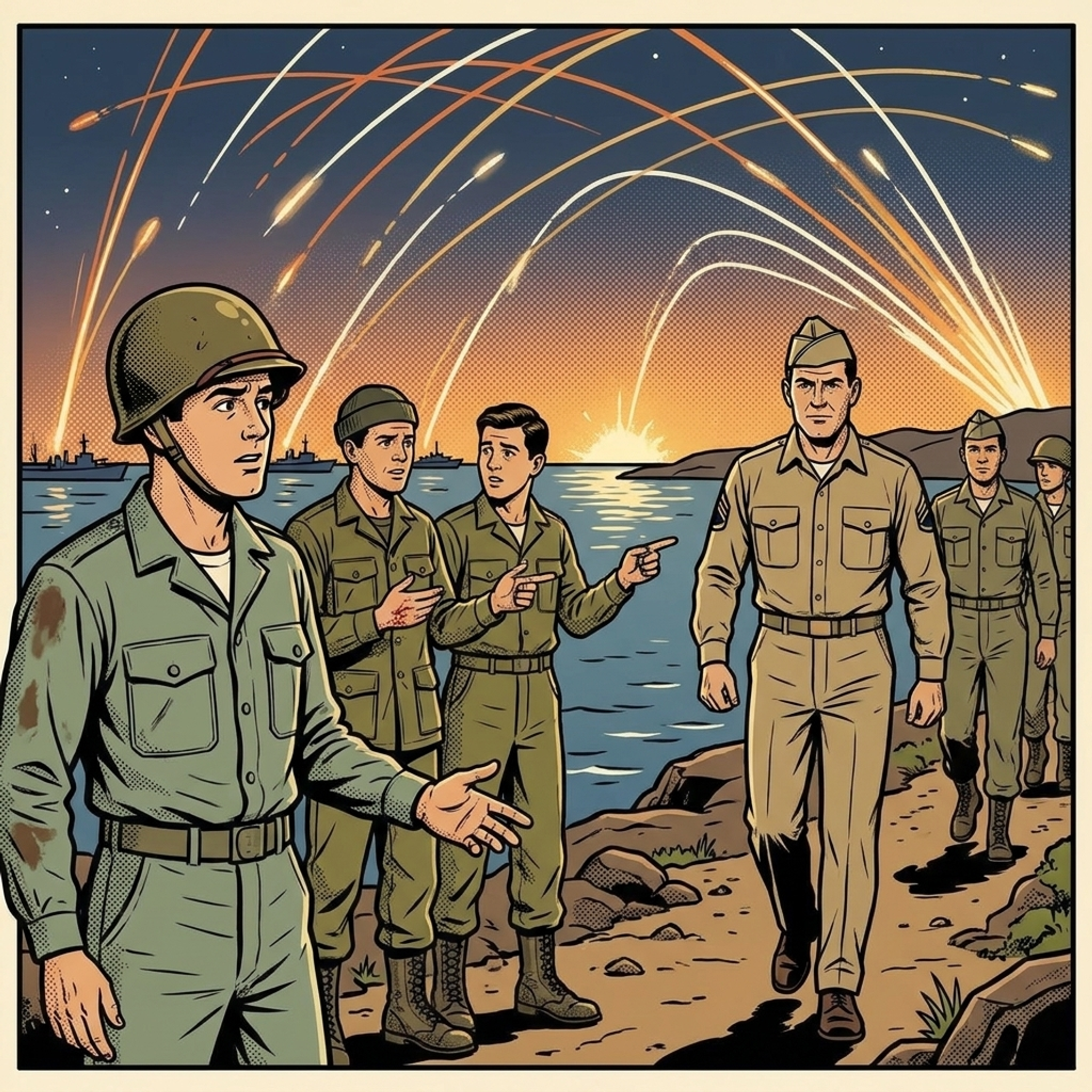
But why? Why was the whole Navy shooting at once? Wayne looked at the men around him. Nobody knew. He turned to his sergeant. "We asked our superiors what was going on," Wayne remembered, "and they went to find out."direct
Page 6
The sergeants walked away into the dark. Wayne and the others waited on the hill. The guns kept booming. The sky kept blazing. Every second felt like a minute. Every minute felt like an hour. Still the lights kept going up.bridge
Page 7
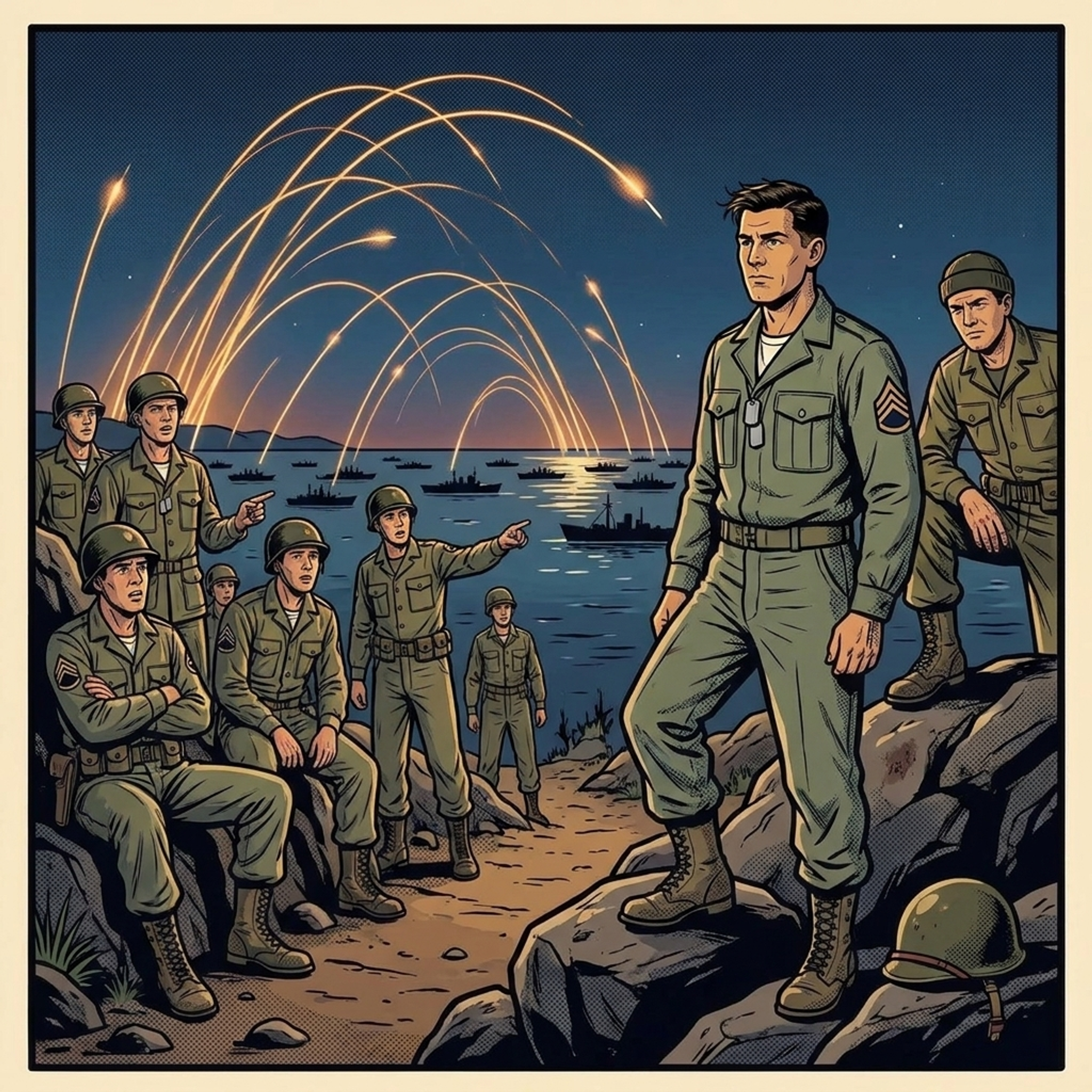
Then footsteps - fast ones - coming back up the hill. The sergeants returned. Their faces were not smiling anymore. "They come back and told us to take cover and not to come out until told to do so."direct
Page 8
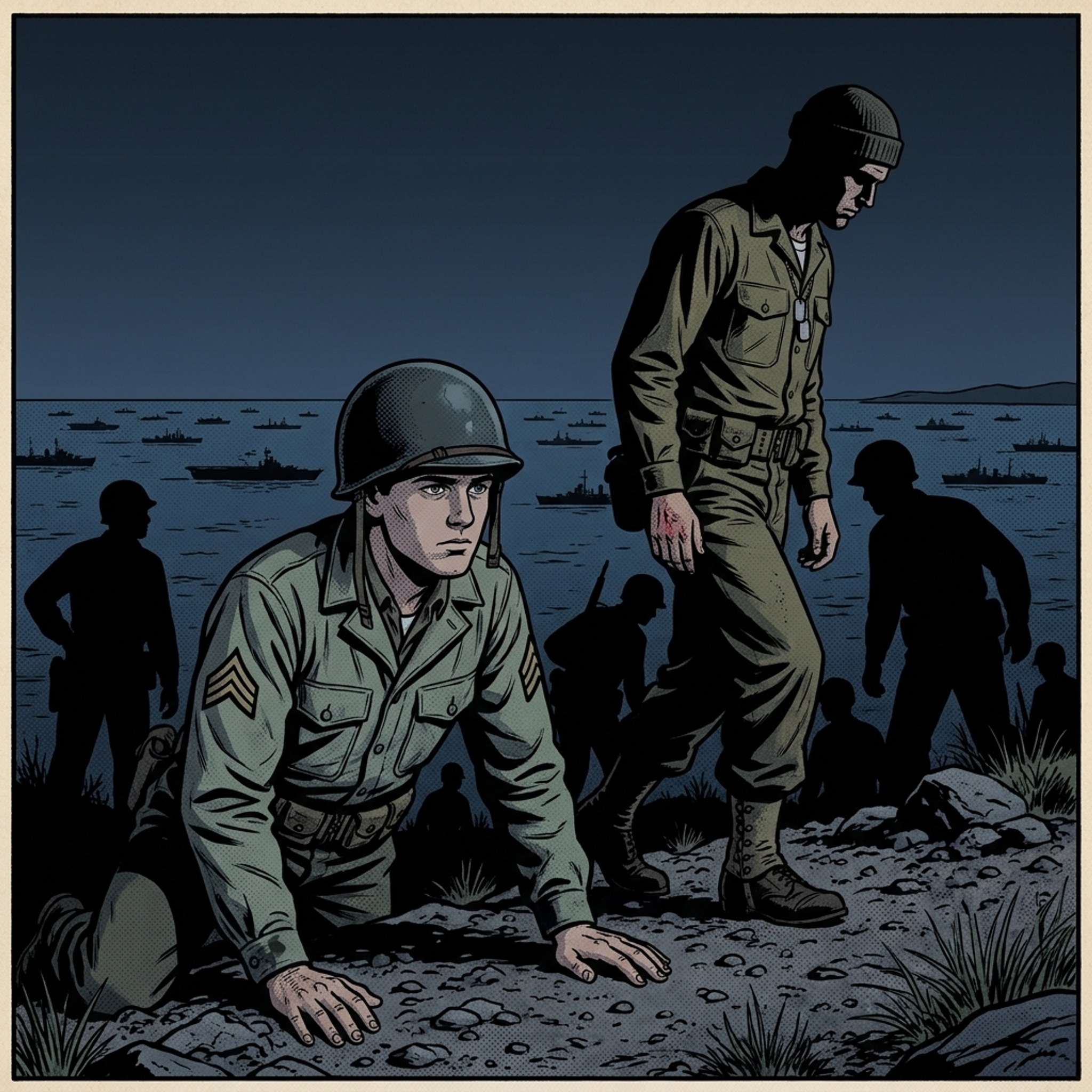
Wayne dropped. Everyone dropped. They pressed themselves flat against the rocky hillside. Down in the bay, the Navy still didn't know. The Navy just kept celebrating - gun after gun after gun, blazing away at the sky.paraphrase
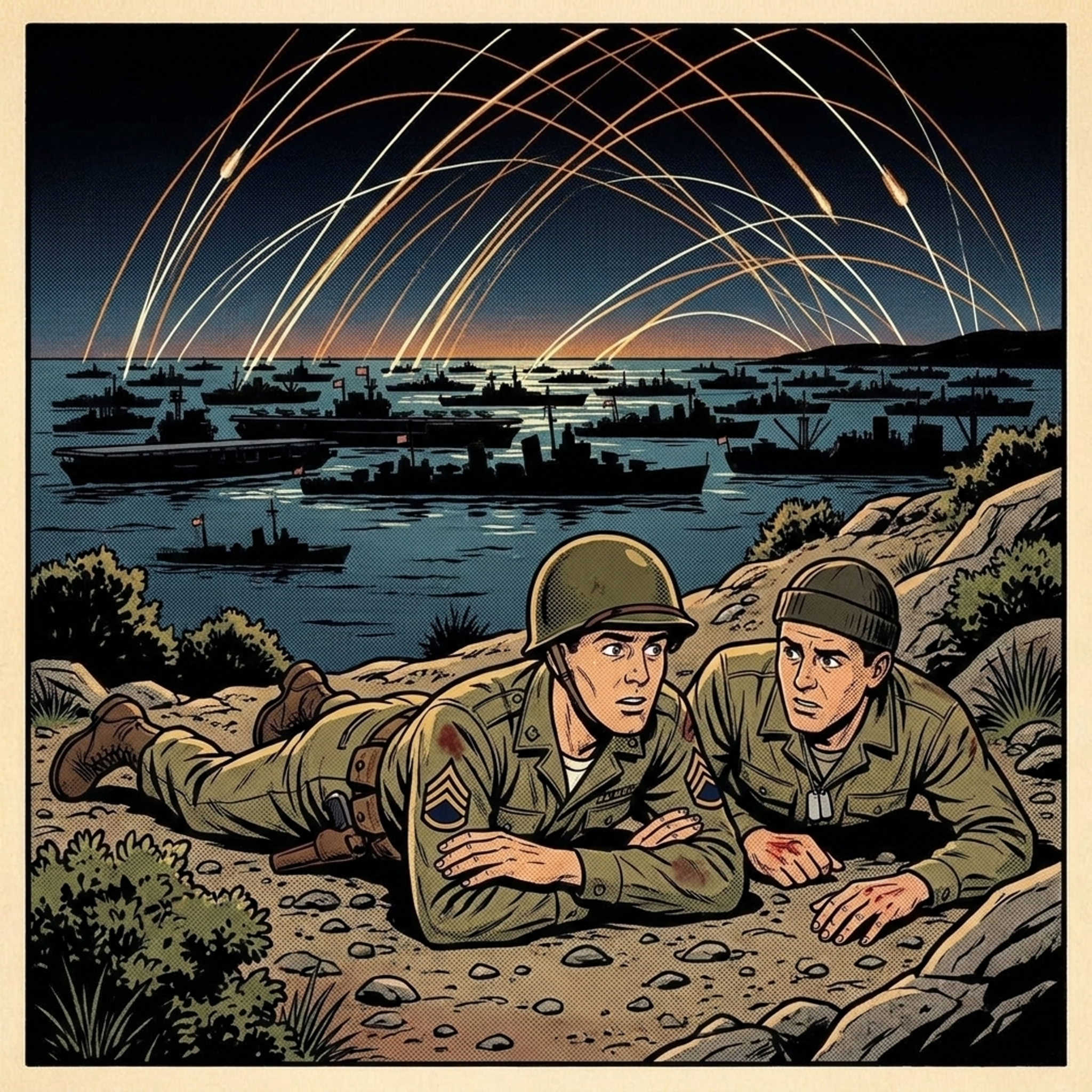
Page 9
Then Wayne understood. What goes up must come down. Every bullet the Navy fired into that dark sky was still a bullet - still made of metal, still moving fast. "All those bullets that went up had to come down and they were coming down in our area."direct
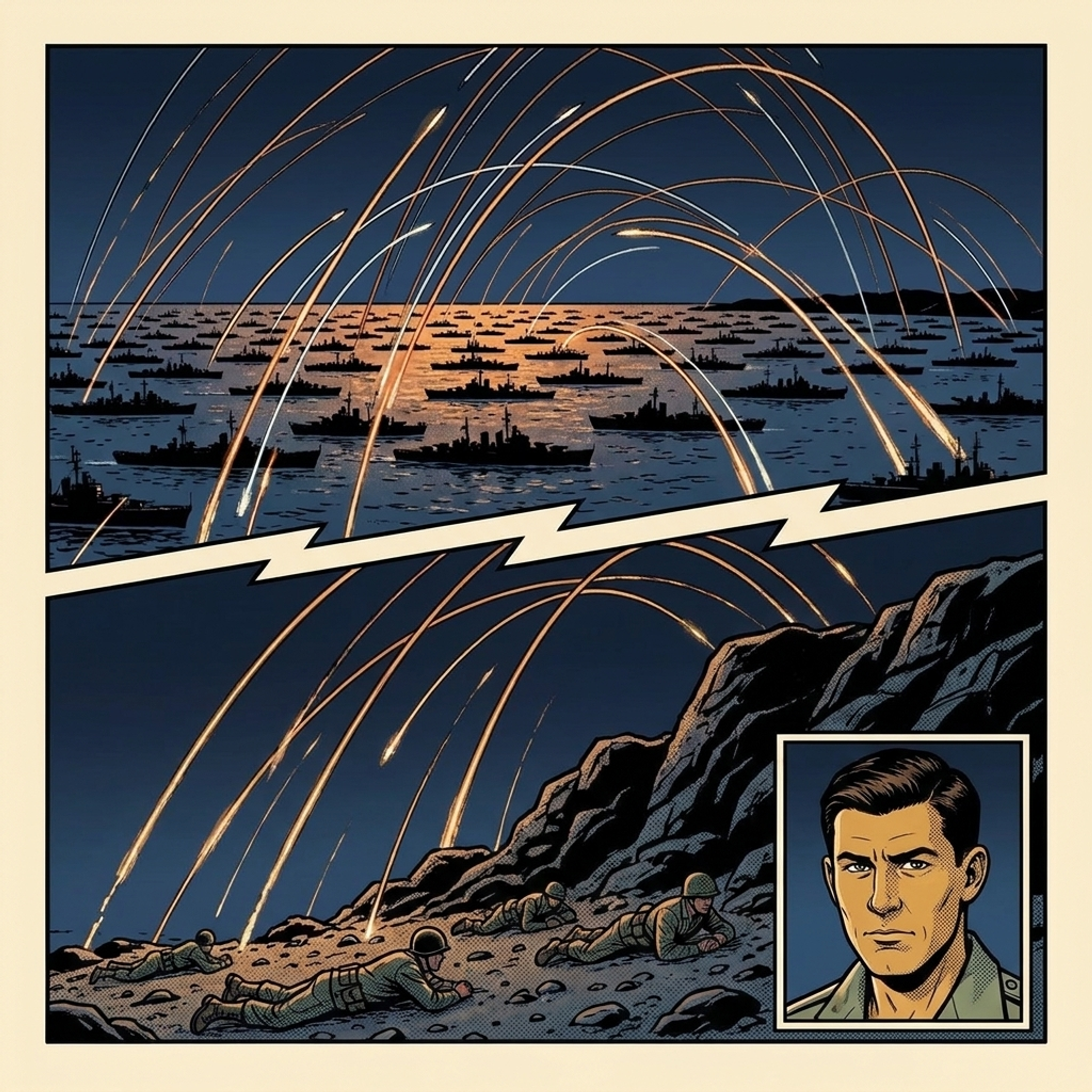
Page 10
The lights were still beautiful from down there on the ground. But now Wayne could hear them - a whistle, a tick, the snap of metal on rock. All around him. He did not move. He waited. That was the order, and he would keep it.bridge
Page 11
At last the guns went quiet. The order came: all clear. Wayne stood up slowly. His legs were stiff. The bay below was dark and still. The biggest celebration in the world was finally over. But it had cost something. "Thirteen men got killed that night," Wayne said quietly.direct
Page 12
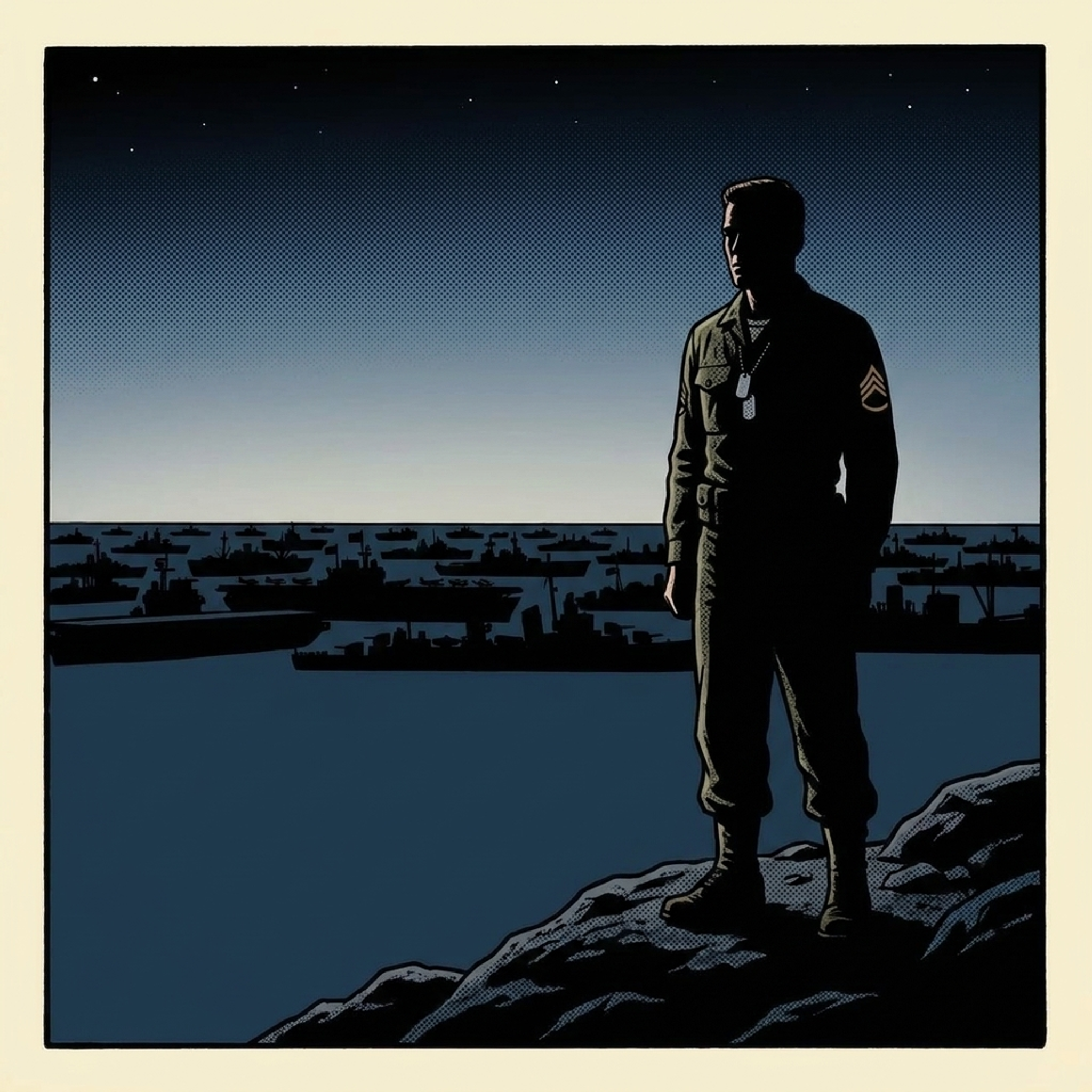
Wayne looked out at the silent bay - two thousand ships resting in the dark. The war was really over. He had made it through the fighting. He had made it through the celebration too. He had learned that sometimes the bravest thing is the hardest thing: stay still, stay low, and wait for the all clear.paraphrase