One last look before we draw it
Your pages aren't painted yet. Here's every place your story happens and what each page will show — when it looks right, press the button below to start drawing. It takes about 10 minutes, and we'll email you the moment your book is ready.
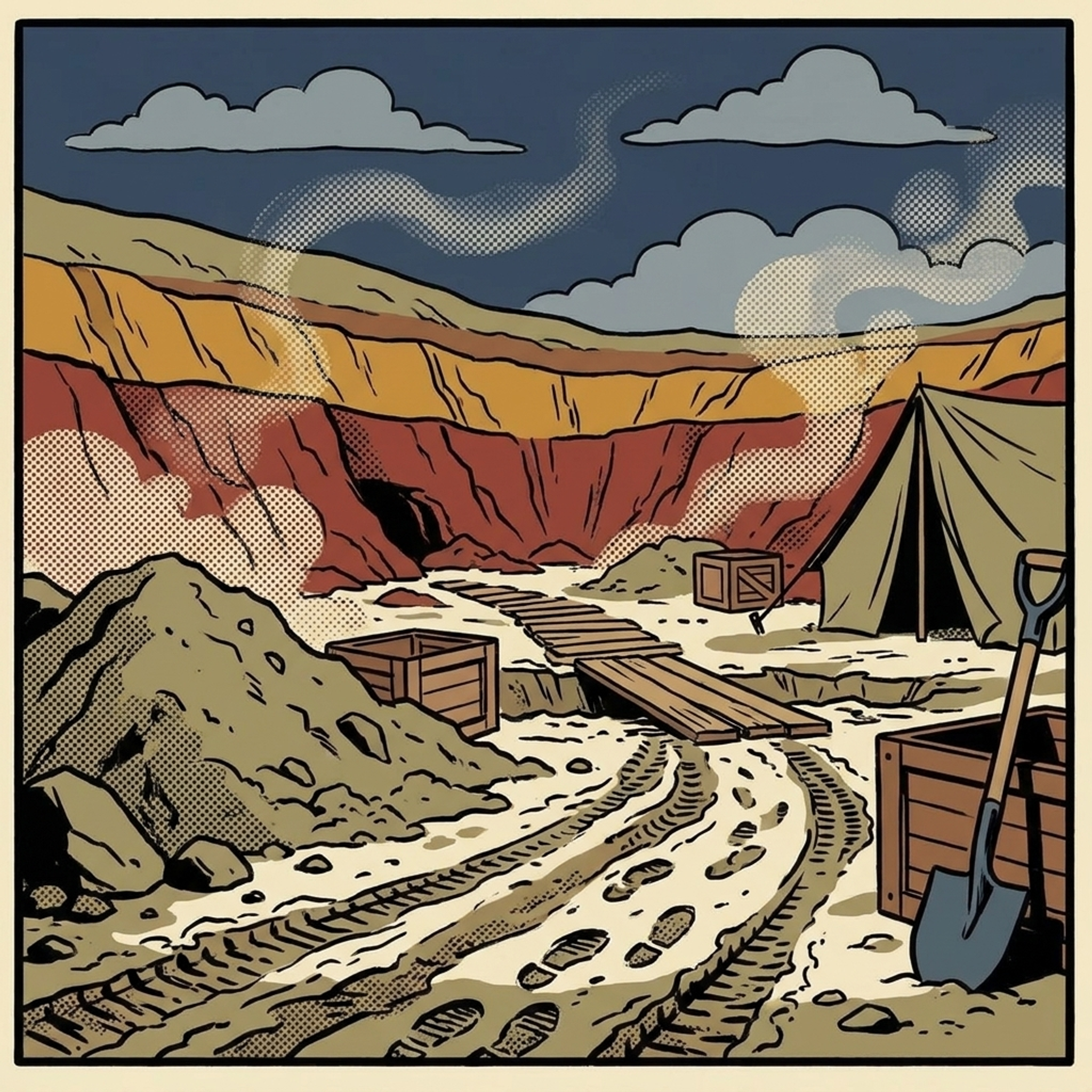
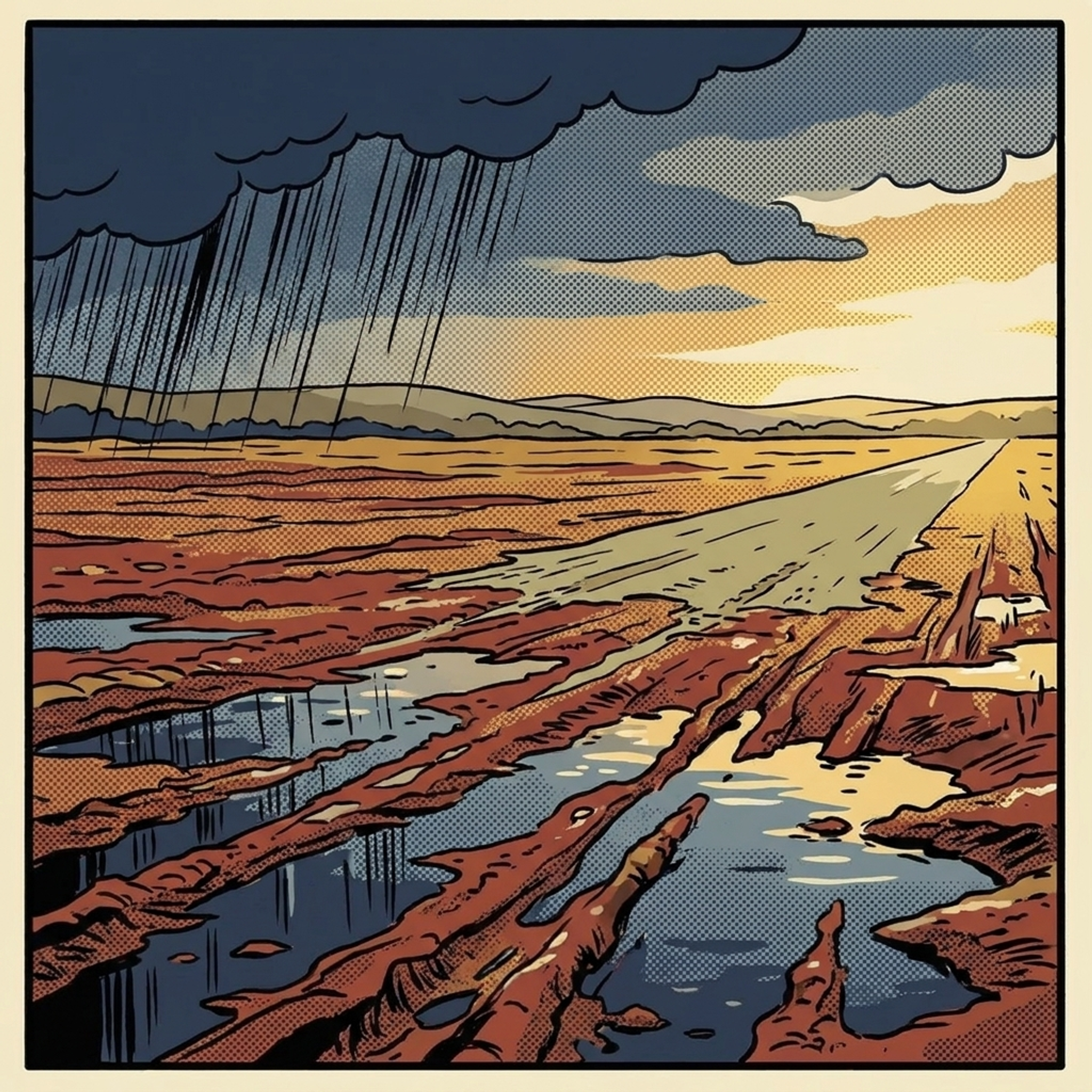
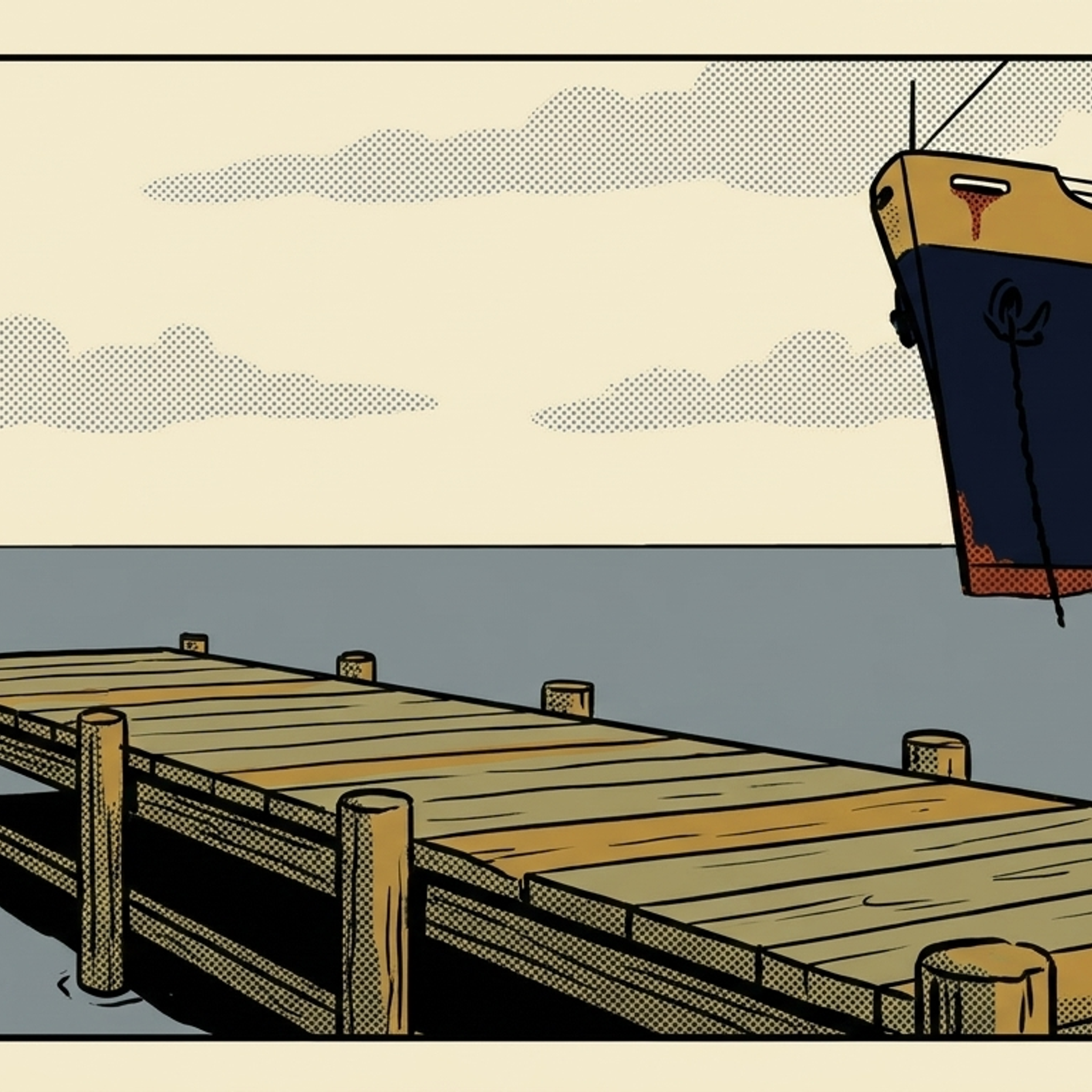
The places we'll draw
Have a real photo of one of these places — the actual house, a landmark? Click a place to add the photo and lock the AI to it.
What each page will show
01
Page 1 — the words
Wayne Wilberg climbed up into the cab of his heavy truck before the sun was even up. He was a Marine — and he was a truck driver. "I hauled lots of dirt," he would say, plain and proud as anything.
The picture
Wide, quiet illustration: Wayne's boots find the running board and he pulls himself up into a massive, olive-drab military truck. The cab is high off the ground. The sky behind him is deep purple going to gray — not yet light. His dog tag swings forward as he grabs the door frame. The truck is enormous beside him, its empty bed stretching back into shadow. The mood is calm, purposeful, alone
"I was a truck driver. I hauled lots of dirt."
02
Page 2 — the words
Then the order came down — and it was a big one. "We have to build an airstrip," the sergeant said. "From nothing. In thirty-six hours." Wayne looked out across the field in front of them. It was nothing but mud.
The picture
A sergeant stands before a cluster of Marines in green dungarees in the gray early light. Wayne is among them, looking past the sergeant at a vast, flat, muddy field — no runway, no gravel, nothing. Red-brown mud stretches to the horizon. The Marines' faces are serious. The sergeant's arm is extended, pointing at the empty field. The scale of the task is visible: the field goes on and on
"We had to build an airstrip and we built it in 36 hours."
03
Page 3 — the words
Thirty-six hours. Wayne looked at that field of mud, then looked at his truck. The truck bed was empty. He took a breath — and pulled forward.
The picture
Close on Wayne in the truck cab, both hands on the wheel, jaw set, eyes on the muddy field ahead. Through the windshield we see the enormous empty field stretching away. The truck bed behind the cab is completely empty — we can see it in the side mirror. The engine has just turned over; a faint puff of exhaust rises. This is the moment of beginning
04
Page 4 — the words
The convoy of trucks roared to the hillside where the dirt was waiting. Shovels bit the earth. Engines growled. Load after load piled into the truck beds — heavy, heaping, packed to the top. Wayne's truck filled up, and he turned back toward the field.
The picture
A hillside alive with activity: six or seven olive-drab trucks are lined up, and Marines with shovels are loading dirt into the truck beds in a blur of effort. Wayne's truck is in the foreground, its bed piling high with red-brown earth. Dust and diesel smoke hang in the air. Faces are focused and working. The sense is of a great engine — human and mechanical — grinding into motion
"I was a truck driver. I hauled lots of dirt."
05
Page 5 — the words
Then the rain came. "It rained a lot," Wayne said later. "We would wear ponchos much of the time." The mud got worse. Wheels spun and sank. The field swallowed the dirt almost as fast as the trucks could dump it.
The picture
Rain pours straight down in silver sheets. The Marines work in green ponchos that shine with water. Wayne's truck is trying to move through deep mud — one rear wheel is spinning, flinging a rooster-tail of muddy water. Other trucks in the background are barely visible through the rain. The field looks hopeless — rutted, flooded, dark. But the men keep moving
"It rained a lot. We would wear ponchos much of the time."
06
Page 6 — the words
Wayne dumped his load. Dirt crashed down onto the wet field with a heavy thud. The truck bed was empty again. He turned the wheel — and headed back for more.
The picture
The truck's dump bed lifts, and a cascade of red-brown dirt thunders out onto the field below. Wayne watches from the cab as the load falls. Then the bed drops back down — empty. In the background, another truck is already returning from the dirt pile, headlights on even though it is daytime because the rain is so heavy. The rhythm is becoming visible: a loop, over and over
"I was a truck driver. I hauled lots of dirt."
07
Page 7 — the words
Load after load after load. Wayne lost count. His hands knew the wheel, his foot knew the gas. The airstrip was rising — inch by inch — but the clock was still running.
The picture
A montage-style illustration divided into four quadrants showing the same scene repeating: Wayne gripping the wheel, the truck filling with dirt, the dump of a load, the empty bed, Wayne gripping the wheel again. In a corner of the illustration, a thin line of airstrip is just barely visible taking shape — lighter-colored packed earth against the dark mud. Sweat and rain are indistinguishable on Wayne's face
"We had to build an airstrip and we built it in 36 hours."
08
Page 8 — the words
Between dirt loads, Wayne swung his truck down to the bay where the big transport ships sat low in the water. "I hauled lots of supplies from the LST transports to the men," he said. Then he turned back — and the dirt hauling began again.
The picture
Wayne's truck is backed up near the water's edge where enormous transport ships — flat-bottomed, gray, enormous — are anchored close to shore. Marines are unloading crates and equipment onto trucks. Wayne's truck is loaded with supplies — crates and canvas-wrapped bundles. In the far background, beyond the ships, we can see the faint outline of the airstrip progress. Wayne is glancing that way even while he works at the docks — his mind is already back on the field
"I hauled lots of supplies from the LST transports to the men."
09
Page 9 — the words
Night fell. Wayne didn't stop. His headlights cut two bright lines through the dark, and his tires crunched over the dirt that was slowly, surely becoming a runway. He gripped the wheel and kept going.
The picture
Darkness. A line of trucks moves through the night, headlights blazing. The scene is lit from below by the headlights and from the side by the faint glow of work-lights on poles at the airstrip edge. Wayne's face is lit by his dashboard — determined, tired, eyes forward. The airstrip in the background is now clearly visible as a long pale strip against the dark mud — it is getting there. Stars are faintly visible above the rain clouds where they are beginning to break
"We had to build an airstrip and we built it in 36 hours."
10
Page 10 — the words
Thirty-six hours were almost gone. Wayne had one more load. He backed up, lifted the truck bed, and watched the last dirt fall into place. Then the graders moved in and smoothed it flat and level.
The picture
The final dump: Wayne's truck is in the foreground, bed raised, the last cascade of dirt falling in a golden cloud of dust catching the early morning light — the rain has stopped. Behind him, two heavy graders are moving in slow passes, smoothing and leveling the surface. Other Marines are standing back, watching. The airstrip is long and pale and almost finished. The truck bed, as the dirt falls away, is empty
"We had to build an airstrip and we built it in 36 hours."
11
Page 11 — the words
Then the engines cut. Silence. And then — from somewhere up in the sky — a drone. A plane circled low, dropped lower still, and landed. It rolled the whole length of the new runway and came to a stop. They had done it. "We had to build an airstrip," Wayne said, "and we built it in 36 hours."
The picture
A military plane — propeller-driven, olive-green — touches down on the freshly built runway in a rush of wind and spinning wheels. Marines in the foreground are watching, some with hands raised against the sun to shade their eyes. The runway stretches away in both directions — packed, solid, real. The plane's wheels kick up a small rooster-tail of dust. The sky above has opened up: blue and gold morning light pours through breaking clouds
"We had to build an airstrip and we built it in 36 hours."
12
Page 12 — the words
Wayne's truck sat empty. He leaned against the door and watched the plane. He didn't need any fancy words. He was a truck driver. He had hauled lots of dirt. And now — planes could land.
The picture
Final spread, warm and quiet. Wayne leans against the side of his truck, arms folded, watching the plane at the far end of the runway. His poncho is off. His dungarees are caked with dried mud. His dog tag hangs at his collar, still. The truck bed behind him is completely empty — no more dirt to haul. But the runway is full, solid, stretching into the distance where the plane has stopped. The light is golden morning. Wayne's face is calm, tired, and deeply satisfied. The last image is the empty truck bed and the finished runway in the same frame
"I was a truck driver. I hauled lots of dirt."
See something off? Change what a picture will show, or add a note — fixing it here is free, before any image is made. To change the words, use the Story step. You can still redraw or edit any page afterward; nothing here is final.