Your book

Flip through the book the way a child will hold it. The PDF tabs show exactly what gets printed. If something feels off, jump back to the step that owns it — the wizard remembers everything you've done.

Need to change something? ← Story ← Cast ← Pages ← Cover
Cover
Custom art
Title + dedication
Sheet 1
Story spreads
12
The real story
11 quotes · 2 photos
Back cover
Blurb + brand
Marine Helps a Japanese Boy
This story belongs to
— — — — — — — —
Marine Helps a Japanese Boy
KindredPages
Spread 1
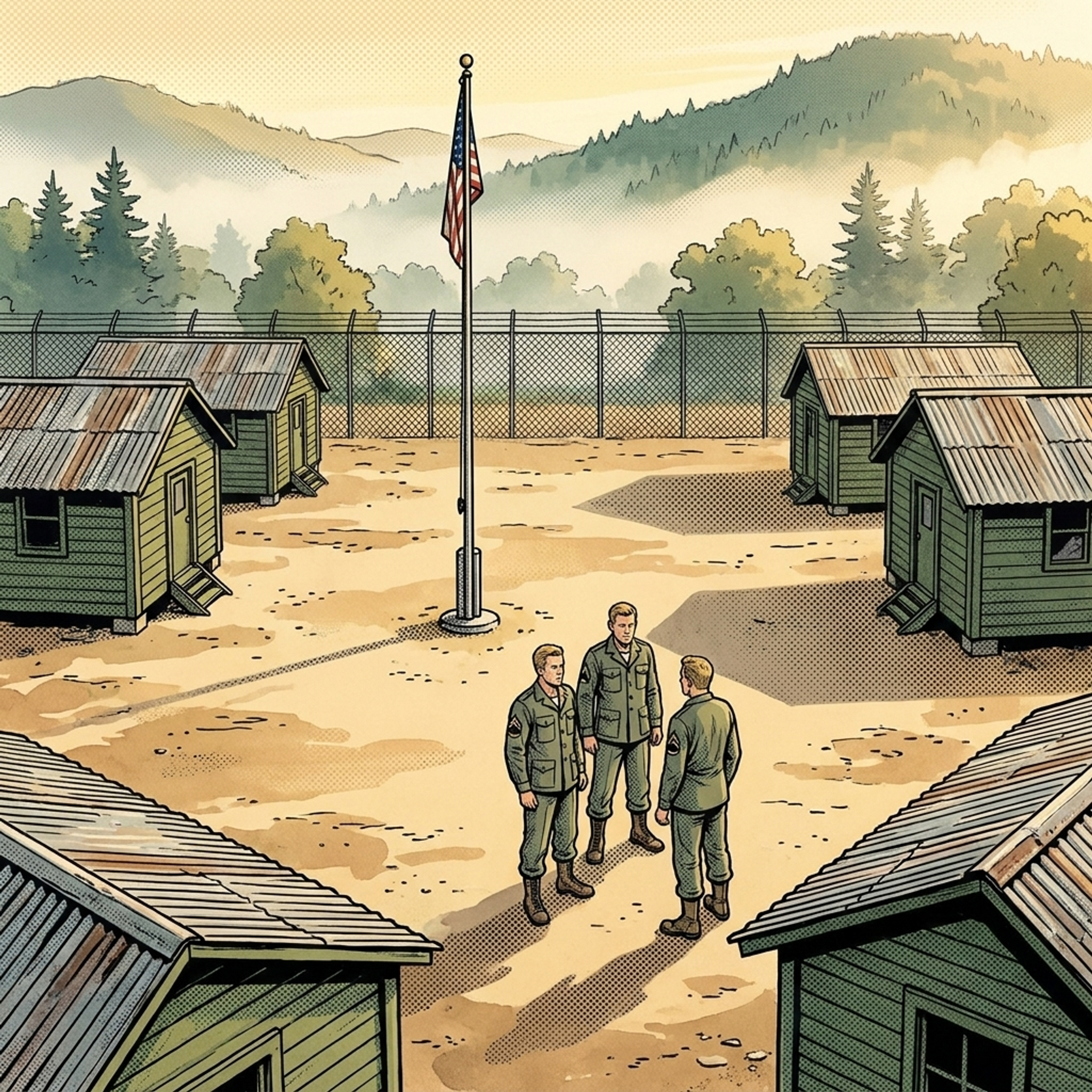
The fighting was over. Wayne Wilberg and his fellow Marines had come to Japan as part of the occupation - keeping the peace now that the guns had gone quiet. The base was calm, but out in the hills, something else was waiting.
1
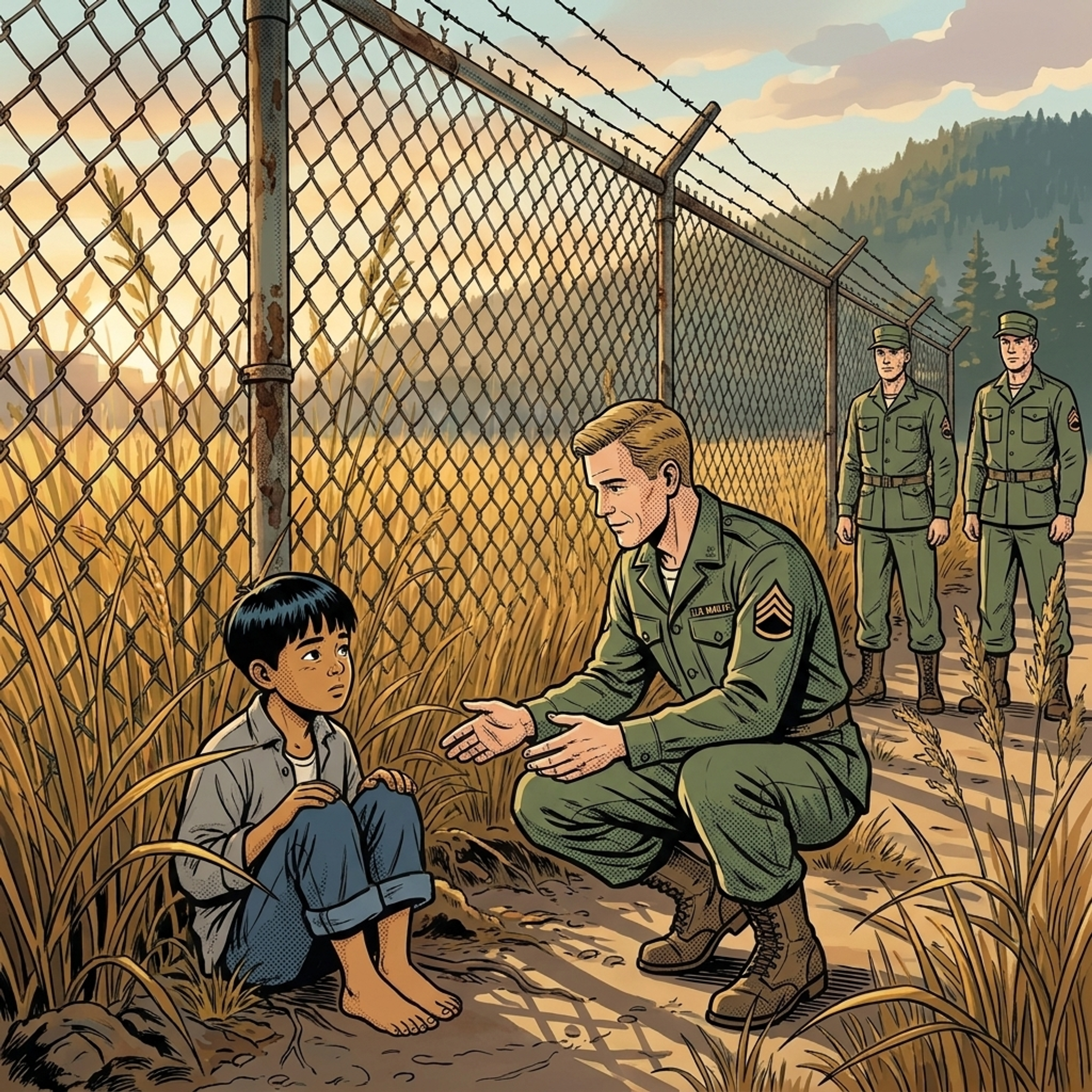
The children had been sent to the hills to get away from the fighting. Many were lost. But some survived - hungry, frightened, alone. One day, Wayne's group found a boy. Twelve years old. Thin as a reed. His eyes said everything his words could not.
2
Spread 2
Spread 3
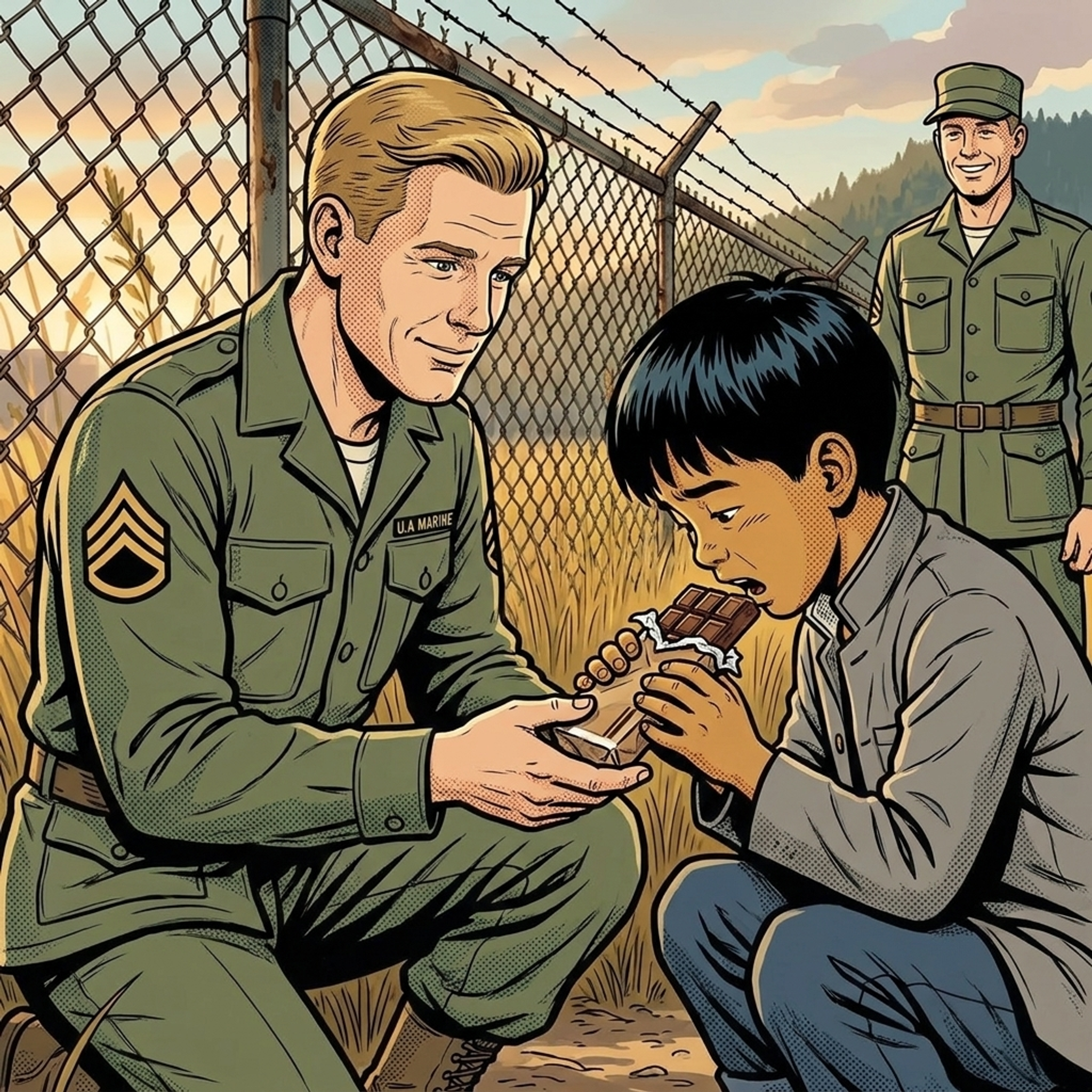
Wayne reached into his pocket and held out a candy bar. The boy stared at it. He had probably not eaten in days. Then - he took it. "We gave him a candy bar and he gobbled it up."
3
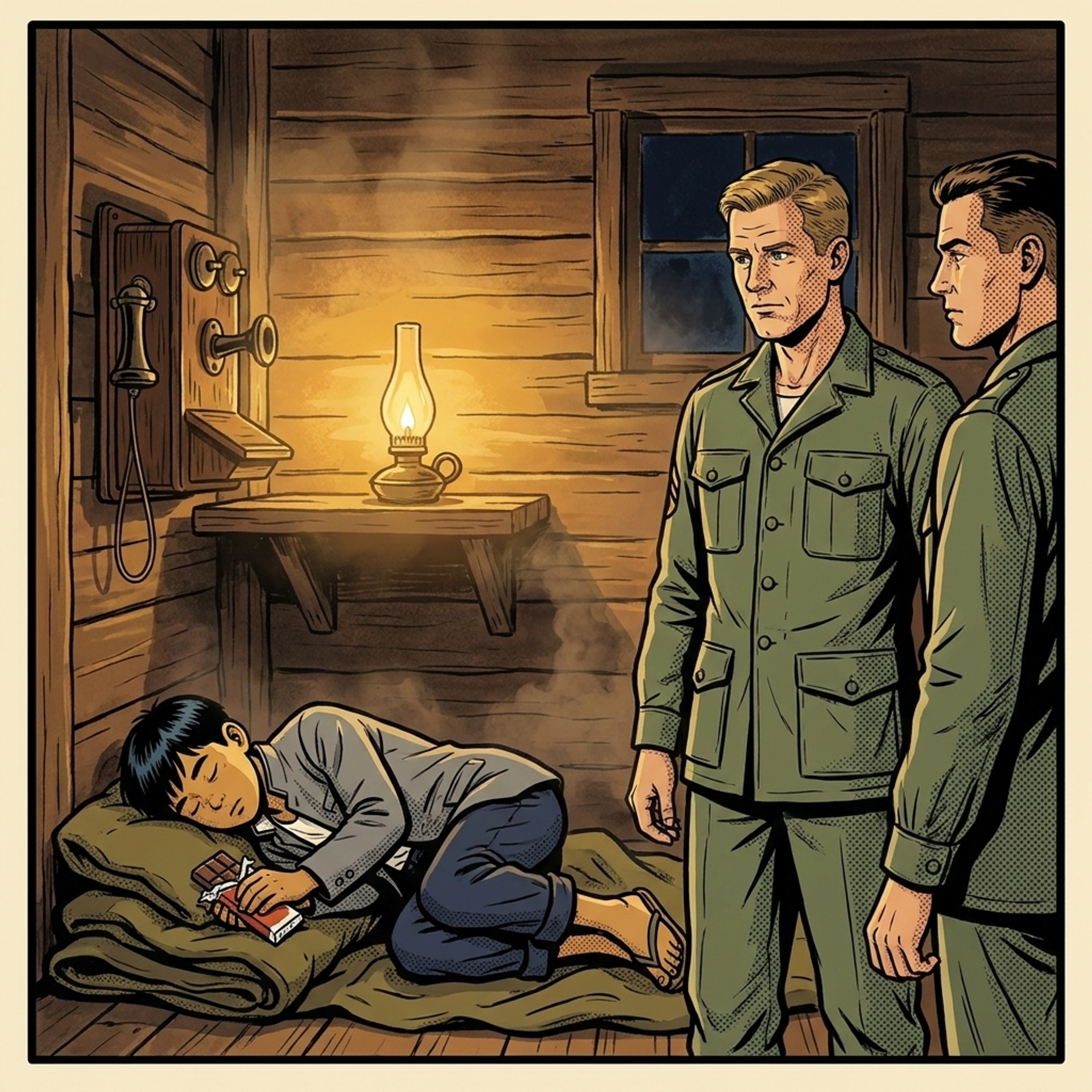
That night, the men made up their minds. "We made him a bed and snuck him in," Wayne said. They tucked the boy away and looked at each other - because they all knew the rule. "If they found out we had him, we would have been court-martialed."
4
Spread 4
Spread 5
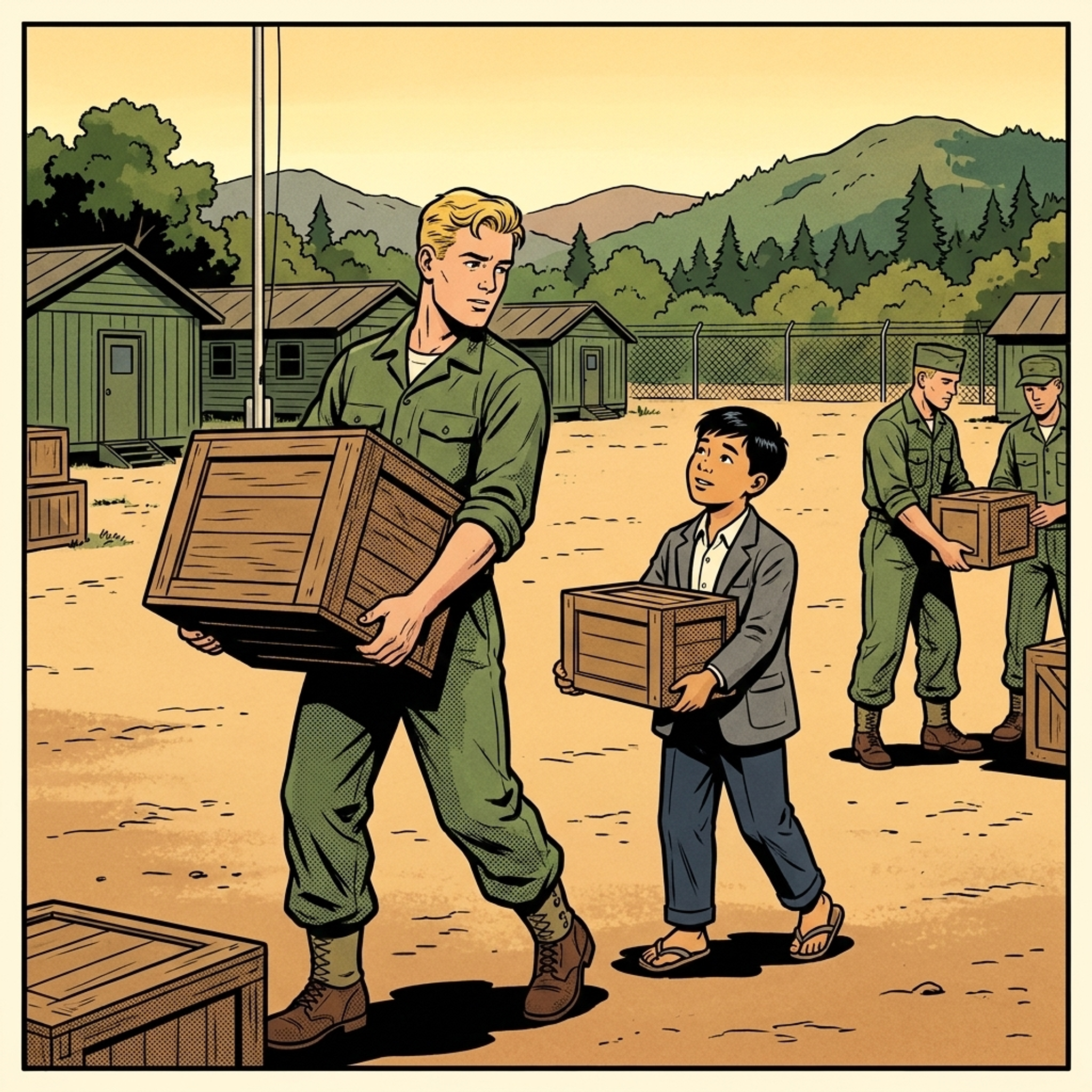
The boy stayed. There were no shared words between them - no English, no Japanese - but there were nods, and pointing, and shy smiles. Little by little, he learned the shape of the base. Little by little, he began to help.
5
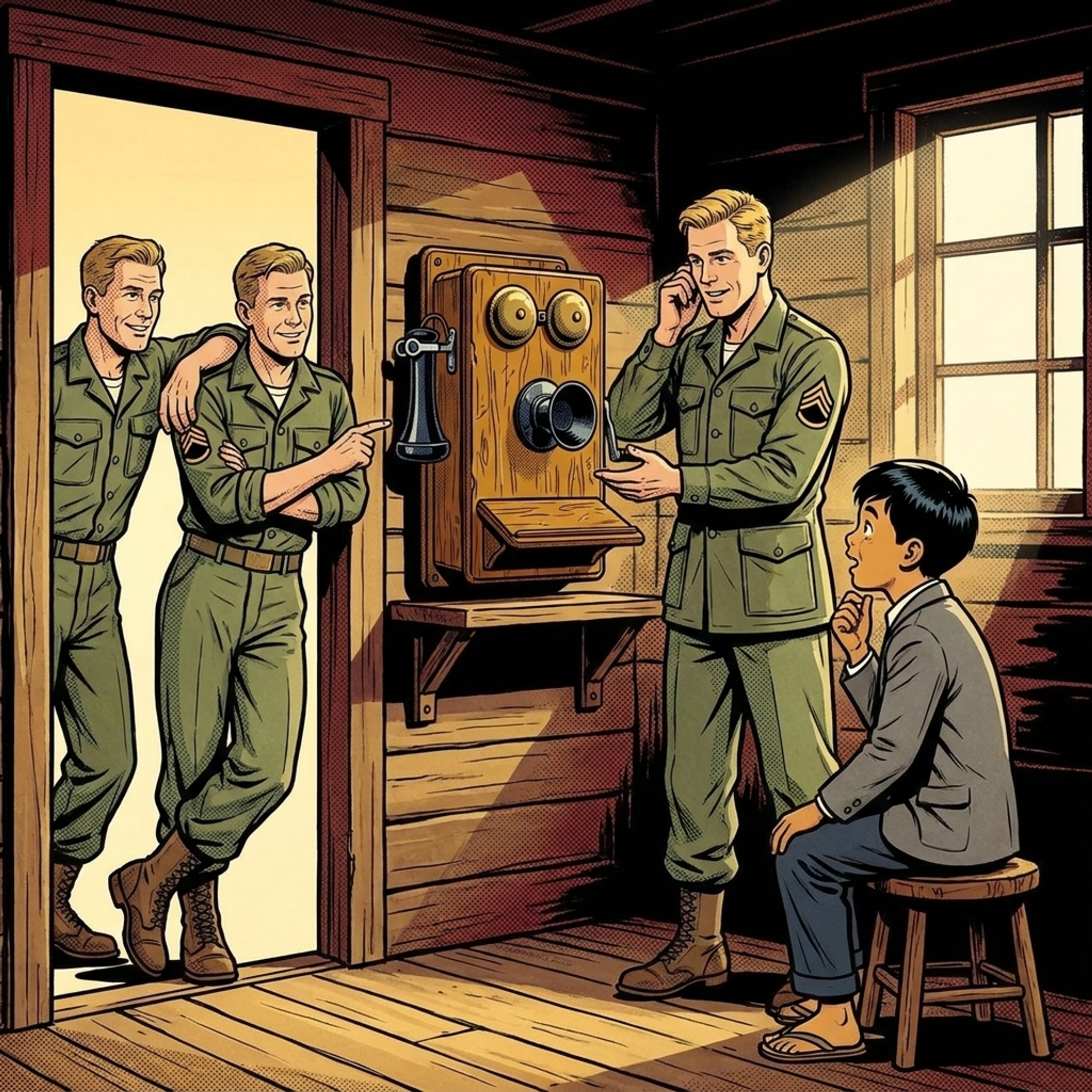
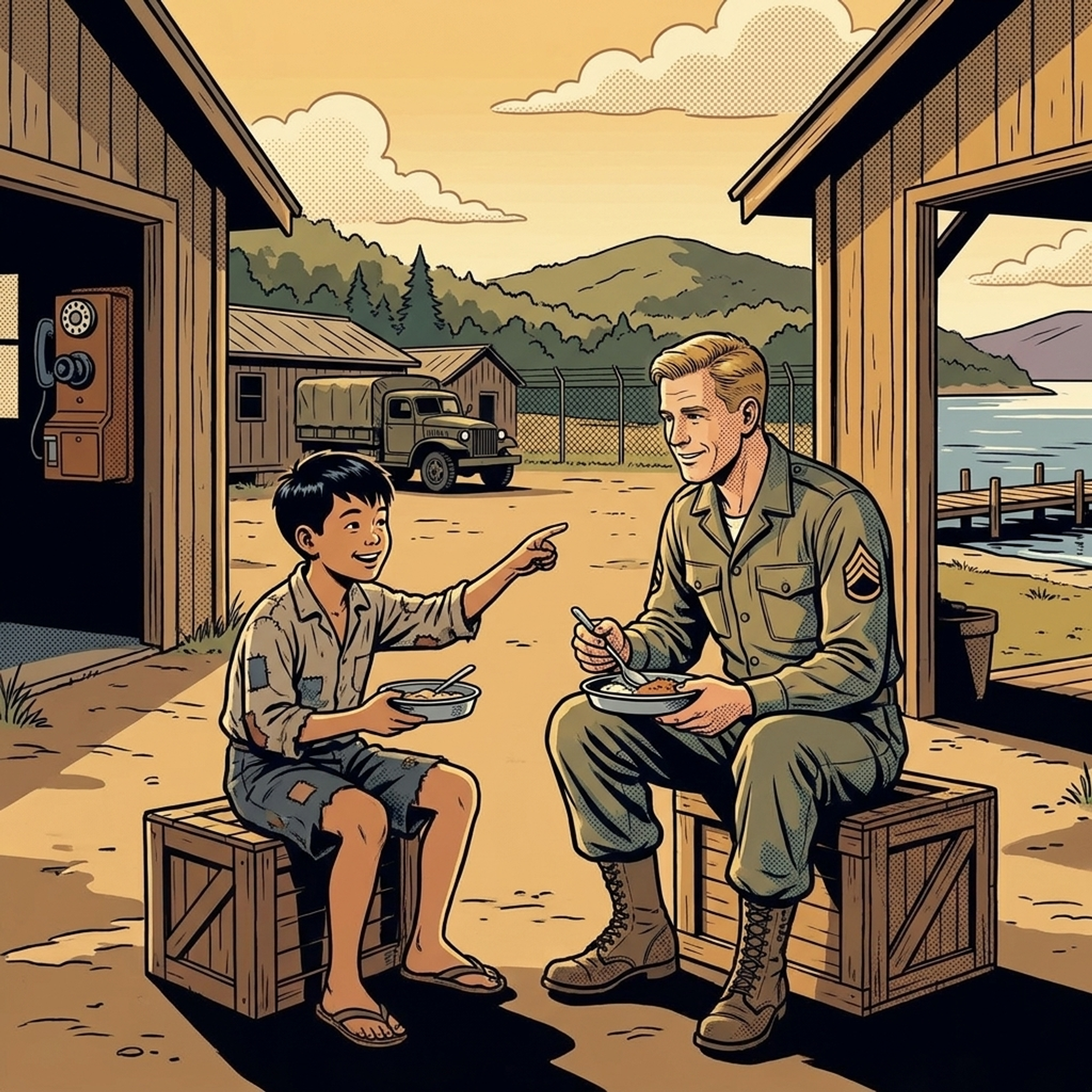
Then the men had an idea. They brought the boy inside and showed him the telephone. Wayne pointed to the phone. He pointed to the boy. He pointed outside, and waved his arms. The boy watched every move. He understood: if it rings - you run.
6
Spread 6
Spread 7
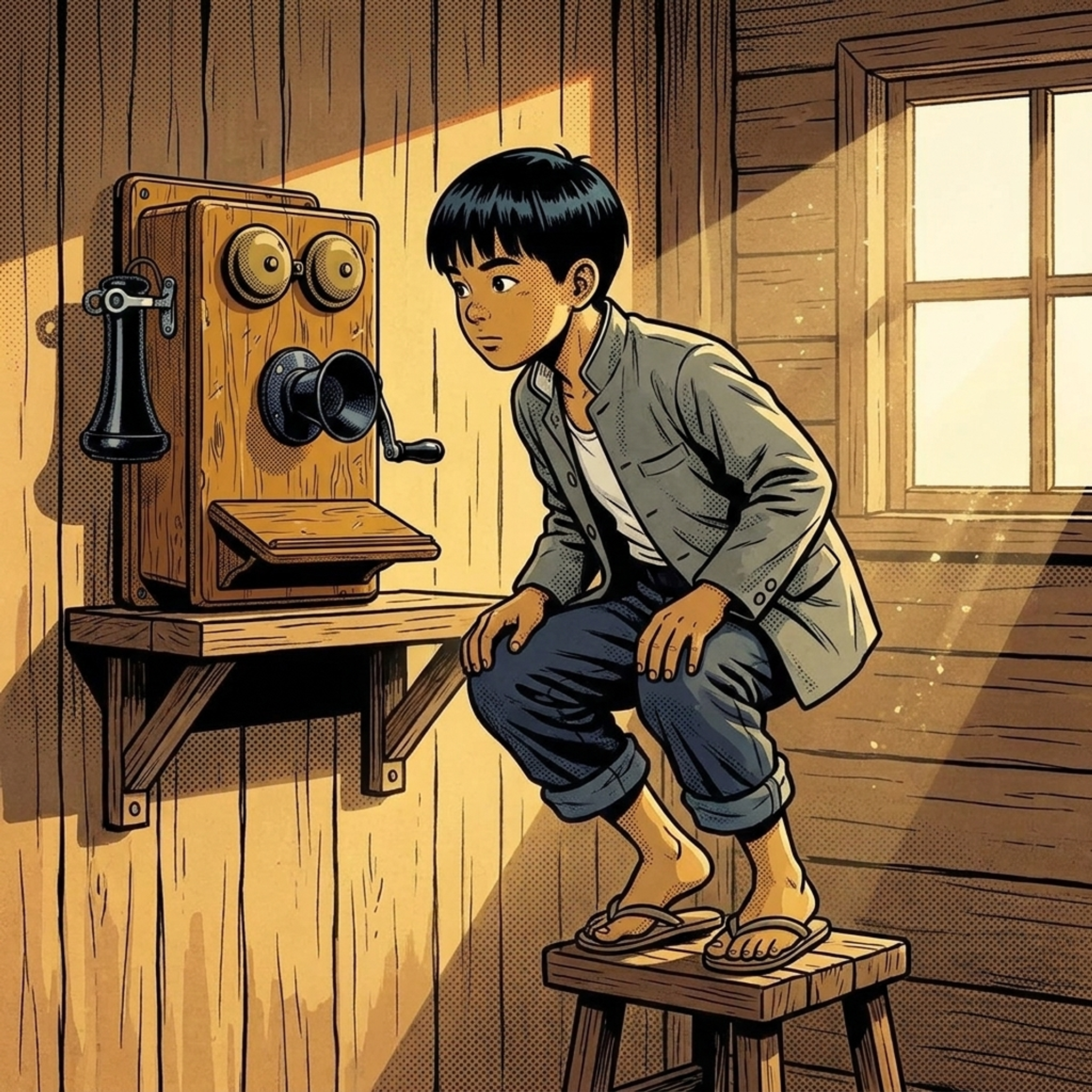
The boy sat very still. He watched the telephone the way a cat watches a bird. He didn't know a single word of English. He didn't know what to say when the men came running. He only knew one thing: the moment it rings, you go.
7
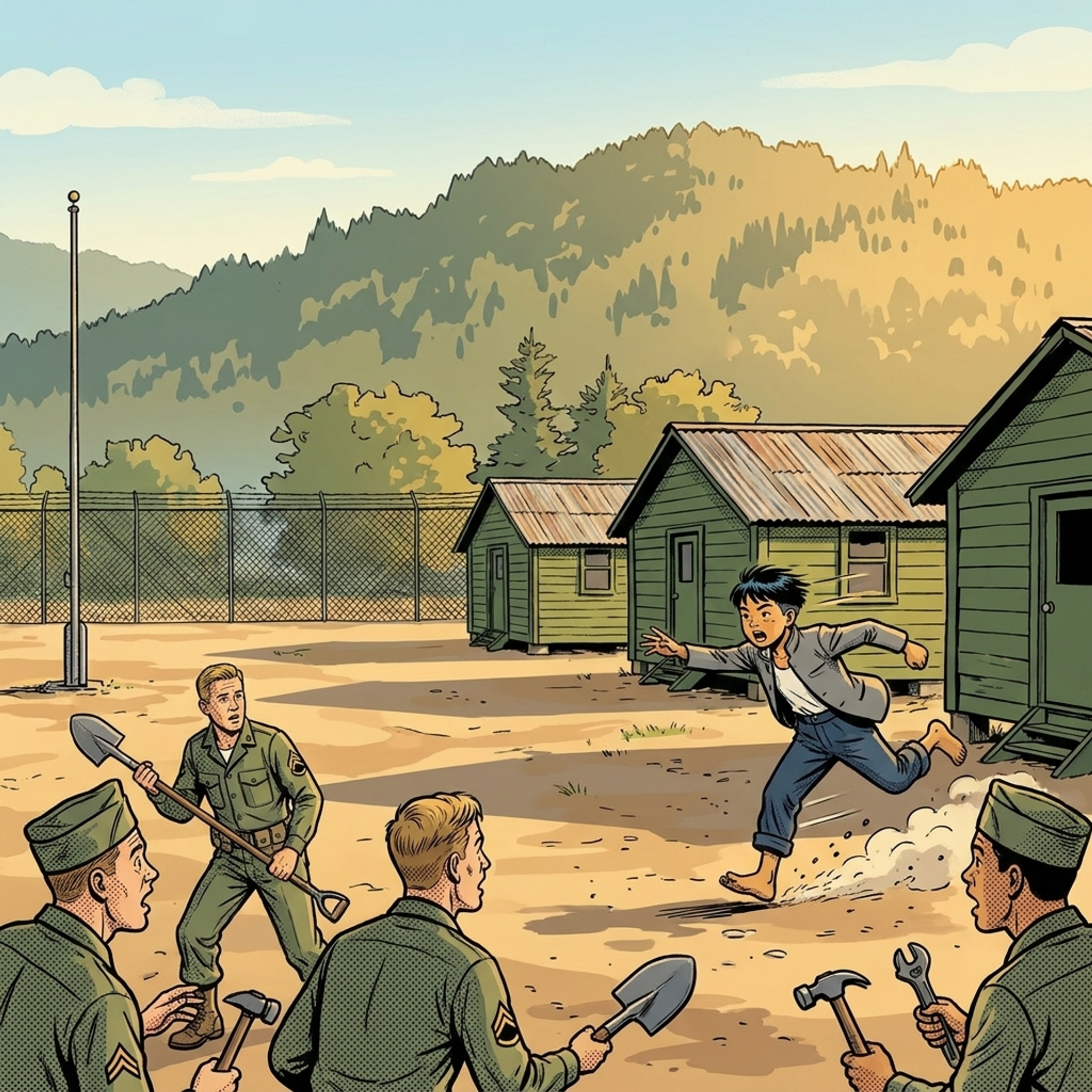
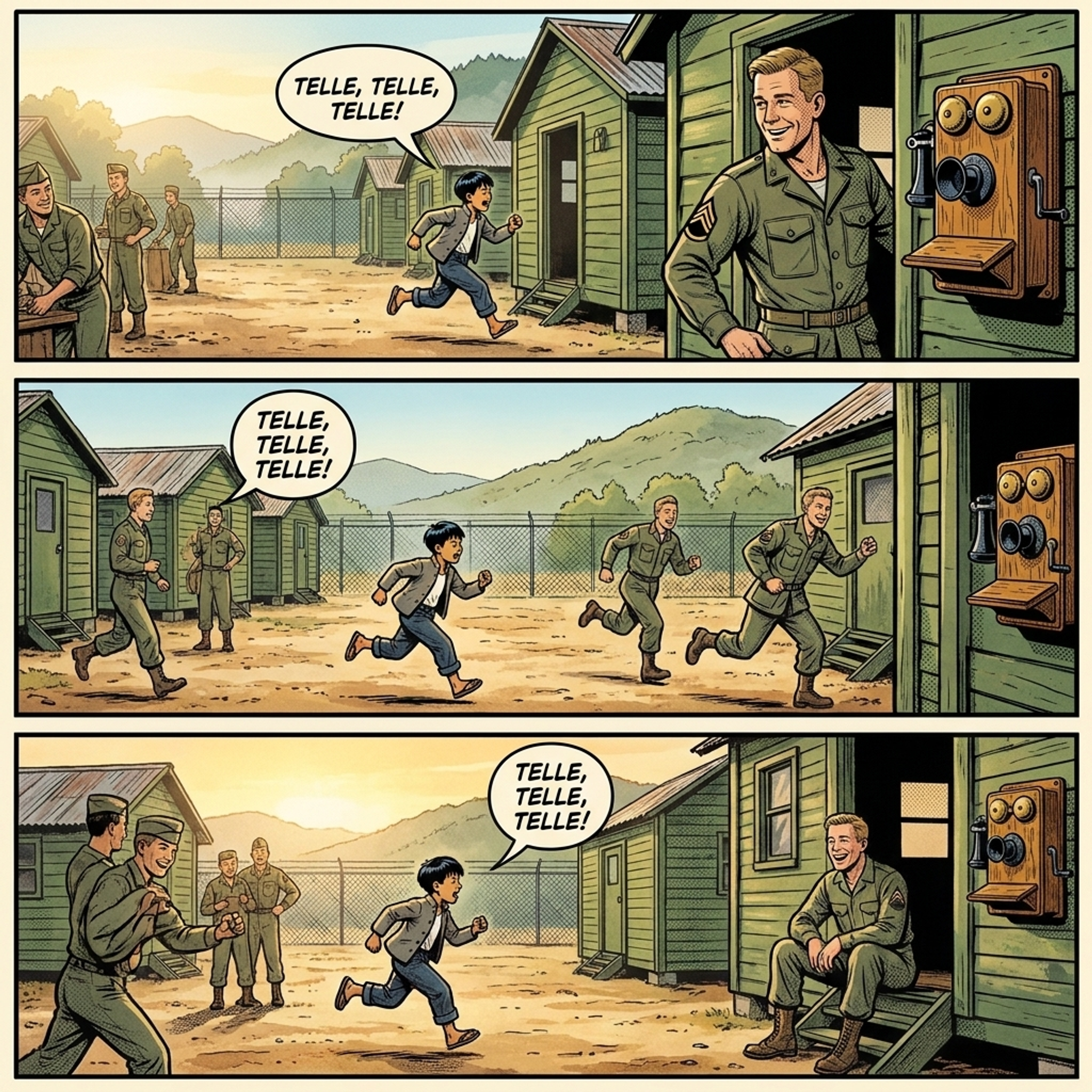
RING. The boy shot off that stool like a firecracker. He burst through the door, bare feet slapping the dirt, arms pumping, racing across the yard as fast as his legs could carry him.
8
Spread 8
Spread 9
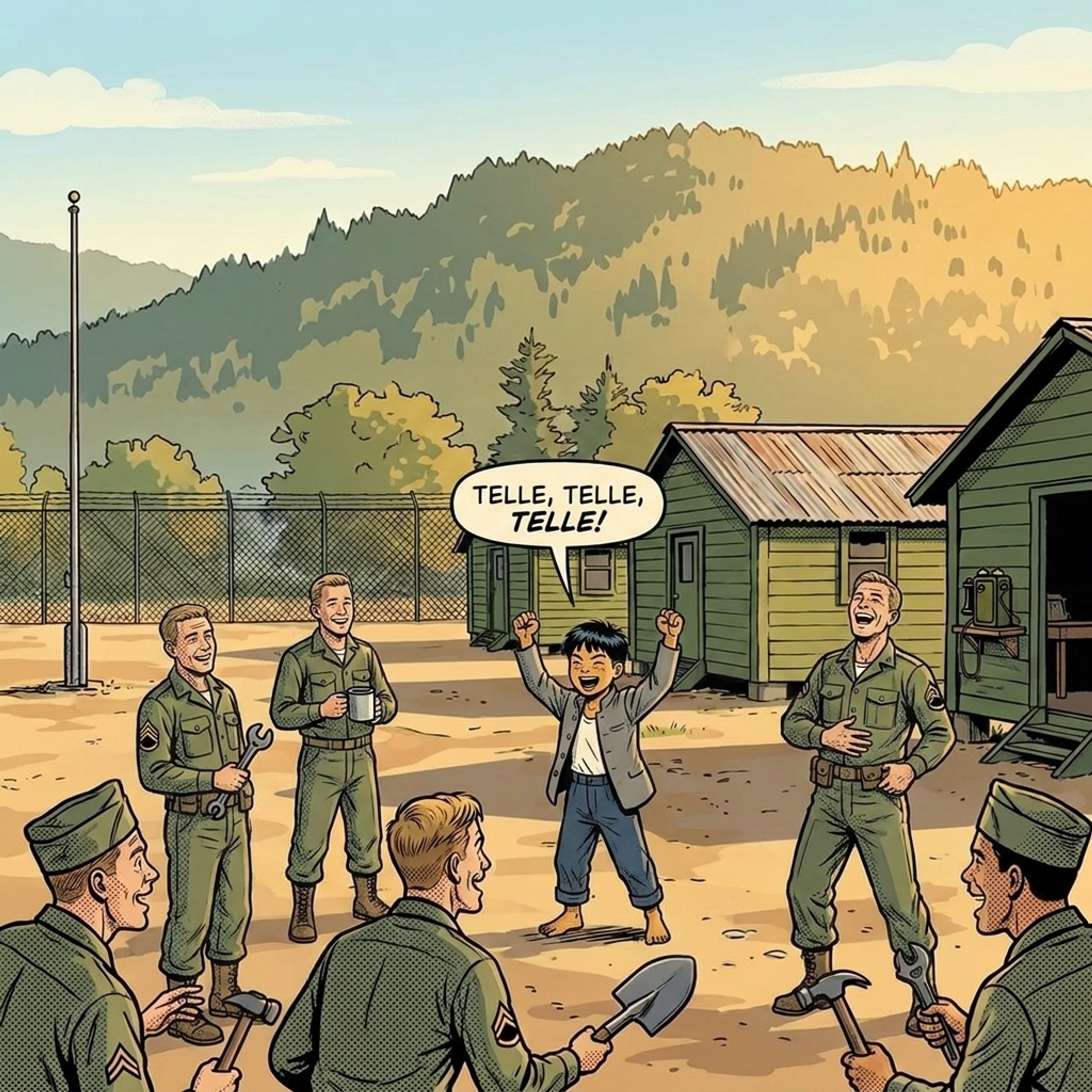
"Telle! Telle! Telle!" he hollered, running and running until a Marine jogged over to answer. Everyone stopped. Everyone stared. Then someone laughed. And then everyone laughed - because there was nothing else to do. "He would run out and yell, 'telle, telle, telle' until someone would go answer it."
9
After that, every time the telephone rang, the boy ran. "Telle! Telle! Telle!" The men stopped listening for the phone. They listened for him instead. His voice - that one flying word - had become the sound of the whole base.
10
Spread 10
Spread 11
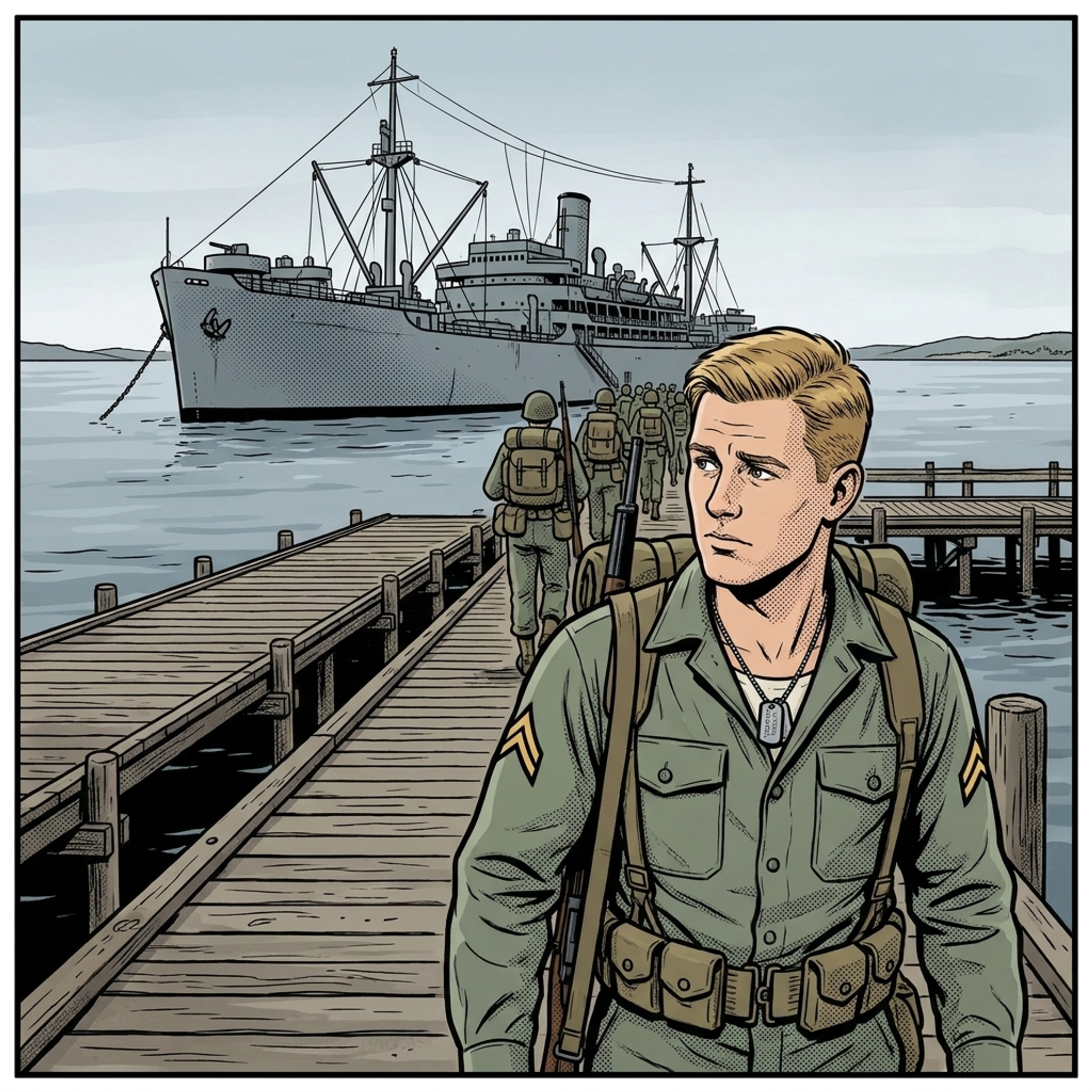
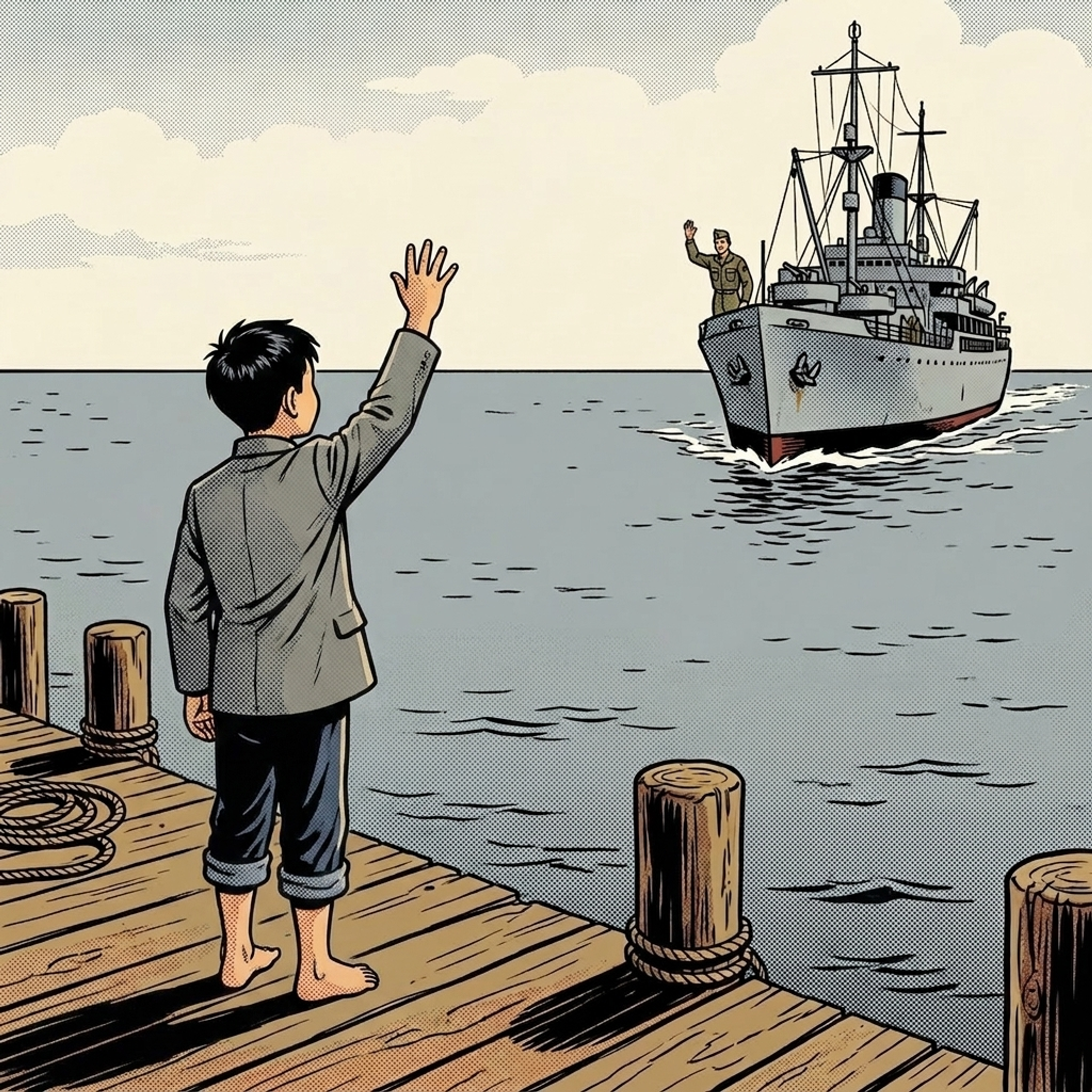
Then one morning, the day came. The men packed their bags and walked to the docks. Wayne carried his pack and looked back toward the base - toward the hut, toward the telephone, toward everything the boy had made feel like home.
11
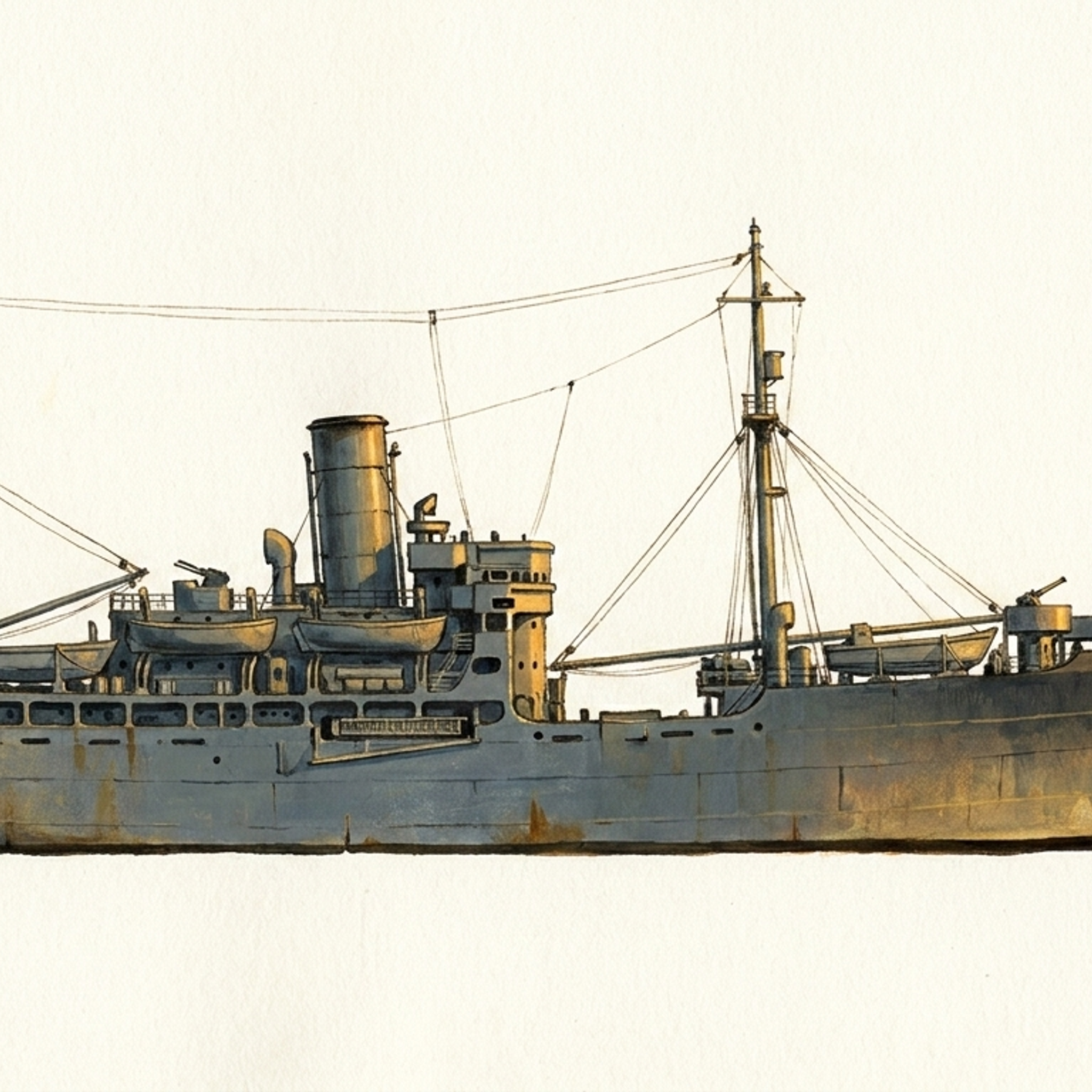
The boy was standing on the docks. He did not run. He did not shout. He only raised his hand - and waved, and waved, and waved, until the ship was too far away to see. Wayne watched until he couldn't anymore. Some things don't need any words at all. "The day we shipped home from the war, he was standing on the docks waving goodbye to us."
12
Spread 12
Behind the story
The real words behind it
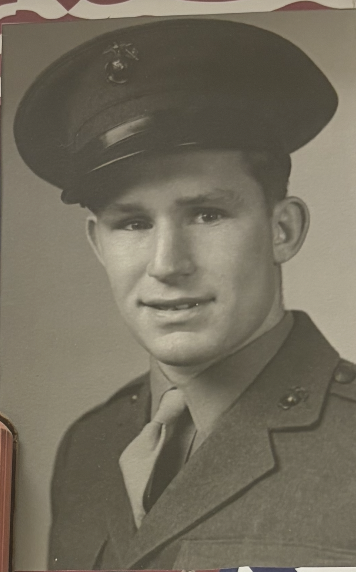
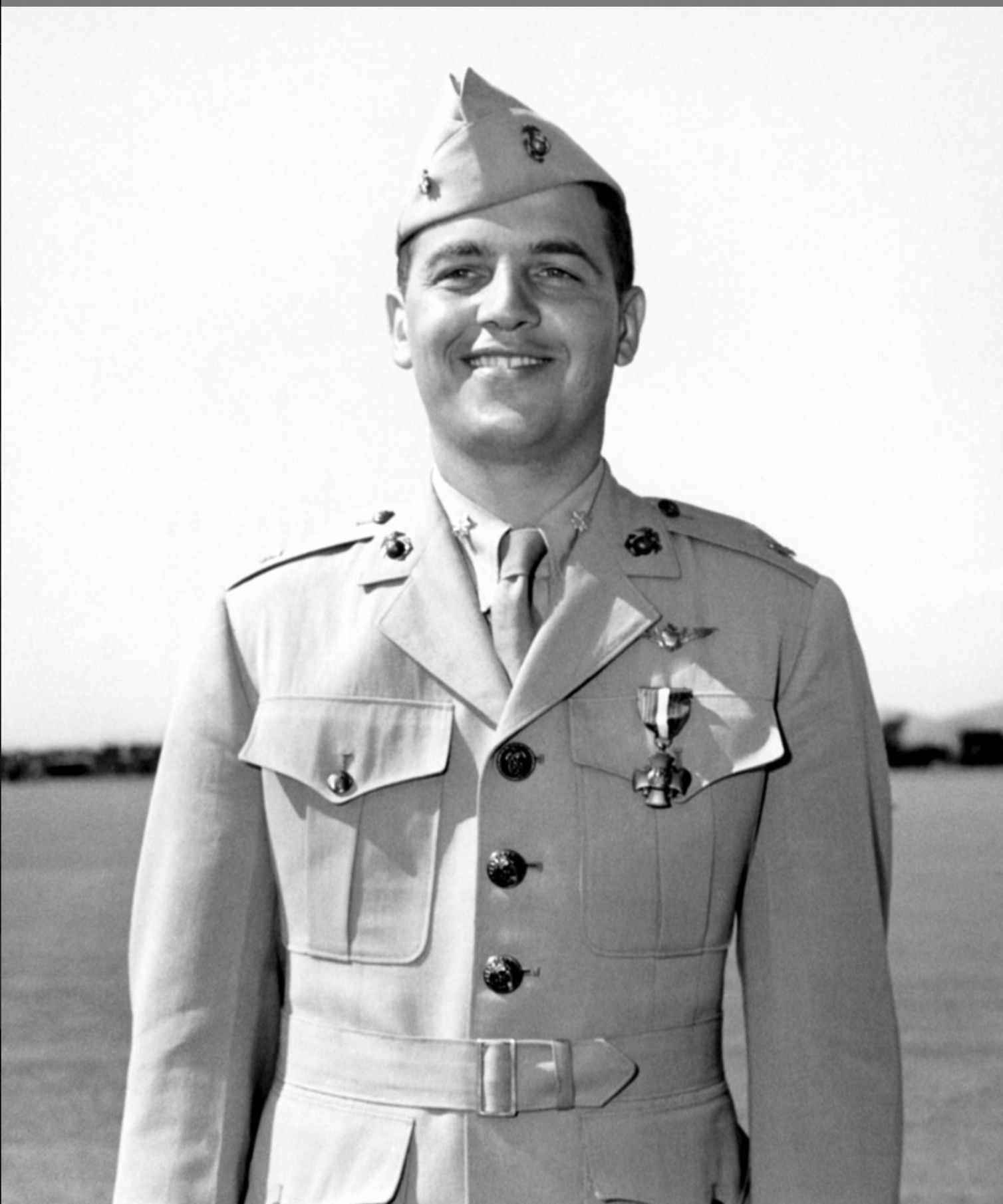
Wayne Wilberg drove trucks for the Marines after World War II ended in Japan. His group found a hungry twelve-year-old boy and brang him back to the base, give him a candy bar, and snuck him a place to sleep - even though they could have gotten into serious trouble for it. The boy found his own job to do: sitting by the phone and running out to holler until someone came to answer it. Wayne wrote all of this down himself. Turn the page and you can read his own words, and see the photographs too.
The real story · photographs
Wayne Ray Wilberg
Wayne Ray Wilberg
Marine 1
Marine 1
Behind the story · 1 of 3
Page 1
Page 1
"During this occupation, they met very little resistance during the beginning... The taking care of these children was one of the major projects facing the occupation forces after the surrender of Japan."
Page 2
Page 2
"Their parents were shot and killed. The kids were sent to the hills to get away from the fighting. They eventually were starved out. Many of them ended up dieing. The army started to gather the kids up and try to help them. One time my group picked up a 12-year boy and took him..."
Page 3
Page 3
"We gave him a candy bar and he gobbled it up."
Page 4
Page 4
"We made him a bed and snuck him in. If they found out we had him we would have been court marshaled."
Behind the story · 2 of 3
Page 5
Page 5
"He did some labor work for us."
Page 6
Page 6
"We had him set by the phone and listen for it to ring. If it would ring he was to quickly run outside and yell to us that the phone was ringing. He couldn't speak any English."
Page 7
Page 7
"He couldn't speak any English. He would run out and yell, 'telle, telle, telle' until someone would go answer it."
Page 9
Page 9
"He would run out and yell, "telle, telle, telle" until someone would go answer it."
Behind the story · 3 of 3
Page 10
Page 10
"He would run out and yell, 'telle, telle, telle' until someone would go answer it."
Page 11
Page 11
"The day we shipped home from the war, he was standing on the docks waving goodbye to us."
ABOUT THIS RECORD
This book was drawn from the journals, kept 1944-2013.
KindredPages
Made with care · 2026
The war is over, but the hills are still full of hunger. When a twelve-year-old boy slips through the fence onto a Marine base in occupied Japan, corporal Wayne Wilberg has to decide fast - and quietly.

Some friendships are built from bravery. Some are built from leftover food, a shared laugh, and one very loud telephone. This one was built from both.
Created with KindredPages
kindredpages.studio
 
Cover
direct Verbatim from the journal paraphrase Same meaning, child-friendly wording bridge Connective tissue we wrote
Page 1
Page 1
The fighting was over. Wayne Wilberg and his fellow Marines had come to Japan as part of the occupation - keeping the peace now that the guns had gone quiet. The base was calm, but out in the hills, something else was waiting.paraphrase
Page 2
Page 2
The children had been sent to the hills to get away from the fighting. Many were lost. But some survived - hungry, frightened, alone. One day, Wayne's group found a boy. Twelve years old. Thin as a reed. His eyes said everything his words could not.paraphrase
Page 3
Page 3
Wayne reached into his pocket and held out a candy bar. The boy stared at it. He had probably not eaten in days. Then - he took it. "We gave him a candy bar and he gobbled it up."direct
Page 4
Page 4
That night, the men made up their minds. "We made him a bed and snuck him in," Wayne said. They tucked the boy away and looked at each other - because they all knew the rule. "If they found out we had him, we would have been court-martialed."direct
Page 5
Page 5
The boy stayed. There were no shared words between them - no English, no Japanese - but there were nods, and pointing, and shy smiles. Little by little, he learned the shape of the base. Little by little, he began to help.paraphrase
Page 6
Page 6
Then the men had an idea. They brought the boy inside and showed him the telephone. Wayne pointed to the phone. He pointed to the boy. He pointed outside, and waved his arms. The boy watched every move. He understood: if it rings - you run.paraphrase
Page 7
Page 7
The boy sat very still. He watched the telephone the way a cat watches a bird. He didn't know a single word of English. He didn't know what to say when the men came running. He only knew one thing: the moment it rings, you go.paraphrase
Page 8
Page 8
RING. The boy shot off that stool like a firecracker. He burst through the door, bare feet slapping the dirt, arms pumping, racing across the yard as fast as his legs could carry him.bridge
Page 9
Page 9
"Telle! Telle! Telle!" he hollered, running and running until a Marine jogged over to answer. Everyone stopped. Everyone stared. Then someone laughed. And then everyone laughed - because there was nothing else to do. "He would run out and yell, 'telle, telle, telle' until someone would go answer it."direct
Page 10
Page 10
After that, every time the telephone rang, the boy ran. "Telle! Telle! Telle!" The men stopped listening for the phone. They listened for him instead. His voice - that one flying word - had become the sound of the whole base.paraphrase
Page 11
Page 11
Then one morning, the day came. The men packed their bags and walked to the docks. Wayne carried his pack and looked back toward the base - toward the hut, toward the telephone, toward everything the boy had made feel like home.paraphrase
Page 12
Page 12
The boy was standing on the docks. He did not run. He did not shout. He only raised his hand - and waved, and waved, and waved, until the ship was too far away to see. Wayne watched until he couldn't anymore. Some things don't need any words at all. "The day we shipped home from the war, he was standing on the docks waving goodbye to us."direct
Trim
8.5″ × 8.5″
Pages
34
Spine
0.255"
Format
Print-ready
If everything looks right, head to the next step to order your hardcover.
← Back to cover