Your book
Flip through the book the way a child will hold it. The PDF tabs show exactly what gets printed. If something feels off, jump back to the step that owns it — the wizard remembers everything you've done.
Cover
Not generated yet
Title + dedication
Sheet 1
Story spreads
12
The real story
3 quotes · 1 photos
Back cover
Blurb + brand
This story belongs to
— — — — — — — —
The Typhoon That Stopped the War
KindredPages
1
2
Illustration pending
Illustration pending
3
4
Illustration pending
Illustration pending
5
6
Illustration pending
Illustration pending
7
8
Illustration pending
Illustration pending
9
10
Illustration pending
Illustration pending
11
12
Illustration pending
Behind the story
The real words behind it
The real story · photographs
Behind the story · 1 of 1
ABOUT THIS RECORD
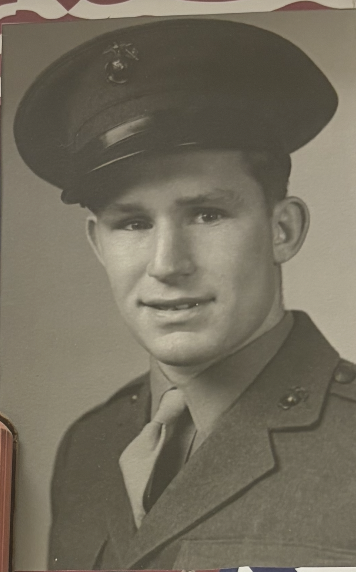
This book was drawn from the journals, kept 1944-2013.
KindredPages
Made with care · 2026
A real family story,
brought to life for little readers.
brought to life for little readers.
Created with KindredPages
kindredpages.studio
kindredpages.studio
Cover
direct Verbatim from the journal
paraphrase Same meaning, child-friendly wording
bridge Connective tissue we wrote
Page 1
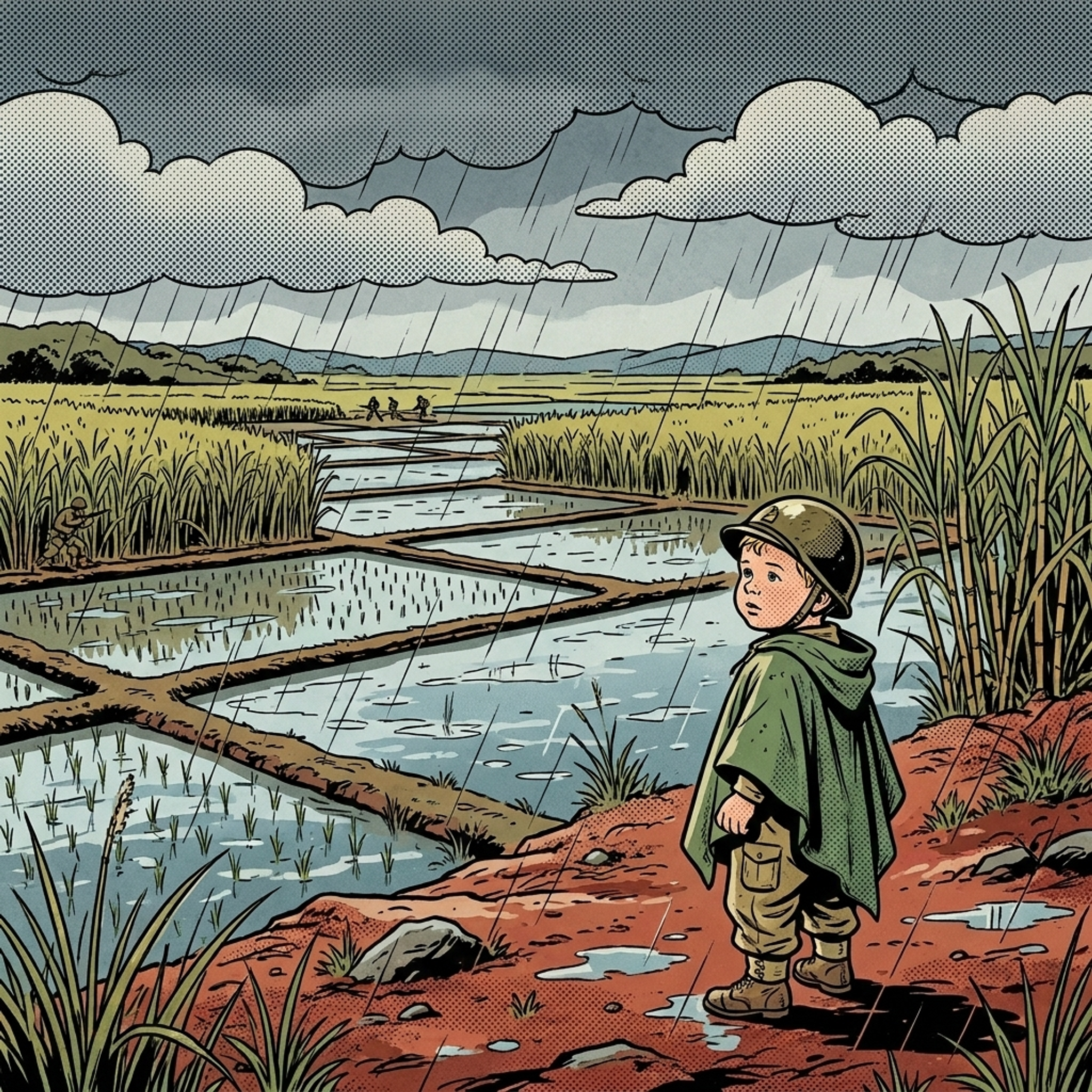
Okinawa was sixty miles long and thirty miles wide, and almost all of it was wet. Rice paddies shimmered between the rows of sugar cane, and the sky pressed down low and grey. Wayne Wilberg, a young Marine from Castle Dale, Utah, pulled his poncho a little tighter and looked out at his new home.bridge
No illustration yet
Page 2
At night, Wayne spread his two blankets on the red dirt and lay down under the open sky. There was no sleeping bag, no cot, no roof - just the ground and the dark and the distant sounds of war. "Just like boy scouts," he would have said, if he were trying to make himself smile.bridge
No illustration yet
Page 3
It rained a lot on Okinawa. Wayne wore his poncho so often it felt like a second skin - green and slick and smelling of wet canvas. Every morning he woke up damp. Every evening he wrung out his dungarees and tried to sleep dry. Rain was just part of the job.bridge
No illustration yet
Page 4
Then one morning, something felt different. The air grew heavy and strange. The wind, usually just a whisper through the cane, began to push - first gently, then harder, then hard enough to lean against. Wayne looked at the sky. The clouds were not grey anymore. They were the color of a bruise.bridge
No illustration yet
Page 5
The typhoon hit like a wall. Wind screamed across the island. Rain didn't fall - it flew, sideways, in sheets, stinging Wayne's face. He yanked his poncho over his head and got as low as he could. The world turned into noise and water and wind.bridge
No illustration yet
Page 6
And then - the guns went quiet. No shots from the hills. No shots from the valleys. Wayne lifted an edge of his poncho and listened hard. "Once for about 10 days there was no fighting," he would later say, "because a typhoon come through, and everyone just took cover."direct
No illustration yet
Page 7
Day two. Day three. The typhoon did not stop. Wayne lay under his poncho on the same red dirt, rain hammering down, wind shaking everything around him. Far out in the cane and the dark hills, he knew the Japanese soldiers were doing the same thing. The storm did not care which side you were on.paraphrase
No illustration yet
Page 8
Under his poncho, Wayne thought about home. Castle Dale, Utah. His mother. The dry smell of the farm, so different from all this wet. He smiled a little, alone in the dark. "Just like a bunch of boy scouts camping out on the ground," he thought.paraphrase
No illustration yet
Page 9
Four days. Five. Six. Wayne counted on his fingers under the poncho. Six days since a single shot had been fired on this island. Six days since the typhoon had told the war to sit down and wait. The storm owned Okinawa now - all sixty miles of it.bridge
No illustration yet
Page 10
Seven days. Eight. Nine. For the first time since he had come to this island, the only sound Wayne could hear was the storm. No guns. No orders shouted across the red dirt. Just rain on his poncho, wind through the cane, and somewhere in the dark, sixty miles of very wet and very quiet island.bridge
No illustration yet
Page 11
On the tenth day, Wayne lifted the edge of his poncho and looked out. The wind had gone soft. The rain had slowed to dripping. The sugar cane stood up again, a little bent, a little battered, but standing. Everything was soaked and broken and very, very still.bridge
No illustration yet
Page 12
Wayne stood up and folded his poncho. The rice paddies shone. The island stretched on - sixty miles long, thirty miles wide - and somewhere out there, the war was starting again. But Wayne knew something now that he hadn't known before: even the biggest, loudest, most terrible things in the world have to stop and listen sometimes. Even wars have to take cover.bridge