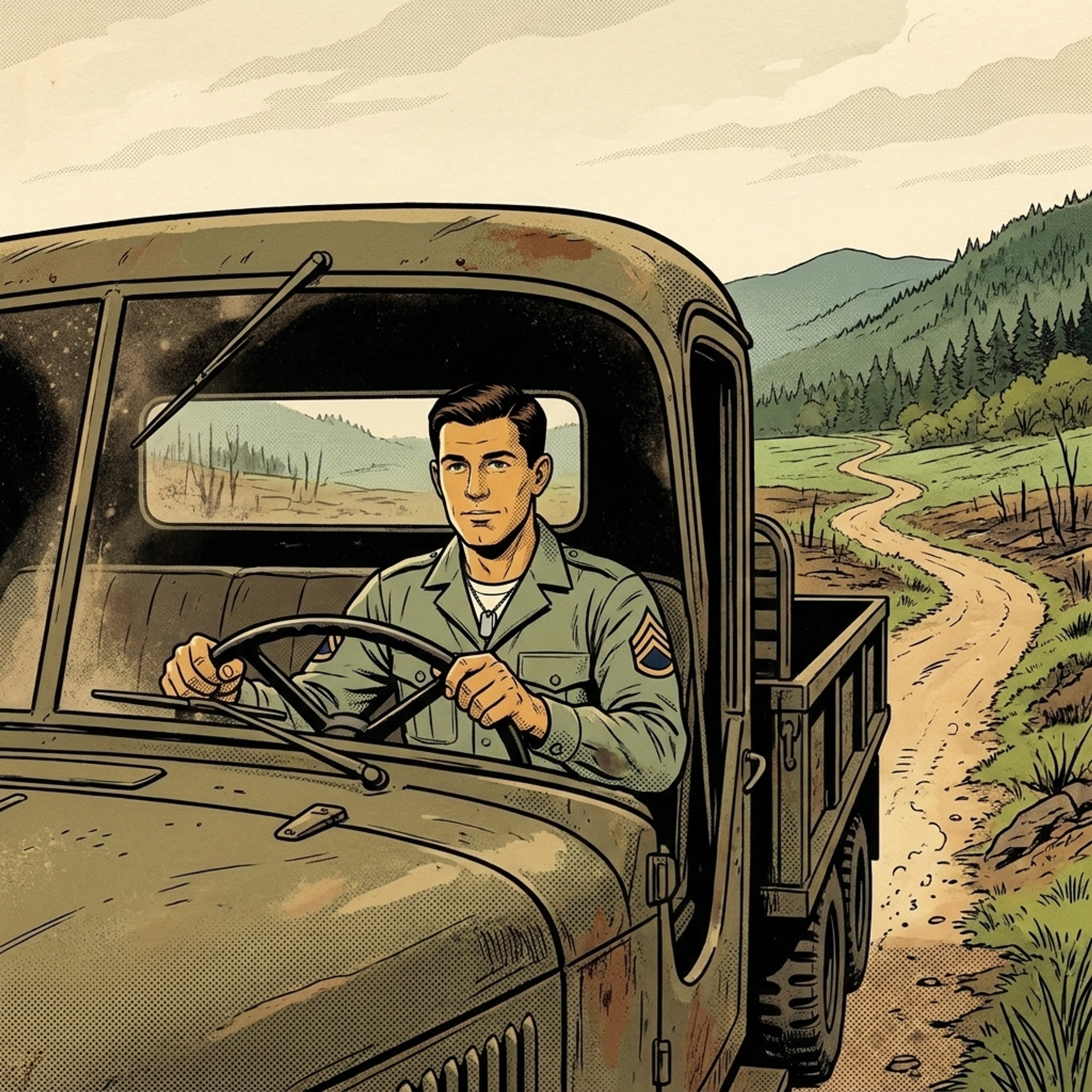
The guns had stopped. The ships in the harbor sat still. Wayne Wilberg, a young Marine far from home, drove his truck through a quiet that felt strange after so many loud and terrible days.
Page 21·0·02 of 12
Drawing
This usually takes 20–40 seconds
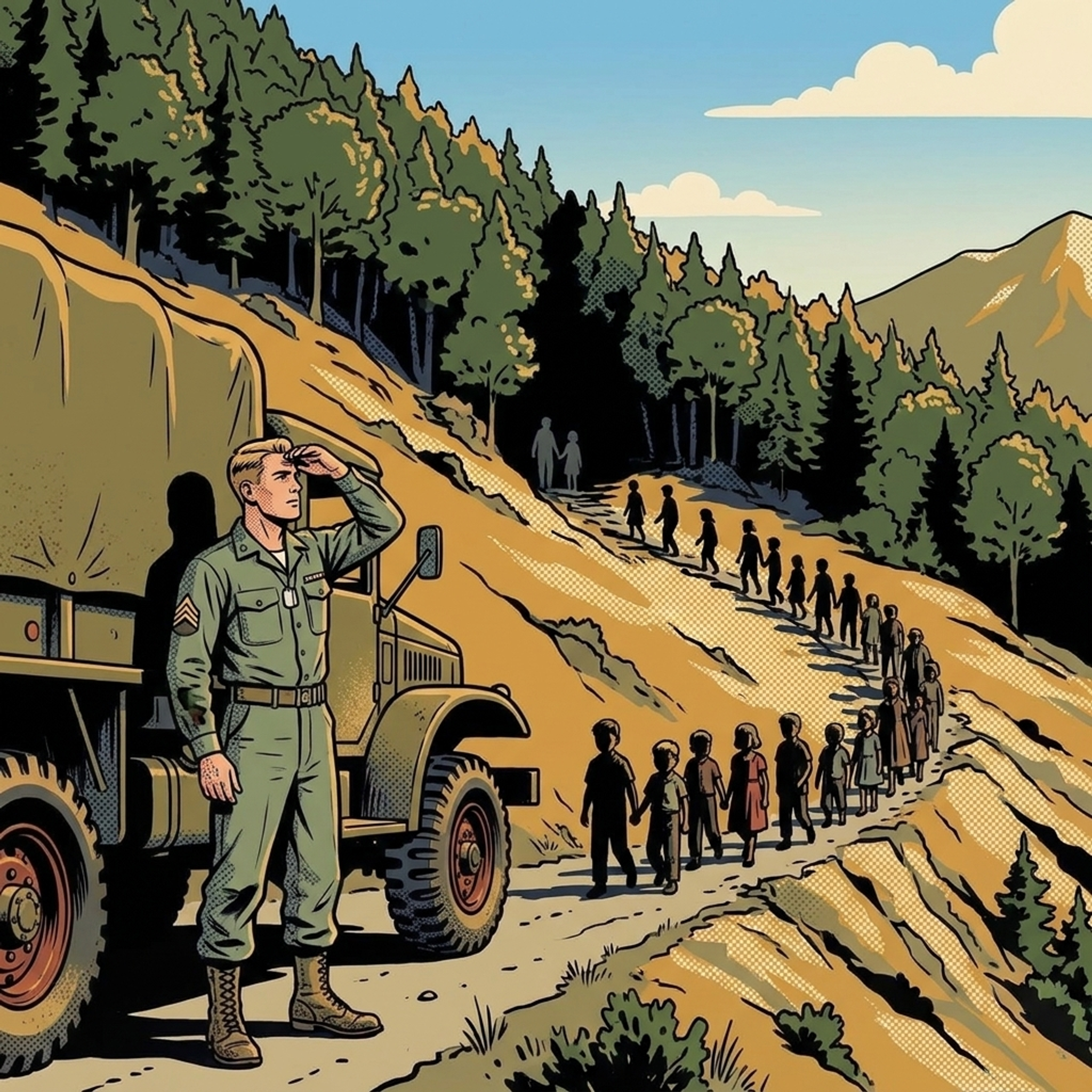
Then — at the edge of the trees — something moved. A child. Then another. Then so many more that Wayne stopped the truck and could only stare. They came out of the mountains like swarms of ants.
Page 30·1·03 of 12
Drawing
This usually takes 20–40 seconds
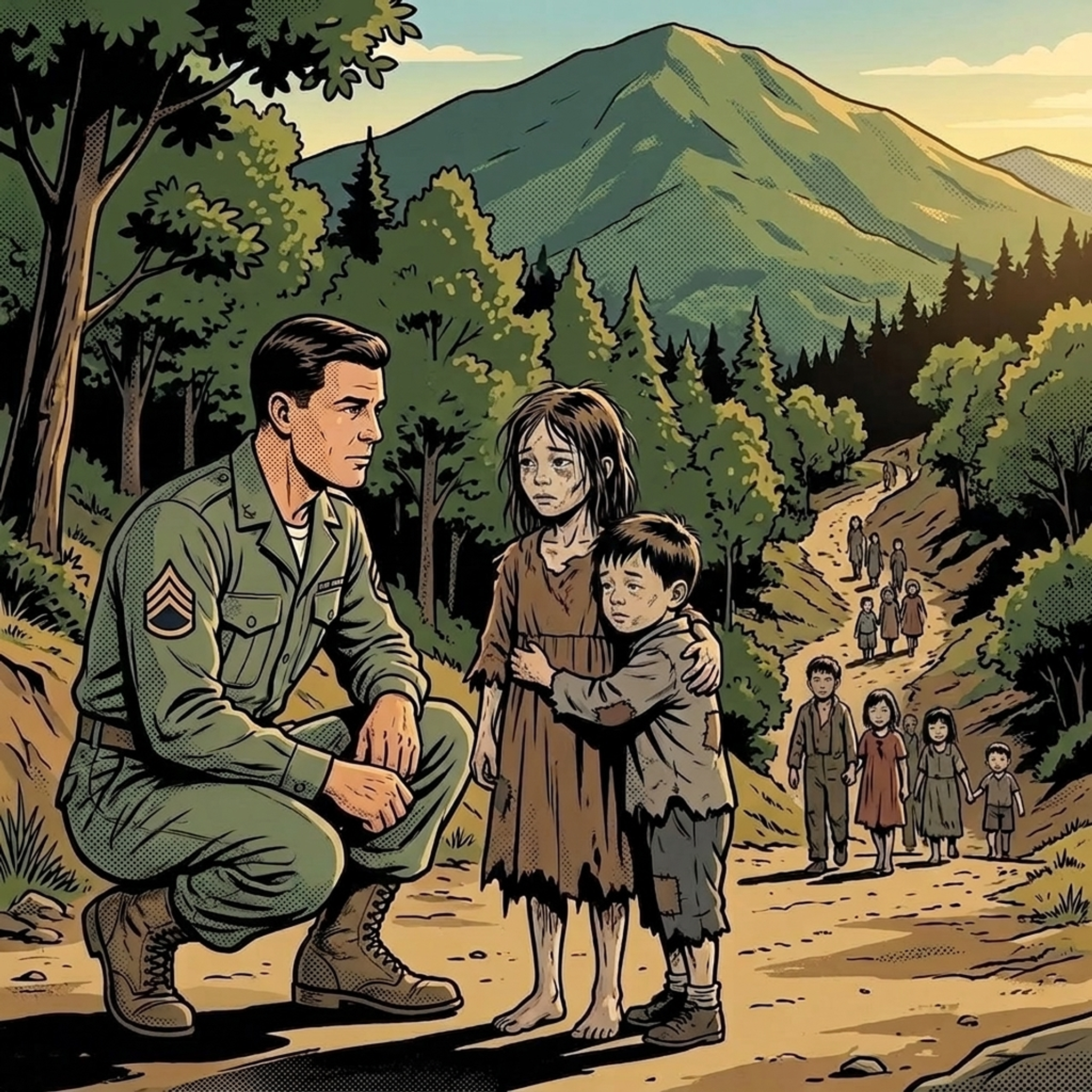
Wayne learned what had happened. The children's parents had been killed in the fighting. The children had been sent up into the hills to hide from the war. They had been there so long, with nothing to eat, that many of them did not make it back down.
Page 40·0·14 of 12
Drawing
This usually takes 20–40 seconds
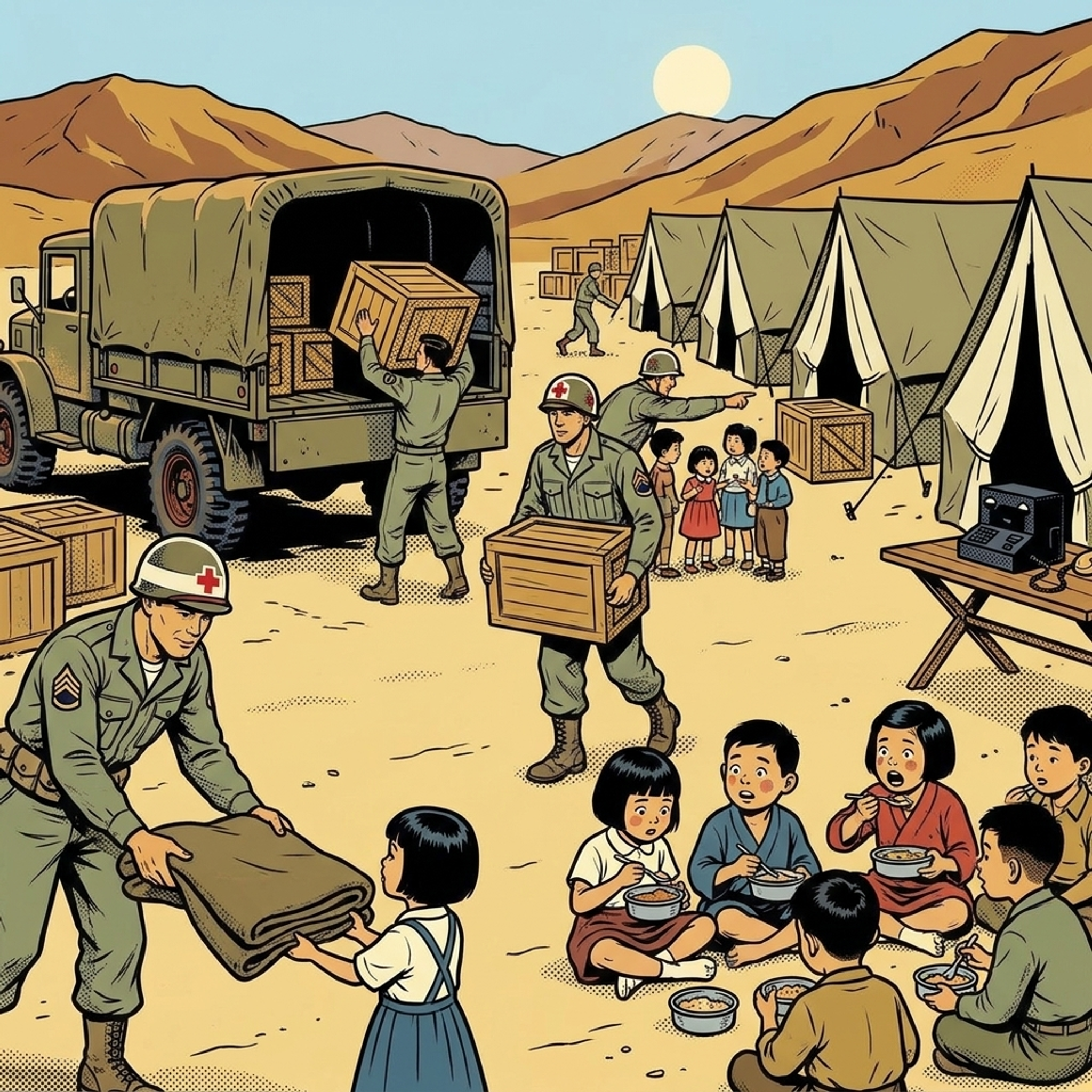
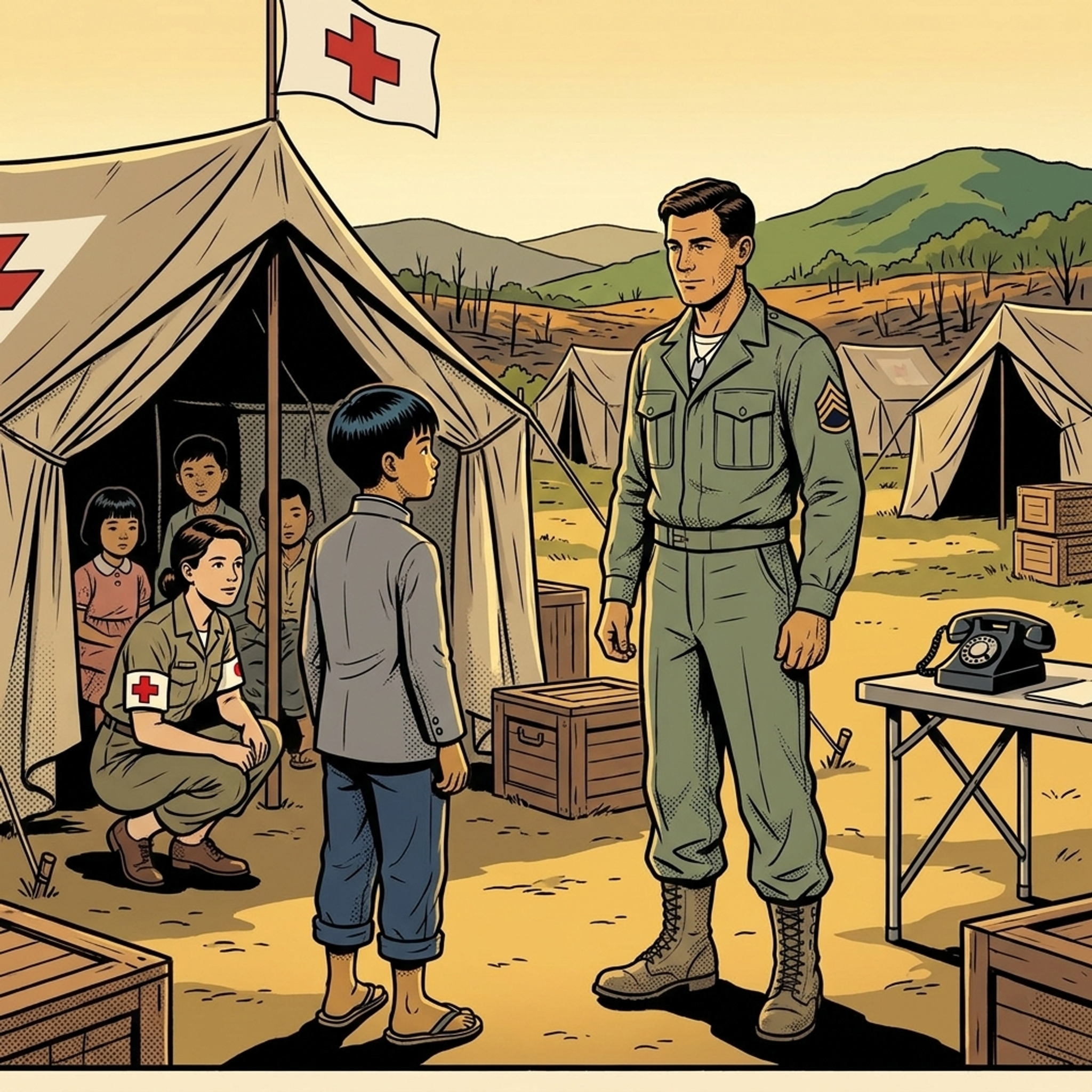
The army, the Red Cross, and soldiers like Wayne began setting up camps. They brought food and blankets. They called out to the children: "Come down. Come down. You are safe now."
Page 50·1·05 of 12
Drawing
This usually takes 20–40 seconds
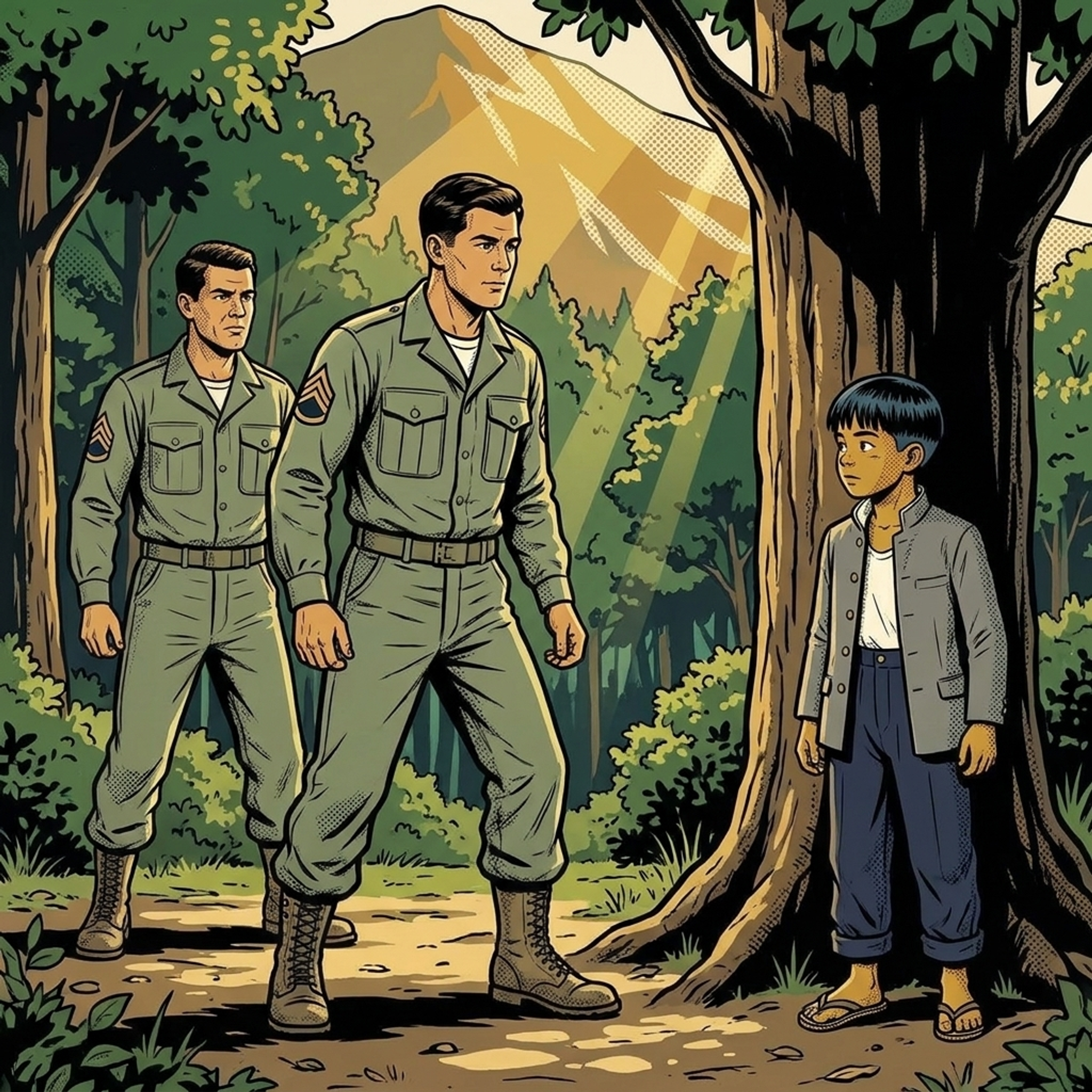
One afternoon Wayne's group was out when they found a boy of twelve — alone, standing very still, watching them from the shadow of a tree. He did not run. He was too hungry to run.
Page 61·0·06 of 12
Drawing
This usually takes 20–40 seconds
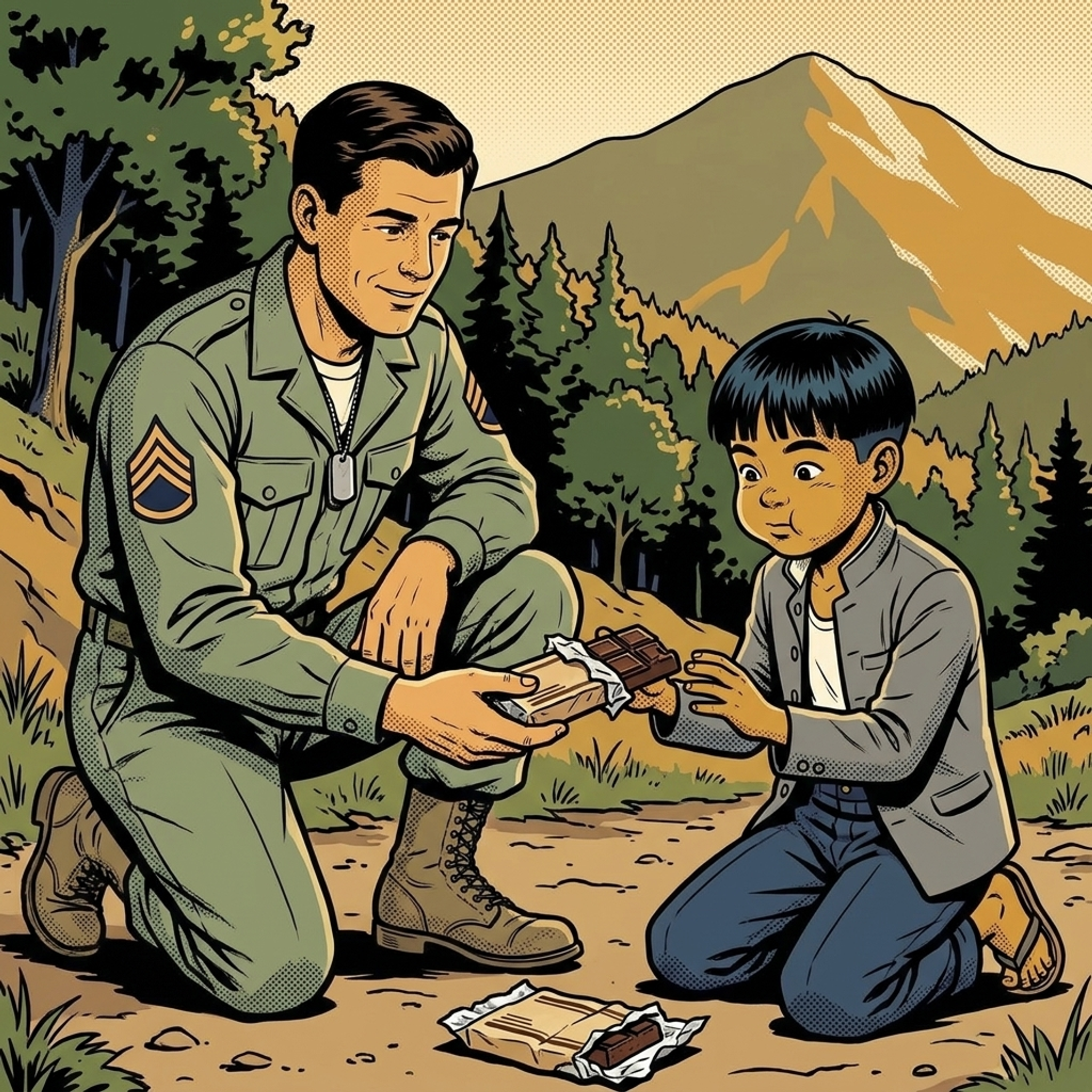
Wayne reached into his pocket and held out a candy bar. The boy took it. Then — in about two bites — it was gone. "We gave him a candy bar and he gobbled it up," Wayne would say later, and he never forgot the look on that boy's face.
Page 71·0·07 of 12
Drawing
This usually takes 20–40 seconds
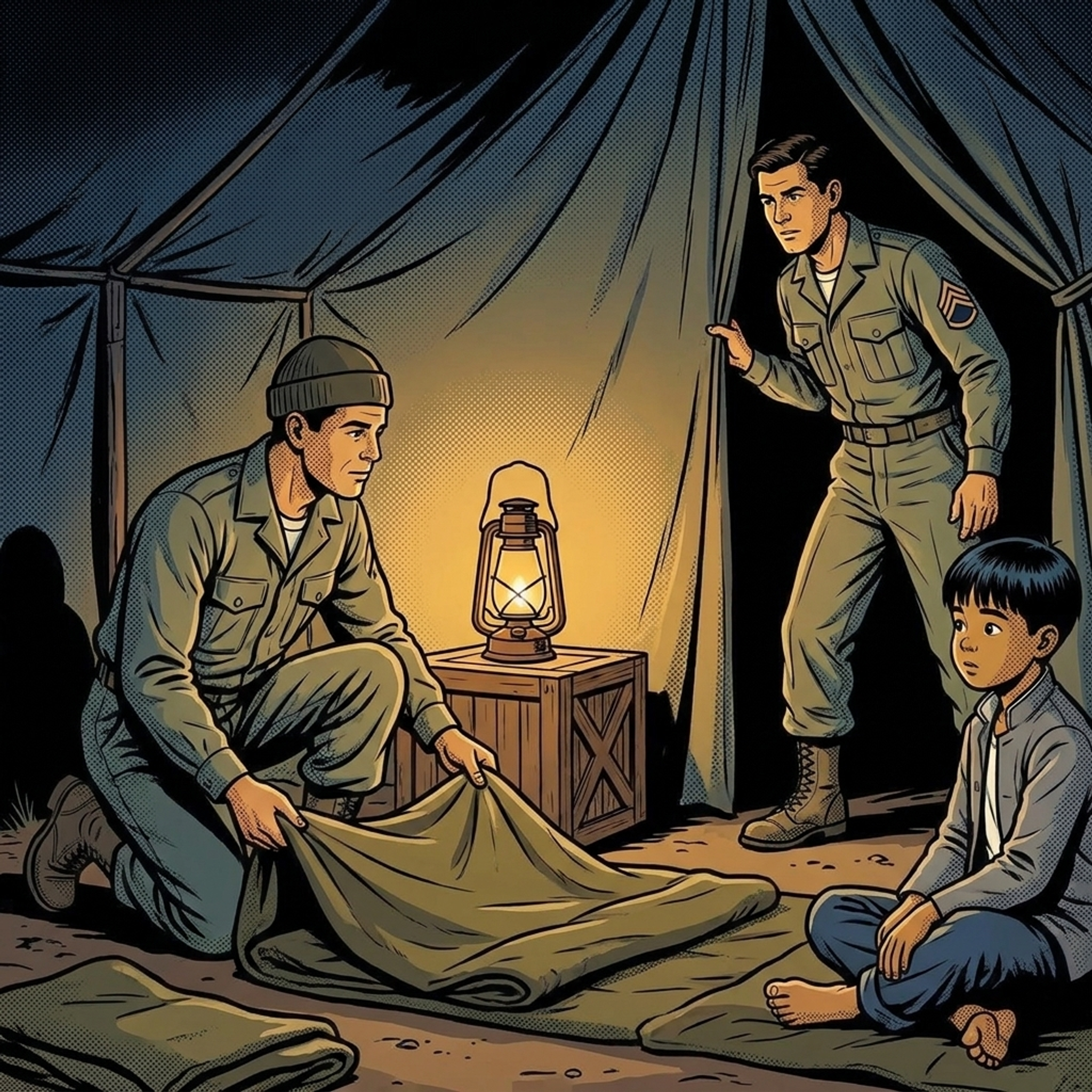
The soldiers made the boy a bed and snuck him inside after dark. They knew they were breaking the rules. "If they found out we had him," Wayne said quietly, "we would have been court-martialed." But nobody said go back.
Page 80·1·08 of 12
Drawing
This usually takes 20–40 seconds
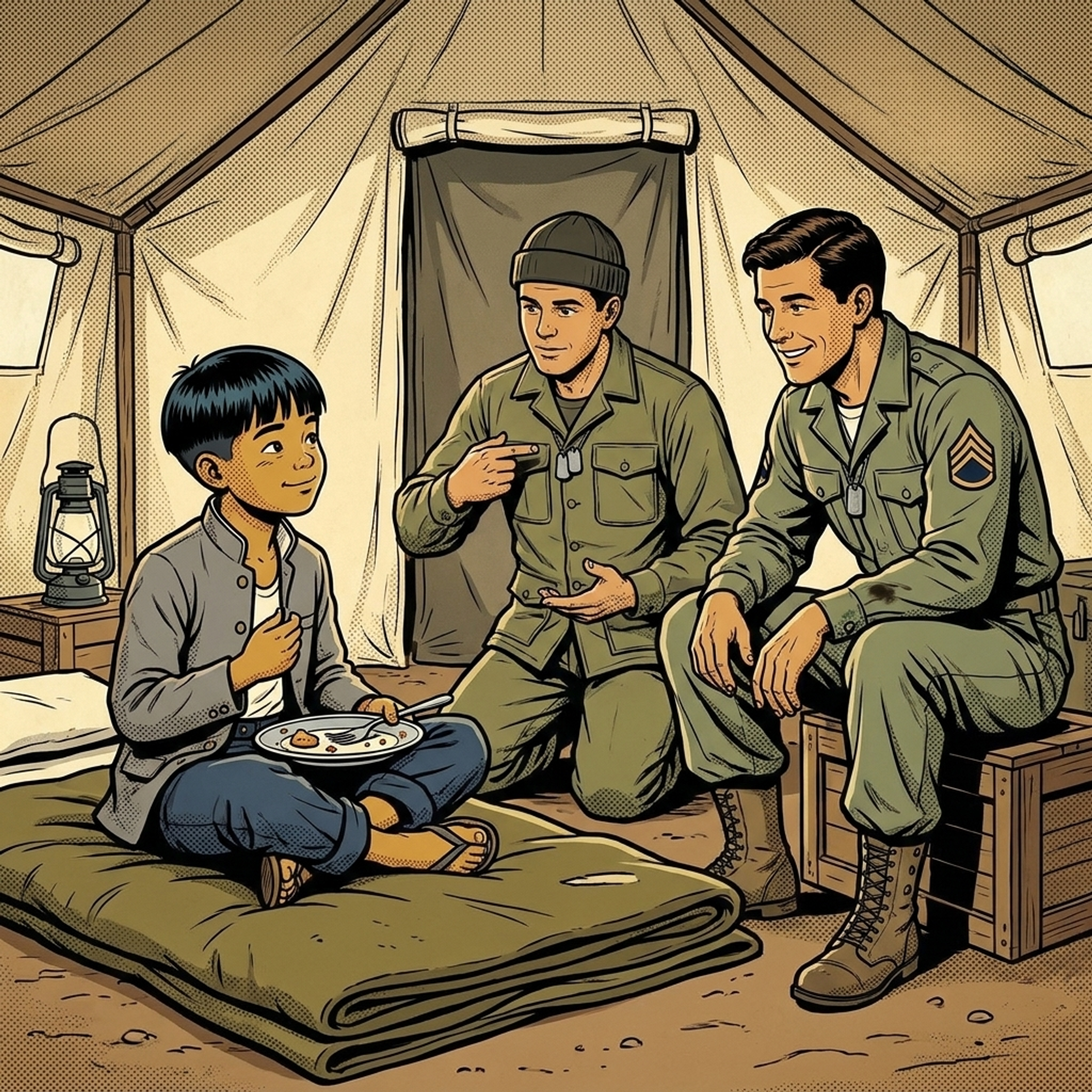
For several days, Wayne's group took care of the boy. They could not speak his language. He could not speak theirs. But they began to understand each other — in the way you understand someone when you share a meal and a roof and keep each other warm.
Page 90·1·09 of 12
Drawing
This usually takes 20–40 seconds
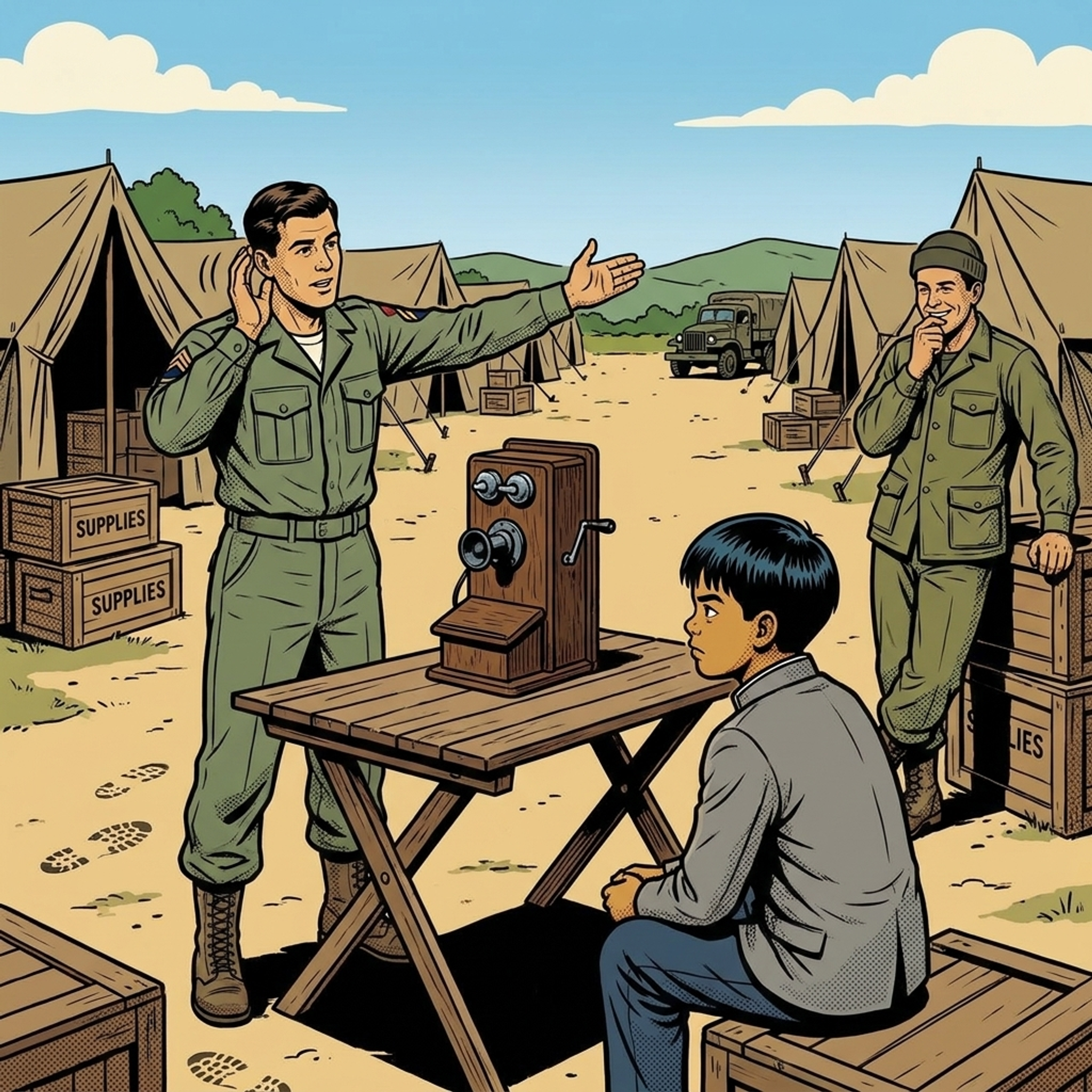
Then the soldiers found him a job. They set him by the telephone and told him — with waving hands and pointing fingers — that when it rang, he should run outside and shout until someone came. He could not speak any English. But he could listen. And he could run.
Page 101·0·010 of 12
Drawing
This usually takes 20–40 seconds
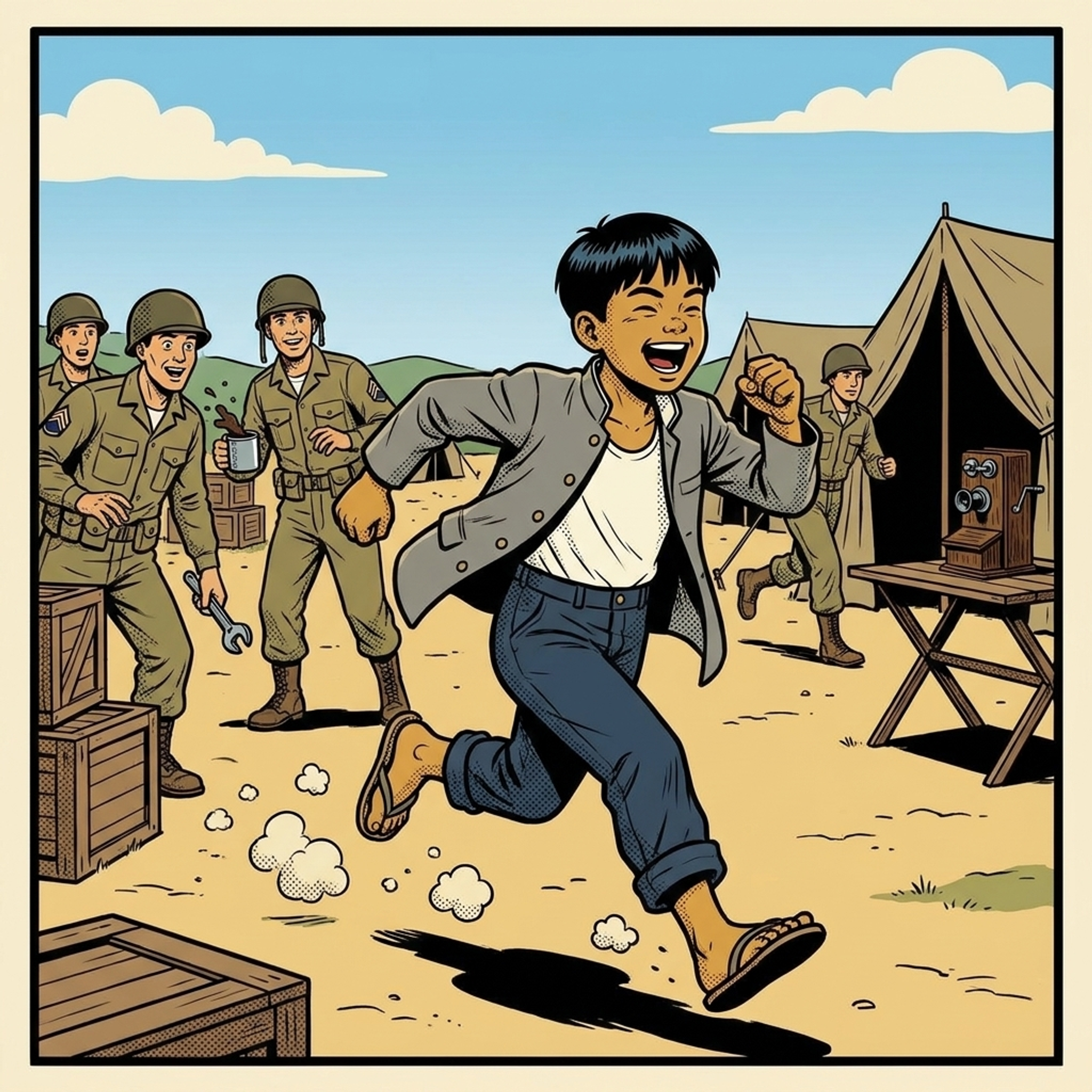
BRING! went the telephone. And out flew the boy — bare feet slapping the ground — yelling at the top of his lungs. "Telle! Telle! Telle!" he shouted, until someone came running to answer it.
Page 110·1·011 of 12
Drawing
This usually takes 20–40 seconds
Later, the soldiers were able to make arrangements for the boy. He would be cared for. He would be safe. He was no longer lost up in the mountains. He was found.
Page 121·0·012 of 12
Drawing
This usually takes 20–40 seconds
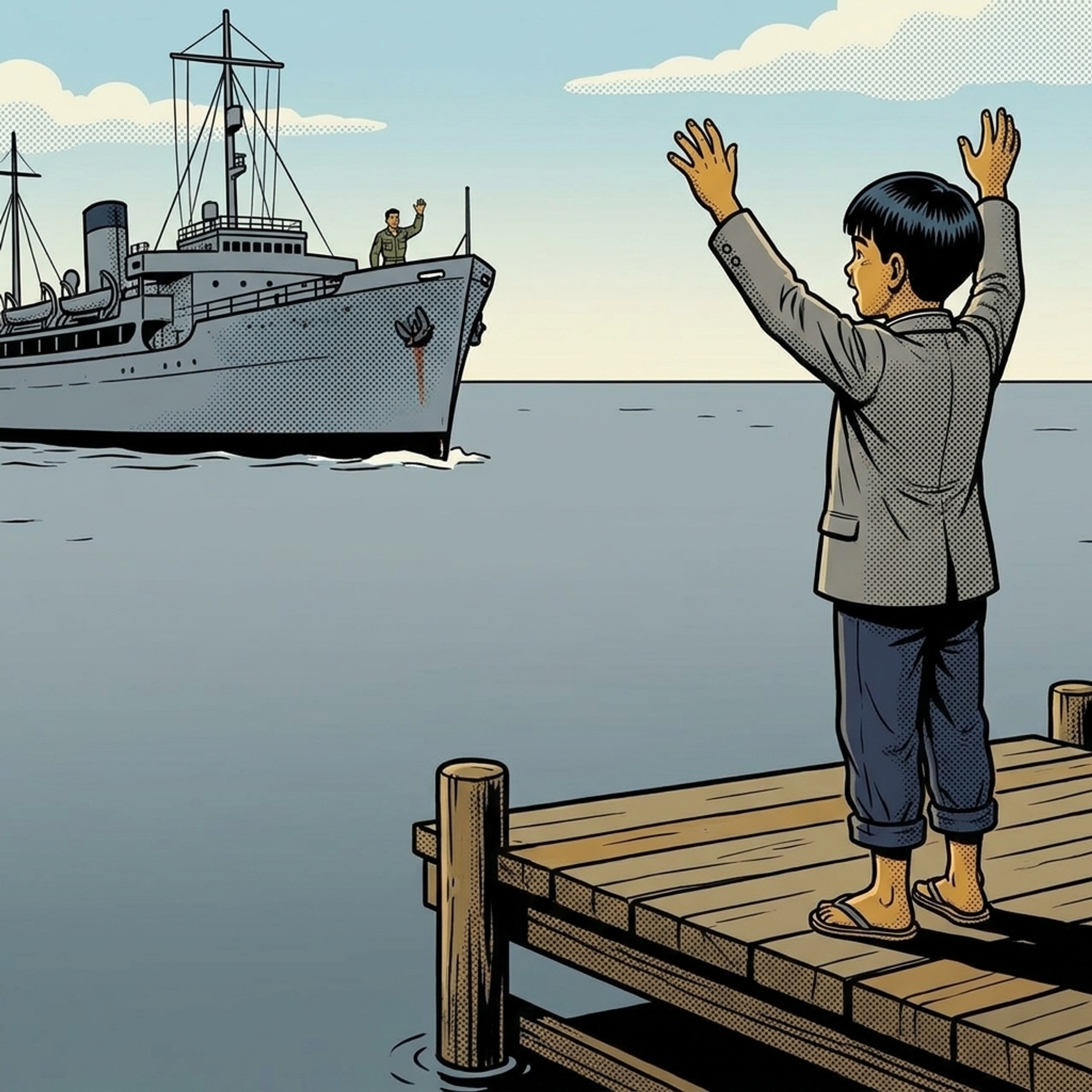
The day Wayne's unit shipped home from the war, the boy was standing on the docks, waving goodbye. Not hiding in the mountains. Not hungry. Not silent. Just waving — and waving — until the ship was gone.
Touch up the picture you have, or redraw it from the description. Your characters and art style stay locked either way.
A short fix-it note. The AI treats this as the top priority and makes sure it shows — best for correcting something it got wrong (a direction, a pose, the size of something).
Name the one fix — “make the lantern brighter,” “take the hat off the boy on the left.” Everything else in the picture stays exactly as it is.
Attach a real photo for the AI to match on this page only — a place, an object, a composition. It stays attached, so every redraw of this page uses it.
Already have the perfect image? Upload it and it becomes this page's picture — no drawing needed.
Rewrite this page with AI
We'll re-run the story engine for just this page, anchored to the source passages it currently cites.